


Affordable Tooth Pulling: Where to Find Cheap Extractions Nearby
When Tooth Pain Meets a Tight Budget: What You Need to Know
Finding a cheap tooth extraction near me is more urgent than most people expect — especially when pain hits and your wallet is already stretched thin.
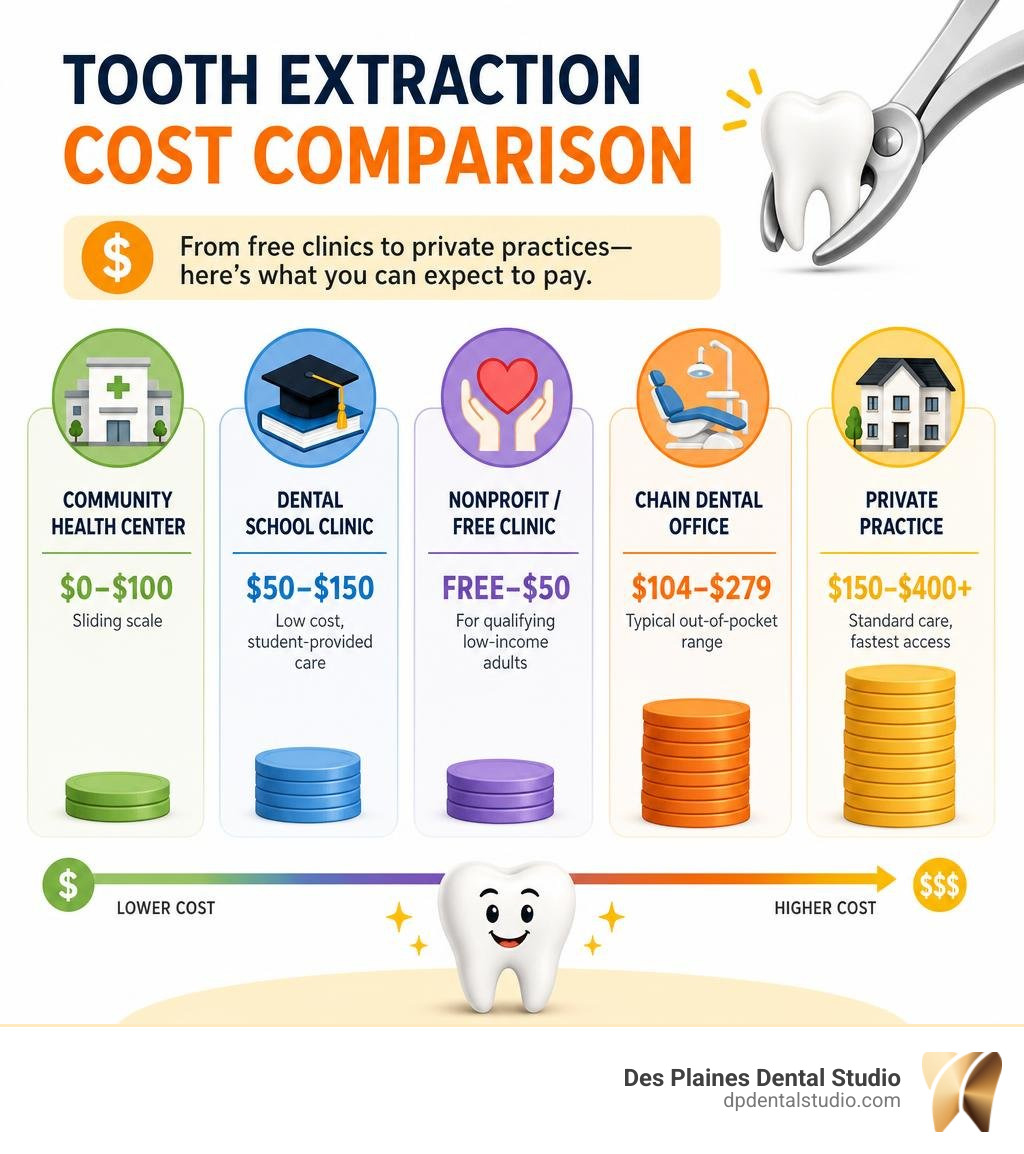
Here are the fastest ways to get an affordable extraction:
| Option | Typical Cost | Best For |
|---|---|---|
| Community health center | $0–$100 (sliding scale) | Uninsured, low income |
| Dental school clinic | $50–$150 | Anyone willing to wait |
| Nonprofit/free clinic | Free–$50 | Qualifying low-income adults |
| Chain dental office | $104–$279 | Insured or financing needed |
| Private practice | $150–$400+ | Standard care, fastest access |
The hard truth? 33% of Americans skip dental care because of cost. That delay turns a $150 extraction into a $749 emergency room bill — or worse, a serious infection.
You don’t have to choose between your health and your finances. There are real, accessible options — and this guide walks you through all of them.
I’m Dr. Marta Milejczyk, and after decades of providing comprehensive oral care — including oral surgery rotations and emergency dentistry training through my General Practice Residency at Loyola University Medical Center — I’ve seen how cost barriers keep patients from getting the extractions they need. My goal in this guide is to make finding a cheap tooth extraction near me straightforward, safe, and stress-free.
Understanding the Cost of a Cheap Tooth Extraction Near Me
When you are looking for a cheap tooth extraction near me, understanding how dental offices and clinics structure their pricing is your best defense against unexpected bills. Dental pricing isn’t uniform. Depending on where you go in the Des Plaines, IL area, the price you pay out of pocket can vary by hundreds of dollars.
In June 2026, the average cash price for a routine dental extraction at a private practice in Illinois ranges from $150 to $400. However, public clinics, dental school programs, and community health centers offer heavily discounted rates. If you want to dive deeper into how we handle these procedures with your comfort and budget in mind, you can learn more about extraction procedures at our clinic.
Below is a cost comparison to help you understand what different providers charge for extraction services:
| Provider Type | Diagnostic Exam Fee | X-Ray Cost | Simple Extraction (Per Tooth) | Total Estimated Cost |
|---|---|---|---|---|
| Dental School Clinic | $30 – $50 | $40 – $70 | $50 – $90 | $120 – $210 |
| Community Health Center | $0 – $30 (Sliding Scale) | $0 – $40 | $30 – $100 | $30 – $170 |
| Corporate/Chain Dental Practice | $50 – $90 | $80 – $150 | $104 – $279 | $234 – $519 |
| Private Practice (Standard Cash Pay) | $80 – $150 | $100 – $180 | $150 – $400 | $330 – $730 |
Average Costs of Simple vs. Surgical Extractions
Not all tooth removals are created equal. The complexity of the procedure is the single largest factor in determining your final bill.
- Simple Extraction: This procedure is performed on a tooth that is visible in the mouth and can be removed using local anesthesia alone. The dentist uses an elevator and forceps to gently loosen and pull the tooth. If you are paying cash, a simple extraction is the most affordable option, typically ranging from $99 to $250.
- Surgical Extraction: This is required if the tooth has broken off at the gumline or has not erupted yet (such as an impacted wisdom tooth). The dentist or oral surgeon must make a small incision in your gum to access and remove the tooth. Surgical extractions are more complex, often requiring specialized tools and sometimes stitches, pushing the cost to $250 – $600+ per tooth.
- Wisdom Teeth Removal: Wisdom teeth are notorious for growing sideways or staying trapped beneath the bone. Because of this, they almost always require surgical extraction. If you are experiencing pain at the back of your jaw, you can find out about painless wisdom teeth removal options that keep both your anxiety and your costs under control.
Hidden Fees to Watch Out For
When you see an advertisement for a “$99 tooth extraction,” remember that the extraction itself is rarely the only service you will be billed for. To avoid billing surprises, always ask if the quoted price includes the following essential steps:
- The Diagnostic Exam: A dentist cannot legally pull a tooth without examining your mouth first. This diagnostic exam can add $50 to $150 to your bill if it is not bundled into the promotional price.
- Panoramic or Digital X-Rays: The dentist must see the tooth’s root structure and its proximity to major nerves before pulling it. A single X-ray can cost $30 to $50, while a panoramic X-ray can run up to $150.
- Anesthesia and Sedation: Local numbing (local anesthesia) is typically included in the cost of the extraction. However, if you require nitrous oxide (laughing gas), oral conscious sedation, or IV sedation to manage severe dental anxiety, this can add anywhere from $100 to $500+ to your total.
- Follow-Up Visits: While most routine extractions do not require a follow-up, complications like dry socket or infections may require you to return. Ask the clinic upfront if follow-up checks are included in the initial extraction fee.
Where to Find Low-Cost and Free Dental Clinics
If private practice fees are out of reach, you still have options. Low-cost and free dental clinics operate throughout Illinois, designed specifically to help patients who are uninsured, underinsured, or living on a limited income.
How to Qualify for Reduced-Cost Dental Care
Community health centers (also known as Federally Qualified Health Centers, or FQHCs) receive federal funding to provide care in underserved areas. They offer dental services on a sliding-scale fee structure, meaning your bill is directly tied to your household income.
To qualify for these reduced rates, you must apply and provide proof of your financial situation. When visiting a sliding-scale clinic, make sure to bring the following documentation:
- Proof of Income: Your most recent tax return, W-2 forms, or consecutive pay stubs from the last 30 to 60 days.
- Identification: A government-issued photo ID (driver’s license, state ID, or passport).
- Proof of Residency: A utility bill, lease agreement, or official mail showing your current Illinois address.
- Insurance Status: If you have Medicaid, bring your card. If you are uninsured, you may need to sign a self-declaration form.
For those navigating state benefits, you can review the Illinois Medicaid dental program details to see what urgent and preventative services are covered under your plan.
Comparing Dental Schools vs. Community Clinics
If you live near a major university, dental school clinics are one of the best-kept secrets for high-quality, affordable oral surgery.
- Dental School Clinics: At these facilities, dental students perform your extraction under the direct, one-on-one supervision of licensed, highly experienced faculty dentists. Because these are teaching institutions, costs are typically 50% to 70% lower than private practices. The trade-off? Appointments take significantly longer because every step must be checked and approved by the supervising instructor. Waitlists can also be several weeks long.
- Community and Nonprofit Clinics: These clinics are staffed by licensed dentists who volunteer their time or work for public health organizations. They are highly efficient and designed to treat a high volume of patients. While wait times on the day of your appointment can be long, they are excellent for emergency walk-ins and urgent pain relief.
Navigating Local Resources and Directories
Finding the right clinic doesn’t have to involve hours of blind internet searches. Several established directories and hotlines can connect you with care immediately.
Finding a Cheap Tooth Extraction Near Me in Major Cities
If you are looking for care outside of our immediate Des Plaines neighborhood, or if you have family members in other parts of the country needing help, major metropolitan areas have robust public health networks:
- Dallas, TX: Facilities like the Texas A&M University College of Dentistry offer highly discounted urgent care extraction clinics.
- Philadelphia, PA: Teaching clinics like Penn Dental Medicine at PHMC on Cedar provide comprehensive oral surgery at a fraction of standard private practice rates.
- Spartanburg, SC: Community dental centers offer dedicated, non-profit restorative and surgical care for underserved adults.
- Tampa, FL: Specialized same-day emergency extraction clinics operate on flat-fee models to bypass insurance hurdles entirely.
Using State Directories and Hotlines
For local residents, finding a dentist who accepts Medicaid or offers sliding fees is simplified by using public directories:
- The 211 Helpline: Simply dialing 2-1-1 from your phone connects you with a local operator who can provide a list of active, low-cost dental clinics and municipal health programs in your specific county.
- State Health Directories: State-specific databases, such as the Michigan Oral Health Directory for our neighbors to the east, or the Illinois State Dental Society directory locally, allow you to filter dental providers by zip code, accepted insurance types, and sliding-scale availability.
- Local Dental Societies: Reach out to your county dental society. They often maintain lists of member dentists who participate in charity care days or offer pro-bono services for patients in extreme financial distress.
Emergency and Same-Day Extraction Options
A severe toothache is not something you can schedule around. When an infection sets in, waiting weeks for an appointment at a busy public clinic isn’t an option. You need relief immediately.
If you are currently dealing with sudden, throbbing pain, knowing what to do in a dental emergency can save your tooth and prevent the infection from spreading. For urgent care, exploring your local emergency dental care options is the fastest way to get out of pain.
Booking a Same-Day Cheap Tooth Extraction Near Me
Many emergency dental practices reserve specific blocks of time every day for walk-ins and urgent procedures. To secure a same-day slot without paying an exorbitant premium:
- Call Early in the Morning: Most dental offices handle scheduling emergencies first thing in the morning. Call right when the office opens (typically 8:00 AM) to claim any open emergency slots.
- Be Clear About Your Symptoms: If you have visible swelling in your face or gums, a fever, or pain that is keeping you from sleeping, communicate this clearly. Dental offices prioritize active infections and severe trauma over routine care.
- Look for Dedicated Urgent Care Centers: Some clinics specialize exclusively in urgent procedures and don’t require pre-scheduled appointments. You can check out our local urgent dental care services or find nearby 24-hour emergency dentist options to get treated today.
Preventing Costly Emergency Room Visits
Every year, an estimated 2 million visits to hospital emergency departments occur for dental pain. The average cost of these visits is $749 — roughly three times the cost of a standard dental visit — amounting to $1.6 billion annually.
Here is the problem: 99% of dental-related emergency room trips could have been handled by an emergency dental office for a fraction of the cost.
Emergency rooms are not equipped with dental chairs, drills, or dental materials. If you go to an ER for a toothache, the medical staff can only provide temporary pain relievers or antibiotics to hold you over. They cannot pull the tooth or treat the root cause of the infection.
If you suspect you have a dental abscess (a severe infection at the root of your tooth), you should seek professional dental care immediately. Prompt dental abscess treatment is critical to stop the infection from spreading to your jaw or bloodstream. For temporary comfort while you wait for your appointment, explore these toothache relief options to manage the pain safely.
Payment Methods and Financial Assistance Programs
Even a low-cost extraction requires a plan for payment. Fortunately, modern dental practices and public programs offer multiple ways to split up the cost of your care.
Medicaid and Government Assistance
If you qualify for Illinois Medicaid, your dental benefits are managed through programs like DentaQuest. For adults, Medicaid typically covers emergency dental services, including medically necessary extractions, to eliminate pain and infection.
That adult Medicaid programs often have an annual spending cap (such as $1,500 per year) and may require a small copay (usually around $3). Always verify your coverage limits before your procedure to ensure your extraction doesn’t exceed your annual benefit maximum.
Sliding-Scale Fees and Financing Plans
For patients without insurance, third-party financing and dental discount plans can make a massive difference:
- Third-Party Financing: Services like CareCredit or Proceed Finance allow you to break your treatment cost into manageable monthly payments, often with 0% interest promotional periods. Interestingly, 99% of patients who apply for third-party dental financing are approved, making this an incredibly reliable safety net.
- In-Office Membership Plans: Many private practices offer in-house savings plans. For a small annual or monthly fee, members receive free preventative care (exams and cleanings) and significant discounts (typically 15% to 30% off) on restorative services and extractions.
What to Expect During and After Your Extraction
Knowing what to expect can take the fear out of your appointment. Modern extraction techniques are designed to be quick, highly controlled, and completely pain-free.
The Extraction Procedure and Pain Management
Before the extraction begins, we will thoroughly numb the tooth, surrounding gum tissue, and nearby bone using a local anesthetic.
- What You Will Feel: You will not feel any sharp pain or cutting. However, you will feel a sensation of pressure. This is because the dentist must gently rock the tooth back and forth to expand the socket and release the periodontal ligaments holding it in place.
- Sedation Options: If you are highly anxious, discuss sedation options with your provider beforehand. Simple local anesthesia is highly effective, but mild sedation can help you feel completely relaxed and at ease throughout the brief procedure.
Post-Extraction Recovery and Aftercare
Your recovery depends heavily on how well you care for the extraction site in the first 24 to 48 hours. The primary goal of aftercare is to protect the blood clot that forms in the empty socket. If this clot is dislodged, it can lead to a painful condition called dry socket.
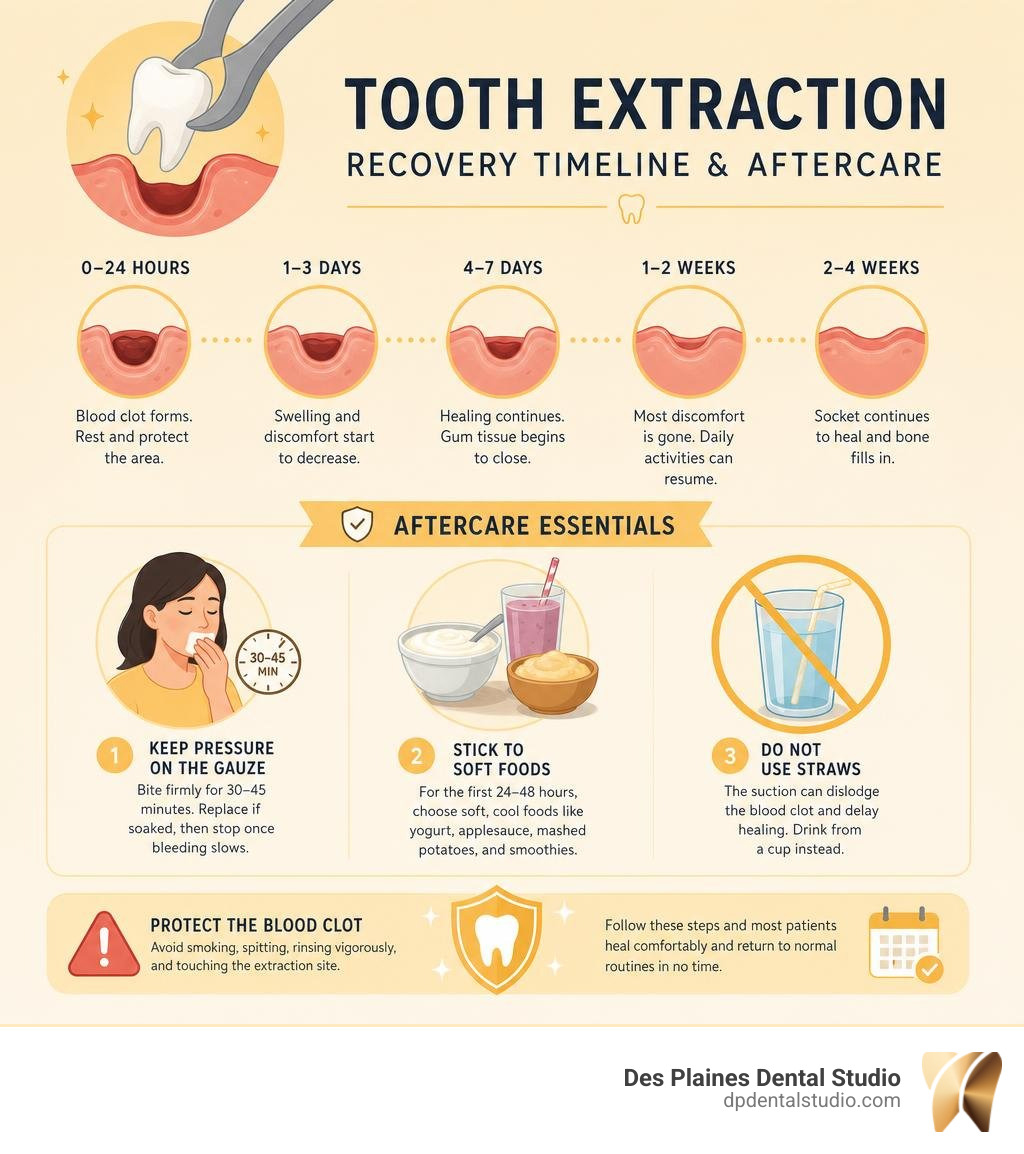
To ensure a smooth, rapid recovery, follow these essential steps:
- Keep Pressure on the Gauze: Bite down firmly on the gauze pad placed over the wound for at least 30 to 45 minutes after leaving the office. Replace the gauze if it becomes soaked, but stop using it once active bleeding slows to a light ooze.
- Stick to Soft Foods: For the first 24 to 48 hours, eat only soft, cool foods like yogurt, applesauce, mashed potatoes, and smoothies. Avoid hot liquids, spicy dishes, and crunchy foods that could irritate the wound.
- Do Not Use Straws: The suction created when drinking through a straw can easily pull the blood clot out of the socket. Drink directly from a cup instead.
- Avoid Smoking and Alcohol: Tobacco smoke contains chemicals that delay healing and increase your risk of infection, while alcohol can interfere with prescribed pain medications.
- Keep Your Head Elevated: Use an extra pillow to prop your head up when sleeping or resting to reduce swelling and throbbing.
Frequently Asked Questions about Cheap Tooth Extractions
Are there age or residency restrictions for low-cost dental clinics?
Yes, some public clinics have specific eligibility mandates. While Federally Qualified Health Centers (FQHCs) must treat patients regardless of residency or income, some local county-funded clinics or volunteer-run non-profits require proof that you live within a specific county or zip code. Additionally, some charitable programs focus exclusively on pediatric dental care or senior citizens, so always call ahead to confirm their patient criteria.
What should I do if I cannot afford any payment for an extraction?
If you have zero income and cannot pay anything, look for local “Missions of Mercy” (MOM) events or free dental days hosted by local dental societies. Many communities also have faith-based charity clinics that provide completely free emergency extractions to those in extreme financial hardship. Alternatively, seek out a hospital dental residency program, which may offer emergency charity care vouchers.
Is a cheap tooth extraction safe and high-quality?
Absolutely. A lower price tag does not mean lower clinical standards. Whether you receive care at a sliding-scale community health center, a university dental school, or a private practice, your treatment is performed by licensed professionals (or students under direct professional supervision) who must adhere to strict state safety, sterilization, and hygiene regulations.
Conclusion
A damaged or infected tooth shouldn’t be ignored because of financial stress. Delaying an extraction only allows infections to grow, turning a simple, inexpensive procedure into a complex, costly medical emergency. From community sliding-scale clinics and local dental schools to flexible financing plans, there are numerous paths to getting the relief you deserve without breaking the bank.
At Des Plaines Dental Studio, we believe that high-quality, compassionate oral care should be accessible to everyone in our community. We focus on patient-centered care, offering robust insurance support, flexible payment options, and a warm, welcoming environment designed to make your experience completely painless.
If you are ready to get rid of tooth pain and restore your peace of mind, schedule an appointment with the best dentist in Des Plaines, IL today. We are here to help you smile again — comfortably and affordably!