



In Des Plaines, gum disease is one of the most common reasons adults lose teeth — and most cases start out mild. Bleeding gums, puffy tissue, or a warning at your last exam are signs the problem has moved below the gumline. This page covers early-stage, non-surgical gum disease treatment: what it includes, who needs it, and what to expect at each step. Most early cases are treated right in our office without surgery, and you’ll see results improve over several weeks. At Des Plaines Dental Studio, we find gum disease early and treat it before it reaches the point where more invasive care becomes the only option.

Gum disease rarely hurts in its early stages. Most patients in Des Plaines notice bleeding when they brush, gums that look puffy or darker than usual, or bad breath that doesn’t go away after brushing. Others have no symptoms at all — the problem shows up only when we measure pocket depth at a routine exam.
Early gum disease falls into two stages: gingivitis, which affects only the gum tissue, and mild periodontitis, which begins to affect the bone underneath. Both are treatable without surgery when caught at this point. Waiting until the gums recede or teeth feel loose means the damage is already done.
Many Des Plaines patients go months between dental visits. By the time symptoms appear, plaque has often hardened into tartar below the gumline — the kind a standard cleaning can’t touch. That’s the point where non-surgical treatment becomes the right call.


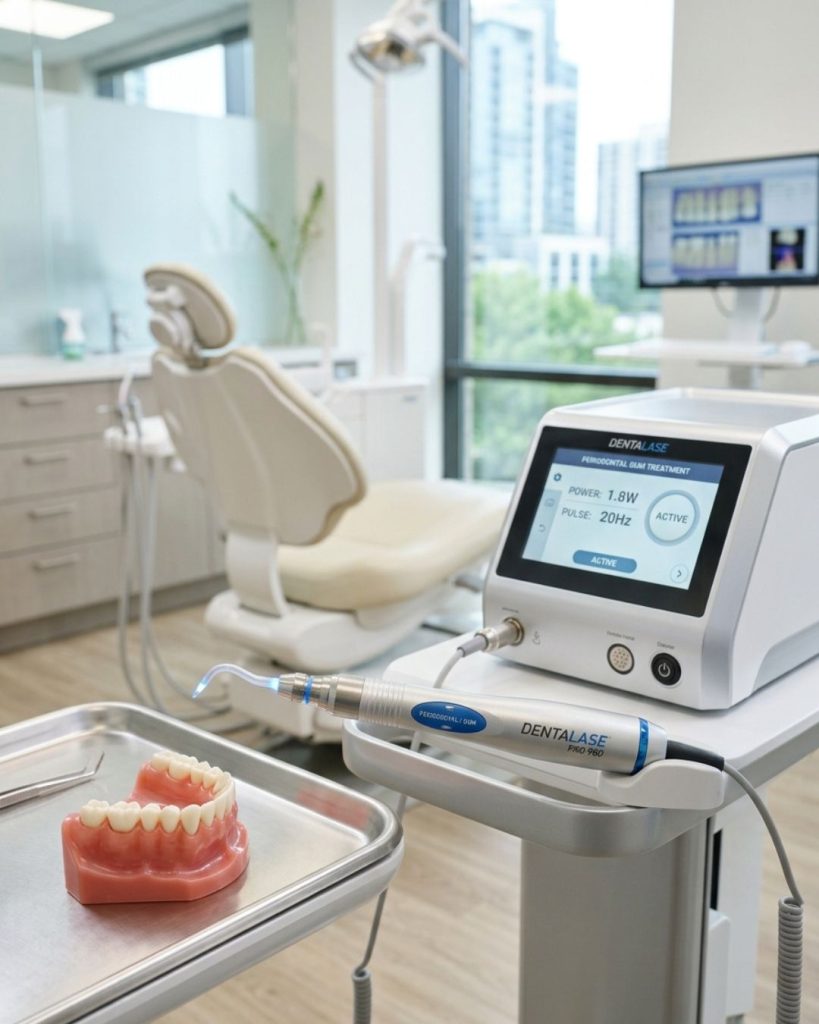
We start with a probing exam. A small instrument measures the space between your gum and each tooth at multiple points. Healthy pockets measure 1 to 3 mm. Anything at 4 mm or deeper — especially with bleeding or bone changes on your X-rays — tells us gum disease is active.
We walk you through those numbers before we recommend anything. Treatment is based on what we measure, not on assumptions. Some patients need scaling and root planing across the full mouth. Others need it in only a few areas. Some cases also call for antibiotic therapy in addition to cleaning.
We handle early-stage cases entirely at our Des Plaines office. The right plan depends on your pocket depths, how much tartar has built up, and how your gums respond to the initial cleaning. You won’t be sent elsewhere for care that we can provide here.
Scaling and root planing is the primary treatment for early gum disease. We numb the area with local anesthesia, then use small instruments to remove tartar from below the gumline and smooth the root surface so bacteria can’t reattach. You’ll feel pressure but not sharp pain. If you do, tell us — we add more anesthesia before continuing.
For pockets that stay deep after cleaning, we may place an antibiotic gel directly into the pocket. The gel releases medication over several days and targets bacteria the cleaning alone may not fully clear.
Most patients in Des Plaines complete treatment in one to two visits. We split treatment by quadrant or half-mouth when that keeps each appointment manageable. No specialist referral is needed for early-stage cases.
The first signs show up at home. Within four to six weeks, your gums should bleed less when you brush, look pinker, and feel firmer around your teeth. Sensitivity may increase briefly right after treatment — that’s normal as the tissue heals and tightens.
At Des Plaines Dental Studio, we schedule a follow-up probing exam six to eight weeks after your last treatment visit. We remeasure every pocket and compare the numbers to your baseline. A pocket that measured 6 mm before treatment and now measures 3 mm is healing the way it should.
We document those before-and-after measurements so you can see the change clearly. If any area hasn’t responded the way we expected, we address it at that visit before it progresses further.
Once gum disease has been active, standard twice-yearly cleanings are not enough to keep it under control. We put you on a periodontal maintenance schedule — visits every three to four months — to stop bacteria from rebuilding below the gumline before it causes damage again.
At each maintenance visit, we re-probe your pockets, clean below the gumline, and check for any areas that need closer attention. What you do at home matters just as much. Brushing along the gumline twice a day and flossing daily removes the soft plaque before it hardens into tartar between visits.
We see maintenance patients right here at our Des Plaines office. You won’t need to switch providers or start over with someone new. Staying on schedule — in the chair and at home — is how you protect the results of your treatment long-term.
If your pockets don’t improve after scaling and root planing, we talk through the next steps at your follow-up exam. That conversation may include a referral to a periodontist for surgical evaluation. Most early-stage cases do resolve with non-surgical care — that’s why catching it early matters.
A regular cleaning removes plaque and tartar from tooth surfaces above the gumline. Gum disease treatment works below it — cleaning the root surfaces where bacteria cause damage to your gum tissue and bone. The two procedures address different problems.
