



In Des Plaines, “deep cleaning” is one of the most searched dental terms — and one of the most misunderstood. Some patients think it’s just a more thorough version of their regular cleaning. It isn’t. This page covers what deep teeth cleaning actually is, how it differs from a standard cleaning, who needs it, and what the process looks like at our office. Most patients complete treatment in one to two visits, though some need follow-up care depending on how far the gum disease has progressed. At Des Plaines Dental Studio, we use deep cleaning to stop gum disease before it costs you teeth.

A regular cleaning removes plaque and tartar from the surfaces of your teeth above the gumline. It’s a maintenance procedure for healthy gums. A deep teeth cleaning works below the gumline — on the root surfaces inside the pockets where gum disease actually starts and spreads.
The clinical name for deep cleaning is scaling and root planing. Scaling removes hardened tartar from root surfaces that standard cleaning instruments can’t reach. Root planing smooths those surfaces so bacteria can’t reattach and the gum tissue can begin to heal.
Many patients in Des Plaines come to us having been told by another office that they need a deep cleaning — but no one explained why. We walk you through your pocket measurements before we recommend anything, so you understand exactly what’s happening in your mouth and why deep cleaning is the right response.


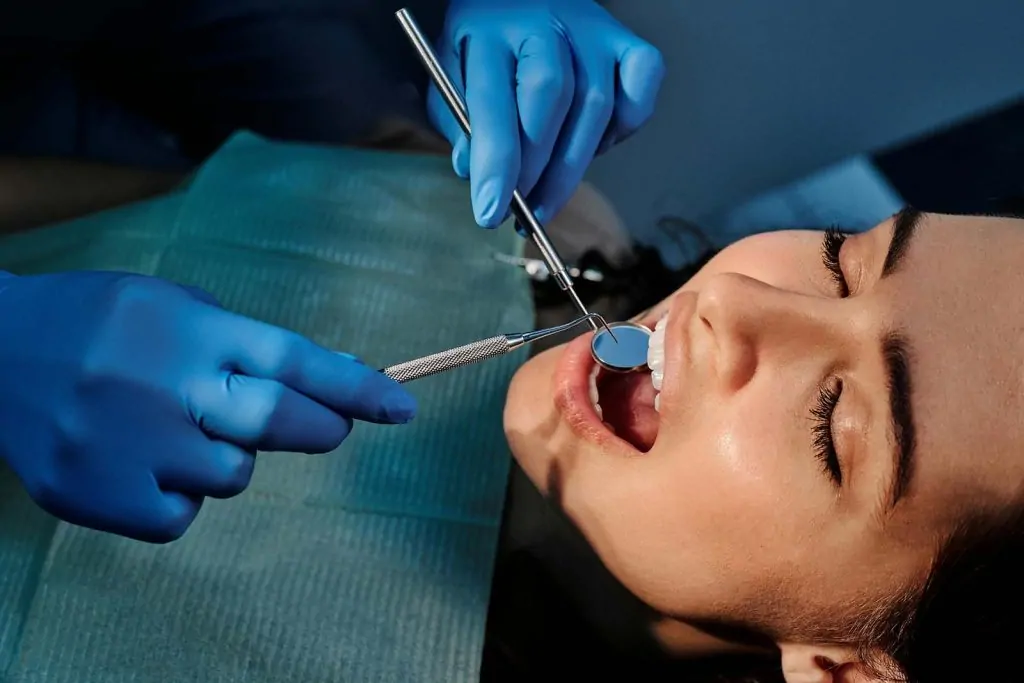
The decision comes down to one measurement: pocket depth. We use a small probe to measure the space between your gum and each tooth. Healthy pockets measure 1 to 3 mm. When pockets reach 4 mm or deeper — especially with tartar buildup, bleeding, or bone changes on X-rays — deep cleaning is the appropriate treatment.
Common signs that bring Des Plaines patients in for this conversation include bleeding when brushing, gums that look puffy or have pulled away from the teeth, chronic bad breath, and sensitivity that wasn’t there before. Some patients have no symptoms at all and are flagged only at a routine exam.
Patients who have gone a year or more without a cleaning often arrive with significant tartar buildup below the gumline. A standard cleaning won’t touch it. The longer that buildup sits on the root surface, the more damage it does to the surrounding bone and tissue. Deep cleaning stops that process.
We start by numbing the area with local anesthesia. You’ll feel pressure as we work — that’s normal. Sharp pain is not. If you feel it at any point, tell us and we’ll add more anesthesia before continuing.
The procedure has two steps:
We complete most deep cleanings at our Des Plaines office in one to two visits. When the full mouth needs treatment, we typically split it into sections — upper and lower, or left and right — so each appointment stays focused and thorough. There’s no need for a specialist referral for most cases we see.
Some soreness, sensitivity, and minor bleeding in the days after treatment is expected. It usually peaks in the first 24 to 48 hours and settles within two to five days. Over-the-counter pain relief handles most of the discomfort. Stick to soft foods on the day of your appointment and avoid very hot or cold drinks while sensitivity is high.
Your gums won’t look or feel completely normal right away. As the tissue heals and tightens around the root surface, you may notice your teeth look slightly longer — that’s the swelling going down, not the gums receding further.
At Des Plaines Dental Studio, we schedule a follow-up probing exam six to eight weeks after your deep cleaning. We remeasure every pocket and compare the numbers to your baseline. That exam tells us whether your gums have responded well or whether any areas need additional attention before we move you to a maintenance schedule.
Deep cleaning is not a one-time fix. It’s the starting point for managing gum disease — not the finish line. Once you’ve had active gum disease, the standard twice-yearly cleaning schedule is no longer enough to keep it under control.
After deep cleaning, we move patients to a periodontal maintenance schedule — visits every three to four months. At each visit we clean below the gumline, re-probe your pockets, and catch any areas that are beginning to backslide before they require treatment again. Consistent home care between visits matters just as much. Brushing along the gumline twice a day and flossing daily removes soft plaque before it hardens into tartar.
We provide all of this at Des Plaines Dental Studio. You won’t need to move to a different provider to stay on a maintenance plan. Keeping one office across deep cleaning and long-term gum care means we already know your history, your measurements, and what to watch for at every visit.
A deep teeth cleaning is also called scaling and root planing. The American Dental Association explains the procedure on MouthHealthy.org.
We use local anesthesia throughout the procedure, so you should feel pressure but not sharp pain. If you do feel sharp pain at any point, let us know immediately — we add more anesthesia before continuing. Mild soreness for two to five days after the appointment is normal.
Deep cleaning is not a routine procedure. We prescribe it when pocket measurements show active gum disease — pockets at 4 mm or deeper. After treatment, most patients move to periodontal maintenance visits every three to four months, which prevents the need for repeat deep cleaning in most cases.
