


Emergency Tooth Extractions and Where to Find Cheap Teeth Pulling Near You
When Tooth Pain Strikes: How to Find Cheap Teeth Pulling Near You
If you’re searching for cheap teeth pulling near me, here’s what you need to know right now:
Quick Answer: What Does a Tooth Extraction Cost?
| Extraction Type | Average Cost (Without Insurance) |
|---|---|
| Simple extraction | $150 – $300 |
| Surgical extraction | $250 – $500+ |
| Impacted wisdom tooth | $350 – $600+ |
- Many clinics offer flat-rate, all-inclusive pricing that covers the x-ray, exam, anesthetic, and extraction
- Same-day appointments are widely available at low-cost and emergency dental clinics
- Payment plans and third-party financing are common — often with near-universal approval rates
- Going to the ER for tooth pain costs far more than seeing an emergency dentist
Tooth pain doesn’t wait for a convenient time. It hits on a Saturday night, before a big week at work, or right when your dental insurance has lapsed. For millions of Americans without coverage — or with plans that barely cover the basics — the cost of getting a tooth pulled can feel out of reach.
But it doesn’t have to be.
Affordable extractions exist in most areas. You just need to know where to look, what questions to ask, and how to avoid hidden fees that turn a “$299 extraction” into a much bigger bill.
In fact, 99% of dental-related emergency room trips could have been handled by an emergency dental office for a fraction of the cost — yet people keep showing up at ERs because they don’t know their options.
This guide walks you through everything: real costs, where to find low-cost providers near you, what’s included in a flat-rate fee, and exactly what happens during and after the procedure.
I’m Dr. Marta Milejczyk, and I’ve been providing dental care in Chicago’s northwest suburbs since 1997, including oral surgery, emergency dentistry, and working with patients who need practical, affordable solutions for cheap teeth pulling near me. My training in oral and maxillofacial surgery, anesthesiology, and emergency dentistry gives me a grounded perspective on both the clinical and financial sides of tooth extractions — which is exactly what I’ll share with you here.
Similar topics to cheap teeth pulling near me:
Understanding the Cost of a Tooth Extraction Without Insurance
When you are dealing with a throbbing toothache, the financial anxiety can sometimes hurt worse than the physical pain. Understanding how dental fees are structured is the first step toward regaining control. If you do not have dental insurance, the out-of-pocket cost for a tooth extraction can vary wildly depending on where you go, which tooth needs to come out, and how complex the procedure is.
To put this into perspective, about 72% of Americans have some type of restorative dental work, and 23% of all dental emergencies are directly related to these existing restorations failing. When a crown breaks, a root canal fails, or a deep cavity reaches the nerve, an extraction often becomes the most practical and cost-effective option to eliminate pain.
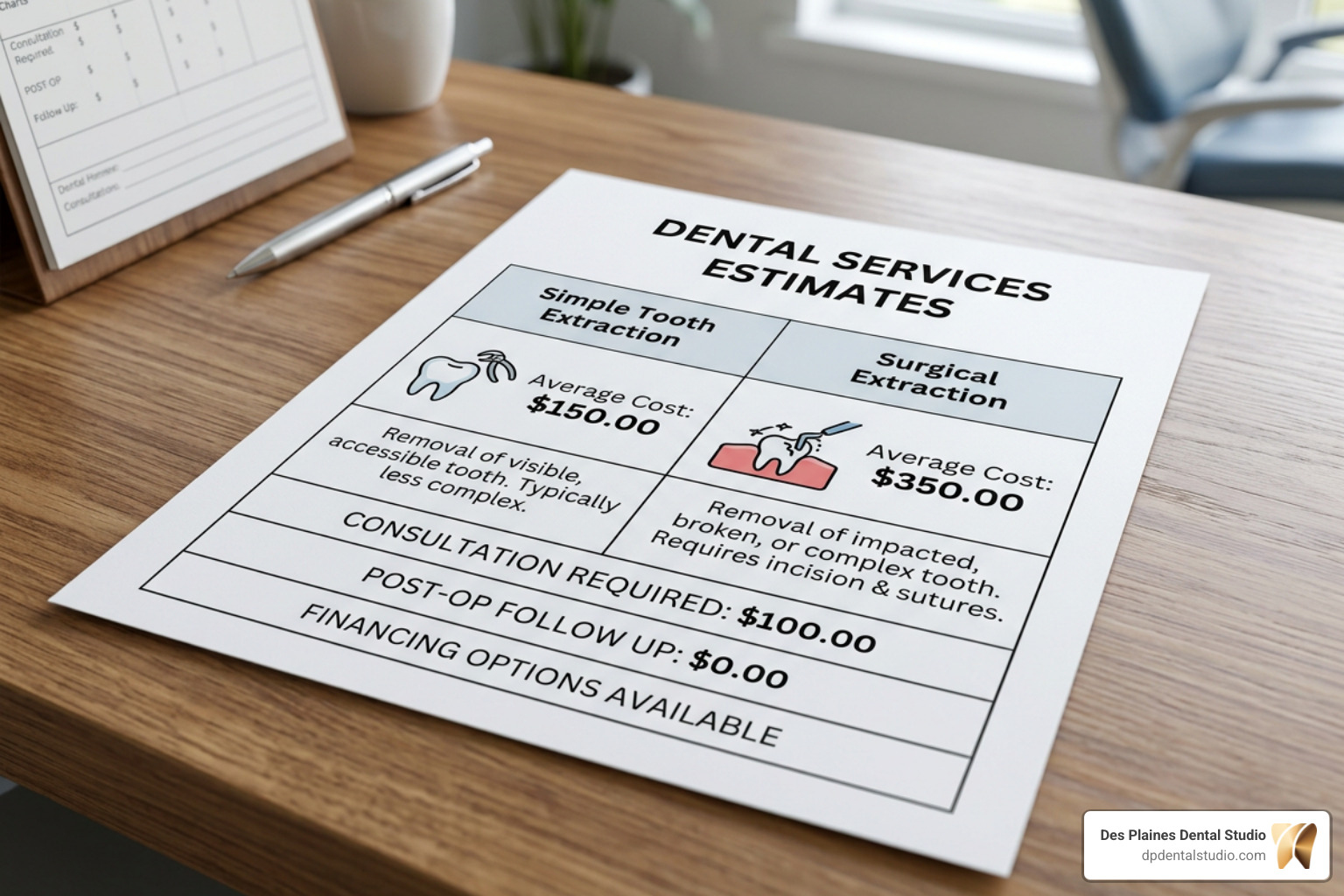
The cost of an extraction is generally divided into two main categories: simple extractions and surgical extractions. Here is a baseline breakdown of what you can expect to pay on average:
| Extraction Type | What It Involves | Average Cost Range |
|---|---|---|
| Simple Extraction | Removing a visible tooth under local anesthetic using basic hand instruments. | $150 – $300 |
| Surgical Extraction | Removing a tooth that has broken off at the gumline or is partially trapped. Requires a small incision. | $250 – $500 |
| Impacted Wisdom Tooth | Surgical removal of a wisdom tooth completely covered by bone or gum tissue. | $350 – $600+ |
If you are looking for local care in the Des Plaines area and want to compare your options, you can read our detailed guide on Affordable Tooth Pulling: Where to Find Cheap Extractions Nearby to see how local pricing structures compare.
What is the Average Cost of Cheap Teeth Pulling Near Me?
When searching for the most affordable options, many patients look for clinics that offer flat-rate fees. In the dental industry, some specialized extraction-only clinics offer flat rates ranging from $250 to $299 per tooth for standard extractions, and around $350 to $399 for wisdom teeth.
These flat-rate models are highly appealing because they remove the guesswork. However, the national average for a standard simple extraction at a traditional dental office without insurance typically hovers around $179 to $250 per tooth.
If you do have dental insurance, your out-of-pocket costs will depend on your deductible and co-pay structure. Most PPO plans cover 50% to 80% of basic extractions, which can bring your direct cost down to under $100. If you are uninsured, finding a clinic that offers transparent, upfront pricing is crucial. You can learn more about our simple, compassionate approach to Extractions to see how we help keep these essential treatments accessible.
Hidden Fees and Additional Costs to Watch For
The headline price of an extraction is not always the final amount you will pay. When clinics advertise a low-cost extraction, it is vital to ask if that fee is truly all-inclusive. A reputable office will be upfront about the total cost, but some low-cost providers may charge separately for the essential steps surrounding the procedure.
Here are the most common “add-ons” that can inflate your final bill:
- Diagnostic Exams: A dentist cannot legally pull a tooth without evaluating it first. A limited emergency exam can cost anywhere from $50 to $150.
- X-rays: A single localized x-ray or a comprehensive panoramic x-ray is required to see the tooth’s root structure and surrounding bone. Panoramic x-rays typically range from $100 to $200.
- Anesthetic and Sedation: Local numbing anesthetic is almost always included in the base price. However, if you have dental anxiety and require nitrous oxide (laughing gas) or IV deep sedation, this will add $100 to $400+ to your bill.
- Post-Operative Care and Follow-up: Ensure that any necessary follow-up visits to check on your healing are included in the initial fee.
Always ask the clinic: “Does this price include the exam, the x-ray, the local numbing, and the follow-up care?”
How to Find Cheap Teeth Pulling Near Me
Finding a reliable and affordable dentist in Illinois does not have to be an overwhelming chore. If you are uninsured or on a tight budget, there are several avenues you can explore to find safe, low-cost care:
- Local Private Practices with In-House Plans: Many local family dental practices offer in-house membership plans or sliding scale fees for cash-paying patients. These plans often provide significant discounts on emergency treatments like extractions.
- Dental Schools: Dental schools and dental hygiene programs offer high-quality care supervised by licensed clinical faculty at a fraction of the cost of traditional private clinics.
- Public Health and State Programs: For residents of Illinois, the Illinois Department of Healthcare and Family Services Dental Program provides essential dental resources and coverage options for qualifying individuals and families.
- Community Health Centers: Federally Qualified Health Centers (FQHCs) receive government funding to provide dental services in underserved areas, often charging patients based on a sliding scale tied to household income.
How Can I Safely Choose Cheap Teeth Pulling Near Me?
When you are in pain, it is tempting to book an appointment with the first clinic that quotes you the lowest price. However, your safety and long-term oral health should never be compromised. Cheap dental work is only a bargain if it is done correctly.
To find a reputable, high-quality provider in your area, consider these steps:
- Check Clinical Credentials: Ensure the dentist is fully licensed in the state of Illinois and has experience in oral surgery and emergency care.
- Read Patient Reviews: Look for reviews that specifically mention emergency visits, extractions, and how the staff handles anxious patients.
- Look for Local Resources: If you are in the Des Plaines area, look for established community dental clinics, local health departments, or dental societies that can provide lists of licensed, reputable providers to compare patient experiences and safety standards.
Payment Options and Financing for Low-Cost Extractions
Even with low-cost options, paying several hundred dollars upfront can be difficult. Fortunately, modern dental offices offer flexible payment methods to ease the financial burden:
- Third-Party Financing: Programs like CareCredit or Proceed Finance allow you to split the cost of your treatment into manageable monthly payments. Across major national dental networks, approximately 99% of patients who apply for third-party financing for emergency extractions are approved.
- In-House Payment Plans: Some offices allow you to pay a portion of the cost on the day of treatment and split the remaining balance over the next few months.
- Cash Discounts: Many clinics offer a 5% to 10% discount if you pay the full amount in cash on the day of your procedure.
Same-Day and Emergency Tooth Extractions
When a tooth is severely fractured, infected, or causing excruciating pain, you cannot wait weeks for an appointment. Dental emergencies require rapid intervention to prevent the spread of infection to other parts of your body.
If you are experiencing swelling in your jaw, a fever, or pain that keeps you awake at night, you need to find an emergency dentist immediately. You can search for local urgent providers using our resources for an Emergency Dentist Near Me or find immediate relief through Urgent Dental Care Near Me.
Many emergency dental clinics offer streamlined, single-visit extraction models to help patients get out of pain quickly and safely. When looking for urgent care, prioritize offices that offer same-day appointments and transparent pricing.
Avoiding the Emergency Room for Dental Work
One of the most common mistakes patients make during a dental emergency is heading straight to a hospital emergency room. While the ER is the right place for a broken jaw or a life-threatening airway blockage, they are generally not equipped to handle dental procedures.
Here is why you should avoid the ER for a standard toothache:
- No Dental Treatment: ER doctors are medical doctors, not dentists. They cannot pull your tooth or fix a cavity. Typically, they can only write you a prescription for antibiotics or painkillers and refer you to a local dentist.
- Massive Medical Bills: An ER visit can easily cost thousands of dollars, whereas an emergency dental visit is a fraction of that cost.
- Preventable Visits: Statistically, 99% of dental-related emergency room trips could have been handled by an emergency dental office for a fraction of the cost. Furthermore, 88% of all emergency dental visits could have been prevented entirely by routine care.
For a deeper look at why hospital emergency rooms are not the ideal choice for tooth pain, read our guide on Why You Should Avoid the Emergency Room for Dental Work.
What to Expect During and After Your Extraction Visit
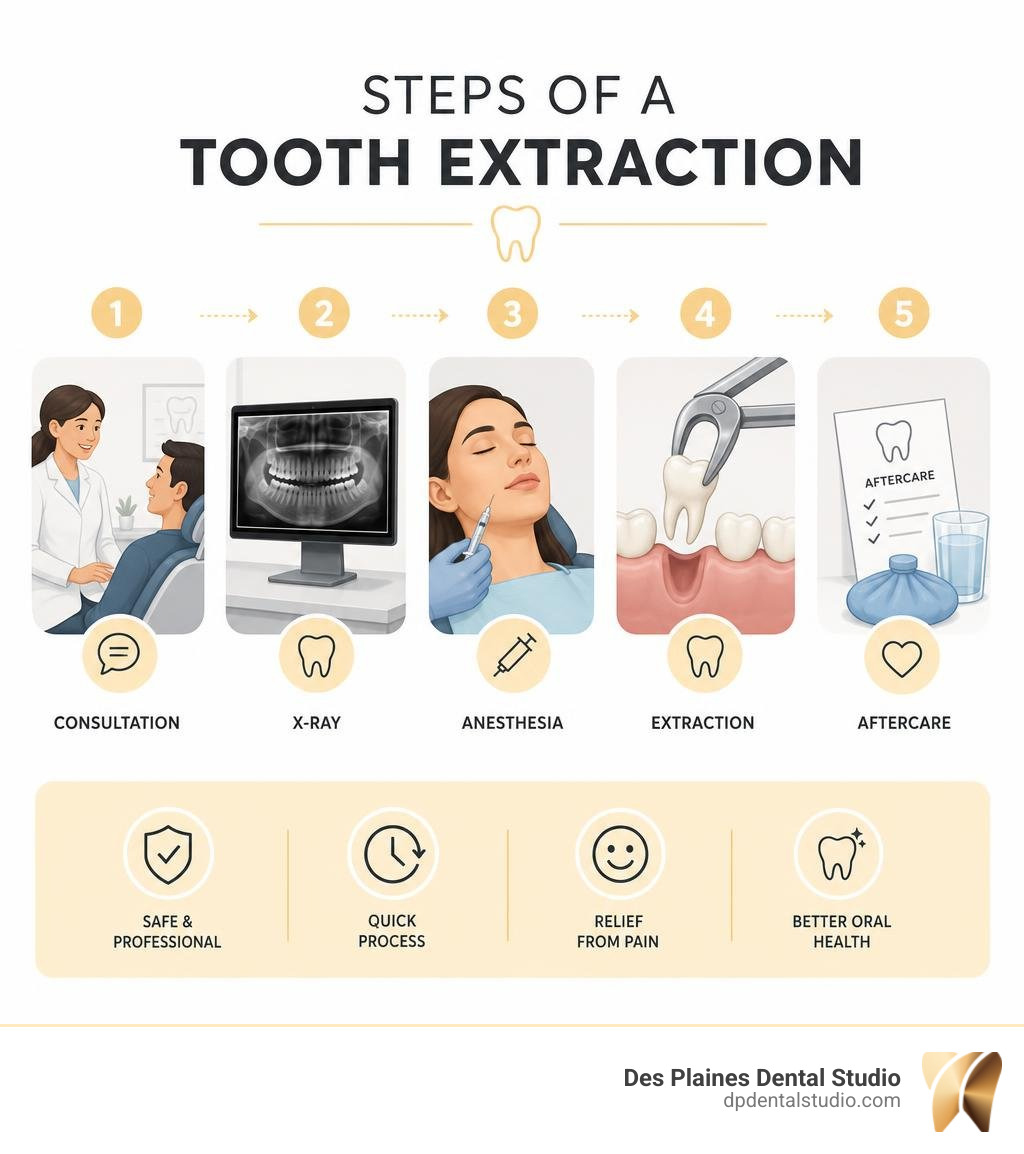
Knowing what to expect during your appointment can significantly reduce your anxiety. A standard, modern tooth extraction is highly streamlined and focused on patient comfort:
- The Assessment: The dentist will take a digital x-ray of the affected tooth to evaluate the root structure and the surrounding bone.
- Numbing the Area: The dentist will apply a topical numbing gel to your gums, followed by a local anesthetic injection. You will feel a slight pinch, but within minutes, the entire area will be completely numb.
- The Extraction: Using specialized instruments called elevators and forceps, the dentist will gently wiggle the tooth to loosen it from its socket. You will feel some pressure during this step, but you should not feel any sharp pain.
- Cleaning and Gauze: Once the tooth is removed, the socket is thoroughly cleaned, and a sterile gauze pad is placed over the site. You will be asked to bite down firmly on the gauze to help a blood clot form, which is essential for proper healing.
Your Post-Extraction Aftercare Guide
The way you care for your mouth over the next 24 to 48 hours dictates how quickly and comfortably you heal. To avoid complications like dry socket (where the protective blood clot is dislodged), follow these essential tips:
- Bite on the Gauze: Keep firm pressure on the gauze pad for at least 30 to 45 minutes after leaving the office.
- Avoid Straws and Smoking: The suction created by smoking, vaping, or drinking through a straw can easily dislodge the blood clot, leading to an extremely painful dry socket.
- Keep Your Head Elevated: When resting, use extra pillows to keep your head elevated. This helps reduce swelling and bleeding.
- Use Ice Packs: Apply an ice pack to the outside of your cheek for 10 minutes on, 10 minutes off, during the first 24 hours to minimize swelling.
- Stick to Soft Foods: Eat soft, cool foods like yogurt, applesauce, mashed potatoes, and smoothies (eaten with a spoon, not a straw!).
- Maintain Gentle Hygiene: Do not brush directly over the extraction site for the first 24 hours. Afterward, gently rinse with warm salt water to keep the area clean.
Frequently Asked Questions About Affordable Extractions
How quickly can I get a same-day extraction appointment?
Most emergency dental clinics reserve dedicated blocks of time in their daily schedules specifically for same-day emergency walk-ins and urgent appointments. If you call first thing in the morning, there is an excellent chance you can be seen, diagnosed, and treated on the very same day.
Do low-cost extraction clinics accept dental insurance?
Yes, many affordable dental providers accept a wide variety of PPO dental insurance plans. Even if a clinic is out-of-network for your specific plan, they will often work with you to submit claims and minimize your out-of-pocket costs. If you are uninsured, always ask about cash discounts or flexible payment plans.
What should I eat during my extraction recovery?
For the first 24 to 48 hours, stick to soft, cool, or room-temperature foods. Excellent options include:
- Yogurt and pudding
- Mashed potatoes (not boiling hot)
- Applesauce and smoothies (no straws)
- Lukewarm broths and soups
- Scrambled eggs
Avoid hard, crunchy, spicy, or sticky foods, as well as tiny grains or seeds that could easily get trapped in the healing socket.
Conclusion
A painful, damaged tooth should never be ignored due to fear of the cost. At Des Plaines Dental Studio, we believe that everyone deserves access to high-quality, compassionate, and affordable dental care. We specialize in providing patient-centered care with full insurance support, flexible payment plans, and a welcoming, virtually pain-free experience.
If you are currently dealing with a dental emergency or searching for cheap teeth pulling near me in the Des Plaines, IL area, please do not wait for the pain to worsen. Contact us today to Book an Appointment and let our expert team get you back to smiling comfortably.
To learn more about why we are trusted by families throughout our community, check out our guide on the best dentist in Des Plaines, IL.