


How to Avoid Root Canal Pain and Keep Your Smile Bright
Root Canal Pain Is More Manageable Than You Think
Knowing how to avoid root canal pain – before, during, and after the procedure – can make the entire experience far less stressful than you expect.
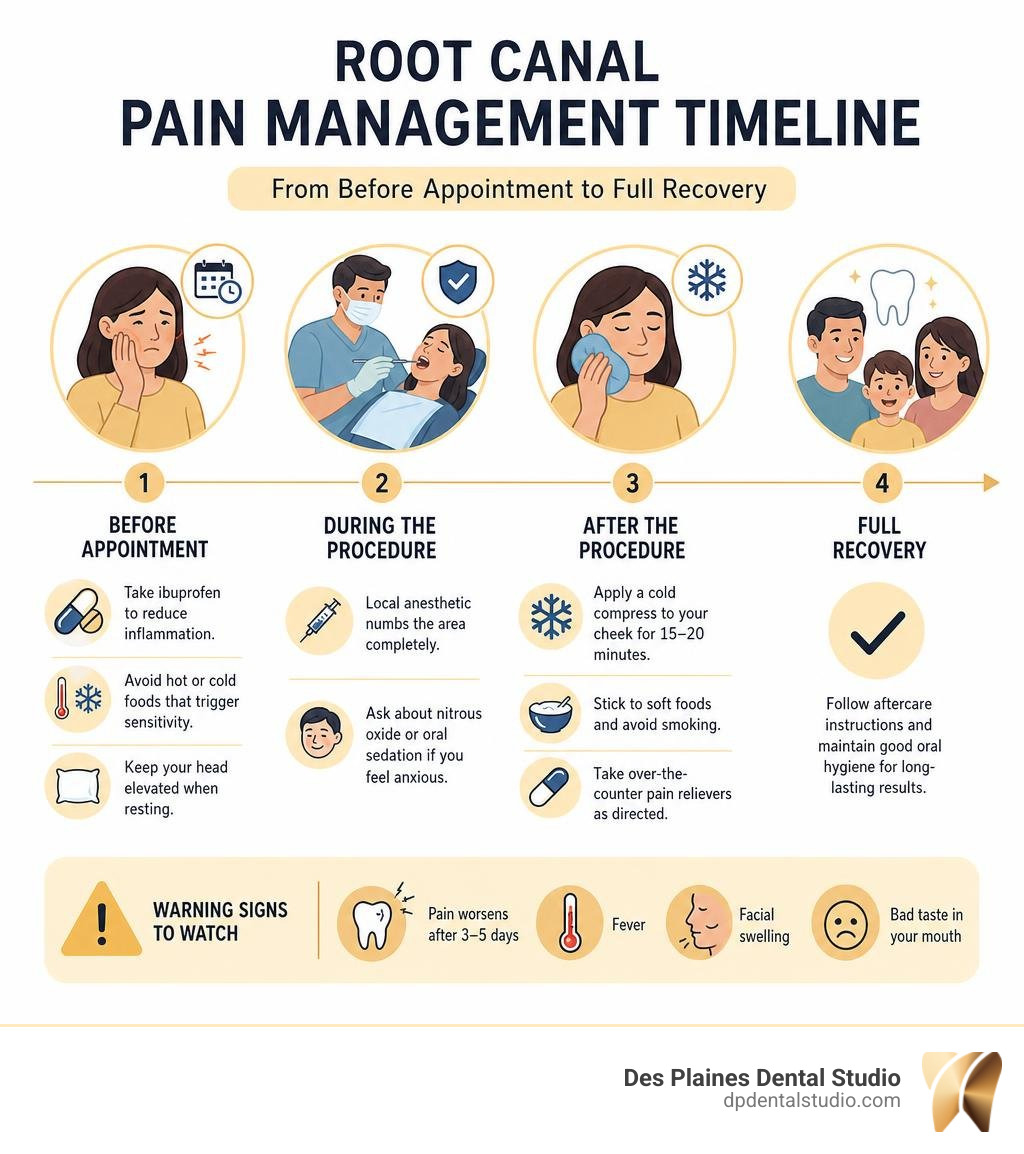
Here is a quick overview of the most effective ways to minimize discomfort at every stage:
- Before your appointment – Take ibuprofen (600-800 mg) to reduce inflammation, avoid hot or cold foods that trigger nerve pain, and keep your head elevated when resting.
- During the procedure – Modern local anesthetics like lidocaine numb the area completely. Ask about nitrous oxide or oral sedation if you feel anxious.
- After the procedure – Apply a cold compress to your cheek for 15-20 minutes at a time, stick to soft foods, avoid smoking, and take OTC pain relievers as directed.
- Warning signs to watch – Contact your dentist if pain worsens after 3-5 days, or if you develop a fever, facial swelling, or a bad taste in your mouth.
The good news? Research shows that thanks to modern anesthesia, most root canals are no more painful than getting a standard filling. The discomfort patients fear most often comes from the infection itself – not the treatment. The American Association of Endodontists also explains that root canal treatment is designed to relieve pain and save the natural tooth.
I’m Dr. Marta Milejczyk, and with decades of clinical experience in restorative and emergency dentistry – including advanced endodontic training through my General Practice Residency at Loyola University Medical Center – helping patients understand how to avoid root canal pain is something I care deeply about. In the sections below, I’ll walk you through everything you need to know, step by step.
How to Avoid Root Canal Pain: What Causes the Discomfort?
To truly understand how to prevent root canal pain, we must first look at why teeth hurt in the first place. Your tooth is not just a solid block of calcium; it is a complex, living structure. Beneath the hard outer enamel and the supportive dentin layer lies a soft inner chamber known as the dental pulp. This pulp contains highly sensitive nerves, connective tissues, and blood vessels.
When deep tooth decay, physical trauma, or structural cracks penetrate these outer defense layers, bacteria gain access to the pulp chamber. This leads to a condition called pulpitis (inflammation of the dental pulp).
In its early stages, pulpitis may be reversible. However, if left untreated, the inflammation becomes irreversible. Because the pulp is housed inside a rigid, unyielding chamber of dentin, it cannot swell to accommodate the increased blood flow of inflammation. This creates intense, localized pressure—similar to swelling inside a tiny, closed room with no exit. This pressure is what causes the classic, agonizing throbbing toothache.
If the infection continues to progress, the pulp tissue eventually dies (necrosis), and the bacteria travel down the root canals to the tip of the root. This leads to acute apical periodontitis, which is inflammation of the periodontal ligament and surrounding jawbone. At this stage, even biting down lightly on the tooth can trigger sharp, radiating pain.
If you are experiencing persistent sensitivity or a throbbing ache, it is essential to determine the root cause. You can read more about identifying these symptoms in our guide: Do I Need a Root Canal?.
How to Avoid Root Canal Pain Before Your Appointment
If you have already scheduled your endodontic treatment but have to wait a couple of days for your appointment, managing your discomfort at home is your top priority. Here are the most effective, clinically backed strategies to keep the pain under control:
- Use Over-the-Counter NSAIDs Wisely: Non-steroidal anti-inflammatory drugs (NSAIDs) like ibuprofen are highly effective for dental pain because they target the chemical pathways (prostaglandins) that cause tissue inflammation. Taking 600 mg to 800 mg of ibuprofen every six to eight hours with food can significantly reduce the throbbing pressure inside the tooth.
- Keep Your Head Elevated: When you lie completely flat, blood pressure in your head increases. This directly intensifies the throbbing pressure inside an inflamed tooth. When resting or sleeping, prop your head up with an extra pillow or two to keep your head elevated above your heart.
- Avoid Temperature and Dietary Triggers: Because the tooth’s nerves are highly exposed and sensitive, avoid extremely hot, ice-cold, sweet, or highly acidic foods and beverages. Brush your teeth with lukewarm water instead of cold water to avoid triggering a sharp nerve reaction.
- Never Place Aspirin Directly on Your Gums: A common but dangerous myth is that placing an aspirin tablet directly against a hurting tooth or gum will relieve the pain. Aspirin is acetylsalicylic acid. When left on the soft tissues of your mouth, it causes severe chemical burns—often leaving a painful, raw white patch of damaged tissue. Always swallow oral pain relievers as directed; never apply them topically to your gums.
Taking these proactive steps can help you stay comfortable and prevent the infection from worsening before you sit in the dental chair. If you have any questions about what to do or avoid before your visit, don’t hesitate to contact our office for guidance.
How to Avoid Root Canal Pain During the Procedure
One of the most persistent dental myths is that the root canal procedure itself is excruciatingly painful. In reality, modern endodontic therapy is designed to eliminate your pain, not cause it. Thanks to highly sophisticated local anesthetics and advanced clinical techniques, the actual treatment is remarkably comfortable.
When you sit in the dental chair, the first step is completely numbing the affected tooth and the surrounding tissues. We use powerful local anesthetics, such as lidocaine or articaine, to temporarily block the pain pathways. Once the anesthetic takes effect, you will only feel light pressure and vibration during the procedure—very similar to what you would experience during a routine dental filling.
For many patients, the source of discomfort is not physical pain, but rather dental anxiety. Fear can lower your pain threshold and make you highly sensitive to every sensation. To help you feel completely at ease, we offer customized relaxation options. You can learn more about our gentle, patient-centered approach in our guide to Root Canals Without Fear.
If you need an extra layer of comfort, we also provide Sedation Dentistry for Adults, which includes options like nitrous oxide (laughing gas) or oral sedatives to keep you calm and relaxed throughout your visit. Understanding the roots of dental fear can go a long way in helping you overcome it; read more about this in 60016 Dentist The Truth About Dental Anxiety.
Advanced Anesthetic Techniques for Complete Numbing
Sometimes, patients worry that their tooth “won’t numb properly.” This is a valid concern, as teeth with severe, active infections (irreversible pulpitis) can sometimes be highly resistant to standard numbing injections.
The scientific reason behind this involves the local tissue chemistry. Active inflammation lowers the pH of the surrounding tissues, making it harder for local anesthetics to penetrate the nerve membrane. Additionally, inflammation activates specialized, tetrodotoxin-resistant (TTX-resistant) sodium channels on the nerve fibers, making them highly stubborn.
Fortunately, we utilize highly specialized, advanced anesthetic protocols to ensure complete, profound numbing even in the most difficult cases:
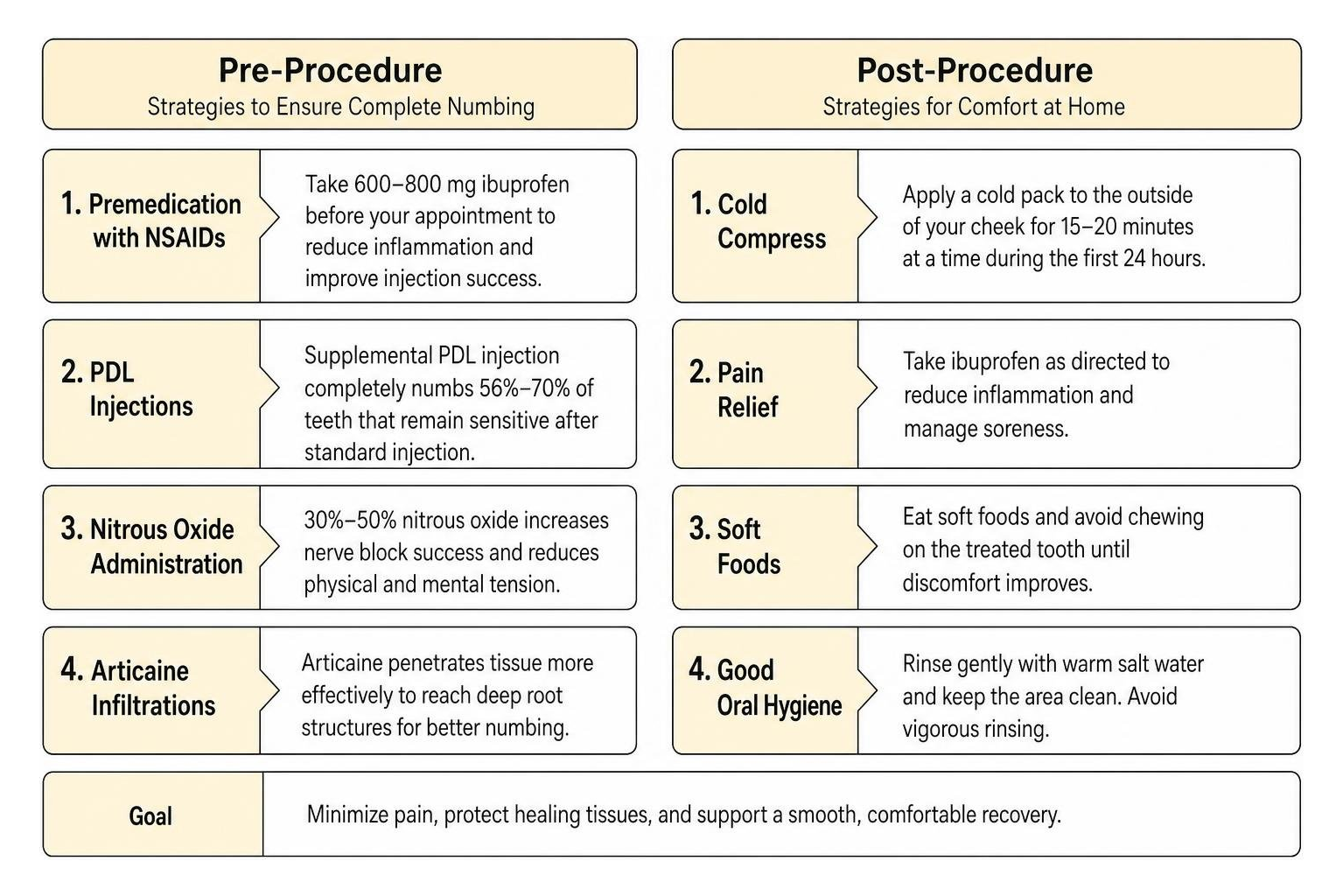
- Premedication with NSAIDs: Taking 600 mg to 800 mg of ibuprofen shortly before your appointment blocks the formation of inflammatory prostaglandins. This simple step significantly increases the success rate of the standard Inferior Alveolar Nerve Block (IANB) injection used for lower molars.
- Periodontal Ligament (PDL) Injections: If a standard injection does not fully numb the tooth, we can administer a supplementary PDL injection. Clinical studies show that between 56% to 70% of stubborn mandibular posterior teeth with irreversible pulpitis that still had sensitivity after standard numbing are successfully and completely anesthetized with a PDL injection.
- Nitrous Oxide Administration: Administering 30% to 50% nitrous oxide during the injection process has been clinically proven to significantly increase the success rate of nerve blocks, while simultaneously reducing physical and mental tension.
- Articaine Infiltrations: We often use articaine instead of traditional lidocaine for local infiltrations because articaine has superior tissue-penetrating capabilities, ensuring the anesthetic reaches the deep root structures of the tooth.
Managing Post-Procedure Discomfort at Home
Once your root canal is successfully completed, the active infection is gone, and the healing process begins. However, as the local anesthesia gradually wears off over the next two to four hours, it is normal to experience some mild, temporary soreness.

It is common for patients to wonder: “How can my tooth still hurt if the nerve was completely removed?”
While the internal nerve of the tooth is gone, the living tissues surrounding the outside of the tooth—including the periodontal ligament and the surrounding jawbone—are still inflamed from the original infection and the mechanical work of the dental instruments. Think of it like a minor sports injury; even after the cause of the injury is gone, the surrounding muscles still need a few days to heal and rest.
To protect your healing tooth and minimize post-operative discomfort, we focus on a dual approach: keeping the area physically protected and chemically reducing inflammation. You can find detailed insights on how we balance saving your tooth with ensuring your comfort in our article: Kill the Pain Save the Tooth.
To help you visualize the best ways to manage your comfort, here is a comparison of home care strategies:
How to Avoid Root Canal Pain During Your Recovery
The first 24 to 48 hours post-treatment is the peak window for tissue recovery. By following these simple, practical home-care steps, you can prevent unnecessary irritation and support a rapid, comfortable healing process:
- Apply a Cold Compress: Wrap an ice pack or a bag of frozen vegetables in a clean, soft cloth. Apply it to the outside of your cheek near the treated area for 15 to 20 minutes at a time, followed by 10 to 15 minutes of rest. This constricts the local blood vessels, which significantly reduces localized swelling and numbs the area. Never apply ice directly to the skin to avoid cold burns.
- Stick to a Soft diet: For the first few days, eat only soft, lukewarm foods such as scrambled eggs, yogurt, smoothies, mashed potatoes, and well-cooked pasta. Avoid hard, crunchy, sticky, or highly chewy foods (like nuts, chips, or gum) that can put excessive physical force on the treated tooth or dislodge your temporary filling.
- Chew on the Opposite Side: Always chew your food exclusively on the unaffected side of your mouth until your permanent crown or final restoration has been placed.
- Avoid Smoking and Alcohol: Refrain from smoking or using tobacco products for at least 48 hours after your procedure. Smoking restricts vital blood flow to the gums and bone, which severely delays the natural healing process. Additionally, avoid alcohol for the first 24 hours, as it can interact negatively with your recovery medications.
- Maintain Gentle Oral Hygiene: Keeping your mouth clean is vital to prevent bacterial buildup. Continue to brush and floss your teeth daily, but be extremely gentle around the treated tooth. Avoid scrubbing the temporary filling material aggressively.
By staying proactive and following these recovery tips, you can ensure a smooth, comfortable healing process.
Medication Strategies for a Smooth Recovery
Systematic and timely medication is key to keeping post-procedure soreness to an absolute minimum. Rather than waiting for discomfort to set in, the most effective strategy is to take your first dose of pain medication immediately after your appointment, before the local anesthesia has completely worn off.
- The Power of Ibuprofen: For most patients, standard over-the-counter anti-inflammatory medications are highly effective. Taking 400 mg to 600 mg of ibuprofen every six to eight hours with food targets the inflammatory response directly at the root tip.
- The Staggered Dosing Strategy: If ibuprofen alone is not providing sufficient relief, you can safely combine or alternate it with acetaminophen (such as Tylenol), provided you have no medical contraindications. For example, you can take your dose of ibuprofen, and then take acetaminophen three hours later. This staggered approach provides continuous, overlapping pain coverage throughout the day without exceeding the safe daily limits of either medication.
- Avoid Aspirin Post-Treatment: Do not use aspirin as your primary pain reliever after a root canal. Aspirin acts as a mild blood thinner, which can increase the risk of minor bleeding or oozing at the treatment site. Stick to ibuprofen or acetaminophen instead.
When to Contact Your Dentist About Post-Treatment Pain
While mild tenderness when biting down is completely normal for the first 3 to 7 days, severe, worsening, or persistent pain is not. It is important to know the difference between normal healing and potential complications so you can seek professional care when necessary.

Please contact us immediately if you experience any of the following warning signs:
- Worsening Pain After Day Three: Your post-procedure discomfort should peak within the first 48 hours and then steadily improve. If your pain begins to intensify or become throbbing after the third day, it could indicate an issue.
- Visible Facial or Jaw Swelling: While mild gum tenderness is normal, visible swelling of your cheek, jaw, or neck is not. This can be a sign of a spreading infection that requires professional evaluation and potentially prescription antibiotics.
- A High Bite Sensation: When we place a temporary filling or crown, we carefully check your bite alignment. However, if the temporary material is even a fraction of a millimeter too high, your jaw will force that single tooth to absorb all the pressure when you chew or close your mouth. This constant trauma triggers deep, sharp root pain. Fortunately, this is incredibly easy to fix—a quick, painless bite adjustment at our office will resolve the pain almost instantly.
- Fever or Systemic Symptoms: Developing a fever (especially above 101°F) or feeling generally unwell (malaise) indicates that your body is fighting a systemic infection.
- A Loose or Missing Temporary Filling: The temporary filling seals the internal canals of your tooth from bacteria in your saliva. If it falls out or feels loose, contact us immediately to have it replaced before the area becomes recontaminated.
If you notice any of these red flags, do not suffer in silence. Reach out to our Emergency Dentist Des Plaines IL team right away so we can evaluate your tooth and get you back on the path to comfortable healing.
Long-Term Prevention: How to Avoid Root Canal Pain in the Future
While we are always here to help you save your natural teeth, the absolute best way to manage root canal pain is to prevent the need for endodontic therapy in the first place! With a proactive approach to your oral health, you can keep your teeth strong, healthy, and infection-free.
- Maintain a Flawless Oral Hygiene Routine: Brush your teeth at least twice a day for a full two minutes using a soft-bristled toothbrush and fluoride toothpaste. Floss daily to remove bacterial plaque and food debris from the tight spaces between your teeth where cavities commonly start.
- Schedule Regular Dental Checkups: Visit us every six months for a professional cleaning and comprehensive exam. During these visits, we can detect minor cavities or enamel wear early—allowing us to treat them with simple, conservative fillings before decay ever reaches the deep dental pulp.
- Protect Your Teeth from Trauma: If you participate in contact sports or recreational activities, always wear a professionally fitted athletic mouthguard. Physical trauma can crack a tooth or sever its blood supply, leading to pulp necrosis and the need for a root canal.
- Address Teeth Grinding (Bruxism): Chronic grinding or clenching of your teeth can create micro-fractures in your enamel over time, exposing the inner pulp to bacteria. If you grind your teeth at night, we can create a custom nightguard to protect your smile.
- Never Use Your Teeth as Tools: Avoid using your teeth to open packages, tear tape, or crack open nuts. These habits put immense, unnatural lateral force on your teeth, which can cause deep structural fractures.
By staying proactive, you can protect your natural teeth for a lifetime. To learn more about how simple preventive habits can save you from complex treatments, read our detailed guide on Root Canals Debunking the Myths.
Frequently Asked Questions about Root Canal Pain
Is a root canal actually painful during the procedure?
No, the root canal procedure itself is not painful. Before we begin, we use advanced local anesthetics to completely numb the tooth and the surrounding gum tissue. While you may feel some mild pressure or vibration as we work, you should not feel any sharp pain. Most patients report that the sensation is no different than getting a routine dental filling.
How long does normal soreness last after treatment?
Most patients experience mild soreness or tenderness for about 2 to 5 days following the procedure. This discomfort typically peaks within the first 24 to 48 hours as the surrounding tissues heal from the initial infection and treatment. The soreness should steadily improve each day and can be easily managed with over-the-counter pain relievers like ibuprofen.
Why does my tooth still hurt if the nerve was removed?
While the nerve inside the tooth has been completely removed, the tooth is still connected to your jawbone by a delicate network of living tissues, ligaments, and bone (the periapical tissue). If the initial infection was deep-seated, these surrounding tissues can remain inflamed and sensitive for several days as they undergo the natural healing process.
Conclusion
At Des Plaines Dental Studio, we believe that high-quality dental care should always go hand-in-hand with absolute comfort. We understand that the thought of undergoing a root canal can bring up feelings of anxiety, but modern techniques, advanced anesthetics, and supportive sedation options mean you can look forward to a relaxed, virtually pain-free experience.
Our dedicated team is proud to serve the Des Plaines, IL community with warm, patient-centered care, comprehensive insurance support, and a welcoming environment. If you are currently dealing with a persistent toothache, sensitivity, or have questions about keeping your smile healthy, we are here to help.
Don’t let dental discomfort get in the way of your life. Contact us today to schedule your consultation and learn more about our gentle, expert Root Canal Therapy options. Together, we will eliminate your pain and keep your smile bright!