


What is the Average Cost for Dental Extractions?
How Much Do Dental Extractions Actually Cost? (2026 Quick Answer)
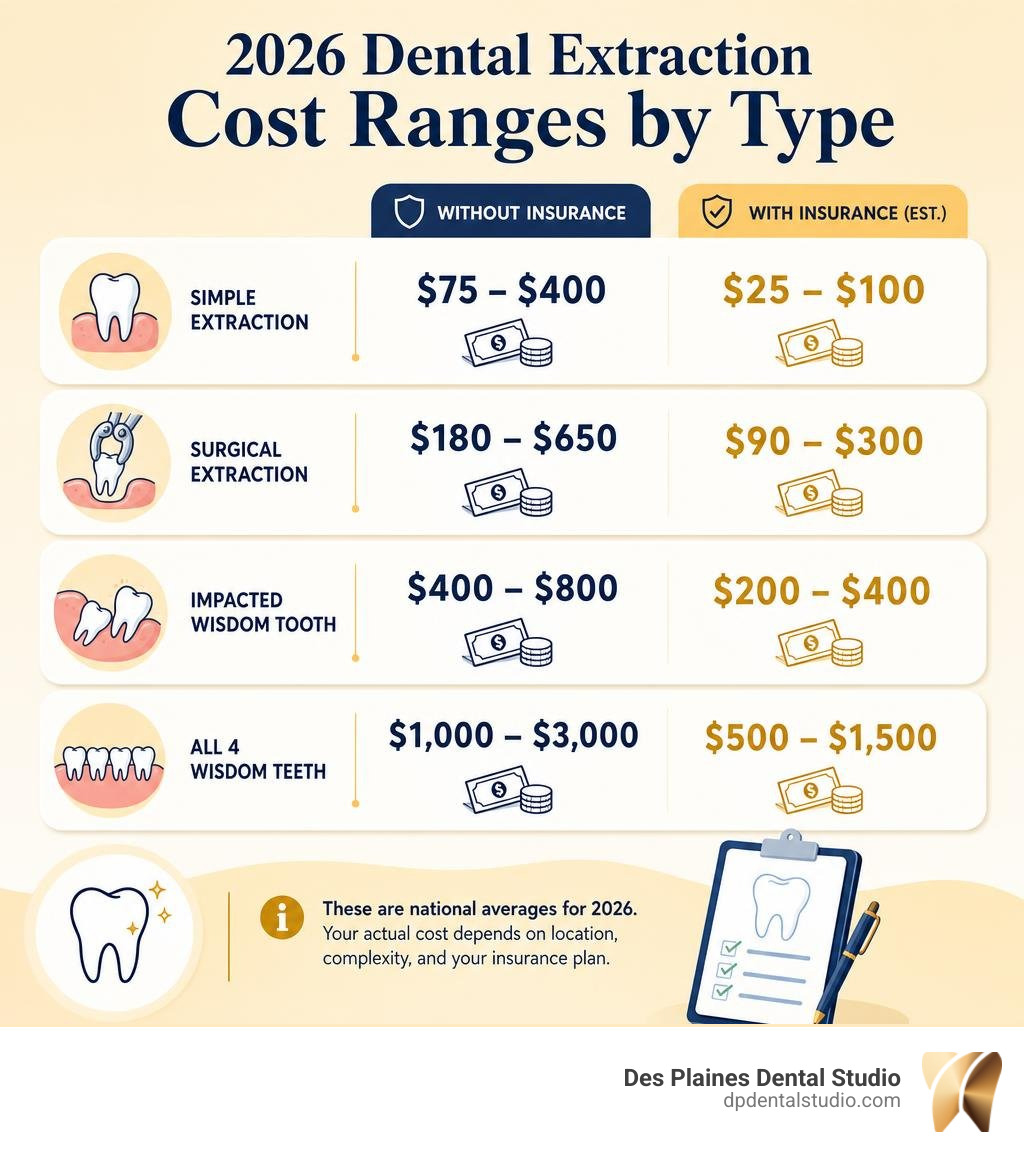
Understanding the cost for dental extractions is the first step to planning your care without surprises. Here’s a fast breakdown of what most patients pay in 2026:
| Extraction Type | Without Insurance | With Insurance (Est.) |
|---|---|---|
| Simple extraction | $75 – $400 | $25 – $100 |
| Surgical extraction | $180 – $650 | $90 – $300 |
| Impacted wisdom tooth | $400 – $800 | $200 – $400 |
| All 4 wisdom teeth | $1,000 – $3,000 | $500 – $1,500 |
These are national averages for 2026. Your actual cost depends on location, complexity, and your insurance plan.
Millions of tooth extractions are performed safely every year. For most patients, it’s a routine procedure — faster and less painful than most people expect. The bigger challenge is usually figuring out what it will cost before you sit in the chair.
Costs vary widely. A straightforward pull can run as little as $75. A complex surgical case with sedation can easily top $1,000. And that’s before adding X-rays, follow-up visits, or post-op medications.
This guide breaks it all down clearly so you know exactly what to expect.
I’m Dr. Marta Milejczyk, a general and restorative dentist serving Chicago’s northwest suburbs since 1997, with advanced clinical training in oral surgery and anesthesiology — areas directly relevant to understanding the cost for dental extractions and what drives it. In the sections below, I’ll walk you through everything you need to make a confident, informed decision.
Understanding the Types of Tooth Extractions
When you hear the old saying, “It’s like pulling teeth,” you might picture a long, painful, and aggressive tug-of-war. Fortunately, modern dentistry has completely debunked this idiom! Modern extractions are fast, highly controlled, and virtually pain-free.
However, not every tooth is removed the same way. The single biggest factor that dictates your final bill is whether the tooth can be coaxed out gently or if it requires a more involved surgical approach.
Simple Extractions vs. Surgical Extractions
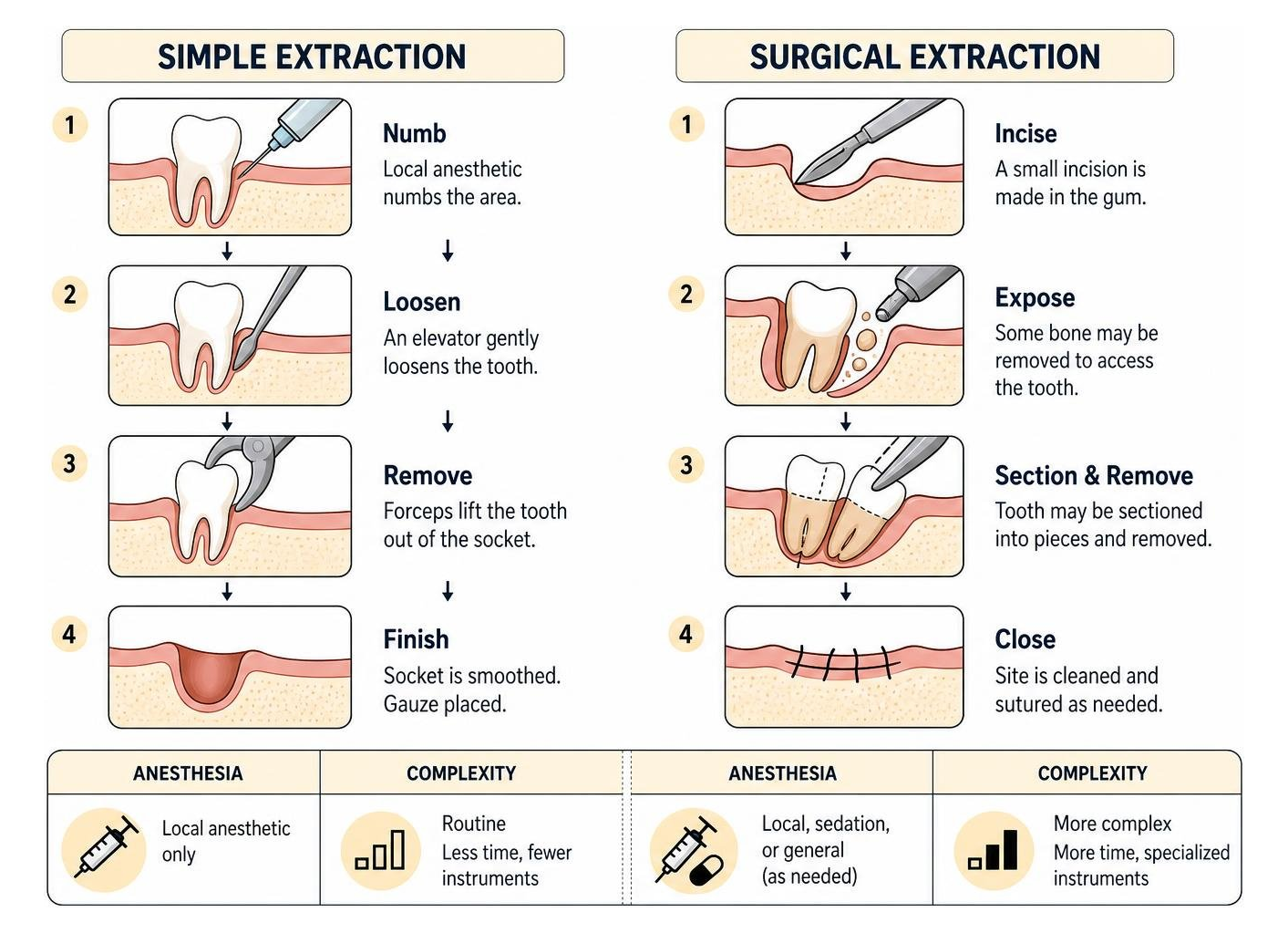
If a tooth has fully erupted and is completely visible in your mouth, we can typically perform what is known as a simple extraction. During this routine treatment, we use a specialized instrument called an elevator to gently loosen the tooth from its socket, and then use dental forceps to lift it out cleanly. We only need a local anesthetic to completely numb the area, meaning you will feel some pressure but absolutely no pain.
Because simple extractions (billed under dental code D7140) require less time and fewer specialized tools, they are the most affordable option. You can learn more about how these procedures compare in this comprehensive breakdown of Tooth Extraction Cost 2026: Simple vs. Surgical.
On the other hand, if a tooth is broken at the gumline, has severely curved roots, or hasn’t fully grown in, it requires a surgical extraction (billed under code D7210 and up). This is a more complex oral surgery. To safely remove the tooth, we must make a small gum incision, remove a tiny portion of the surrounding bone, or section the tooth (cut it into smaller pieces) to lift it out safely.
Sometimes, an extraction that starts out simple can turn surgical mid-appointment. If a heavily decayed tooth fractures during a simple pull, we must switch to surgical techniques to remove the remaining roots safely. At Des Plaines Dental Studio, we walk you through every step of our gentle Extractions process so you always know what is happening.
Wisdom Tooth Removal and Complex Impactions
Wisdom teeth — our third set of molars — are notorious troublemakers. Because they are the last teeth to emerge, there is rarely enough room left in the jaw for them to grow in straight. This leads to impactions, which are categorized by how deeply the tooth is buried:
- Soft Tissue Impaction: The tooth has broken through the bone but is still partially or fully covered by gum tissue.
- Partial Bony Impaction: The tooth is partially encased in the jawbone.
- Full Bony Impaction: The tooth is completely encased within the jawbone, requiring a highly skilled surgical approach to safely extract.
Surgical wisdom tooth extraction is more complex because molars can have three to five roots firmly anchored to the bone. If you are experiencing pain or crowding from these late-arriving molars, you can read about our approach to a Painless Wisdom Teeth Removal to see how we keep our patients relaxed and comfortable.
Key Factors That Influence the Cost for Dental Extractions
No two mouths are identical, which means the cost for dental extractions is highly personalized. When we build a treatment plan, several key clinical and practical variables come into play.
- The Dentist’s Experience & Specialty: General dentists routinely perform simple and moderate extractions. However, if you have a deeply impacted tooth or require complex surgical care, you may be referred to an oral and maxillofacial surgeon. Because of their specialized training and higher overhead, oral surgeons typically charge 20% to 40% more than general dentists.
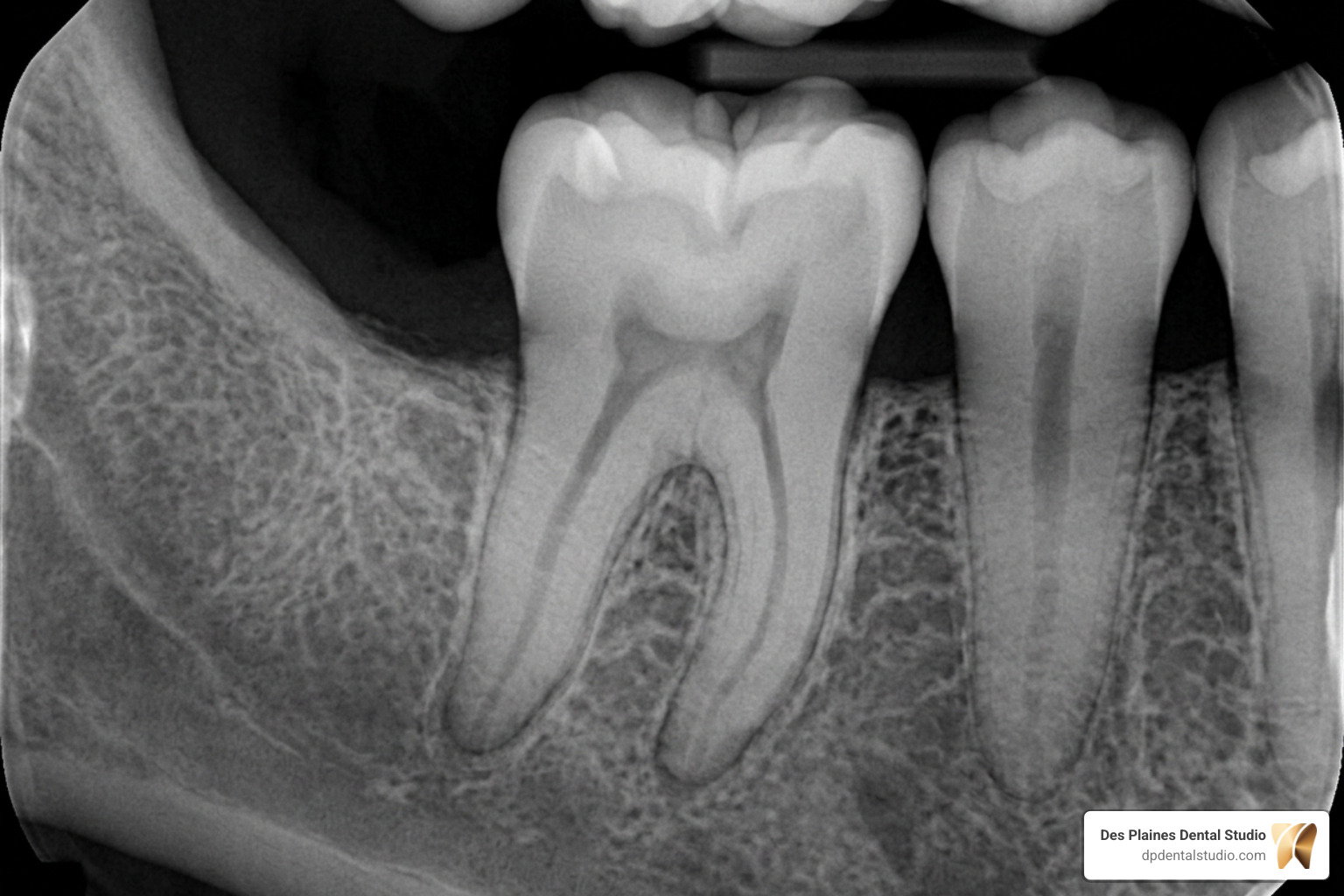
- Tooth Location and Root Structure: Front teeth generally have a single, straight root, making them much easier (and cheaper) to extract. Back molars, which have multiple roots firmly anchored in the bone, require more time and effort, driving up the price.
- The Complexity of the Case: A tooth that is severely fractured below the gumline or fused to the surrounding bone requires specialized surgical techniques, which naturally increases the fee.
Geographic Location and State-by-State Variations
Where you live plays a massive role in what you pay. Dental practices in major metropolitan areas face much higher commercial rents, property taxes, and staff wages than those in rural regions, and these overhead costs are reflected in treatment prices.
For patients living in Illinois, the average out-of-pocket cost for a simple extraction is approximately $258 to $263, which sits slightly above the national average. If you are looking specifically at the Chicago metro area, including Des Plaines and Naperville, the average simple extraction runs about $284 to $288. You can find more detailed regional pricing insights in this Tooth Extraction Cost in Chicago: Complete Price Guide.
Additional Costs: X-rays, Sedation, and Anesthesia
When budgeting for a tooth pull, it is easy to focus solely on the extraction fee itself. However, a safe procedure requires several diagnostic and comfort-related steps that are billed separately:
- Diagnostic Exams & X-rays: Before we can safely extract any tooth, we must evaluate its root structure and the surrounding bone. A standard exam and diagnostic X-rays typically run between $150 and $350. A comprehensive panoramic X-ray, which is crucial for wisdom teeth, can run between $100 and $250.
- The Anesthesia Ladder: Local anesthesia (numbing the immediate area) is standard and almost always included in the base price of your extraction. However, if you experience dental anxiety or require a long surgical procedure, you may opt for sedation. Nitrous oxide (laughing gas) is the most affordable add-on at $50 to $150. IV sedation, which provides deep relaxation, averages $400 to $800. General anesthesia, typically reserved for complex hospital-based surgeries, can easily add $1,000 or more to your bill.
- Post-Op Prescriptions: You may need prescription pain relievers or antibiotics to prevent infection. These typically cost around $30 to $80 out-of-pocket.
To understand how these additional fees fit into your overall dental insurance coverage, check out this guide on Tooth Extraction Cost | Cigna Healthcare.
Out-of-Pocket Cost for Dental Extractions: With vs. Without Insurance
Navigating dental fees can feel overwhelming, especially if you are trying to balance a tight family budget. Let’s look at what you can expect to pay out-of-pocket depending on your insurance status.
| Extraction Scenario | Average Cost Without Insurance | Average Cost With Insurance (PPO) |
|---|---|---|
| Simple Extraction (Single Tooth) | $200 (Range: $75 – $400) | $50 (Range: $25 – $100) |
| Surgical Extraction (Single Tooth) | $400 (Range: $180 – $650) | $150 (Range: $90 – $300) |
| Fully Bony Impacted Molar | $600 (Range: $400 – $800) | $300 (Range: $200 – $400) |
| Exam & Diagnostic X-rays | $250 (Range: $150 – $350) | Covered at 80% to 100% |
Average Cost for Dental Extractions Without Insurance
If you do not have dental insurance, you are responsible for the full fee of the procedure. For a simple extraction in 2026, the national average out-of-pocket cost is $250, though it can range from $75 to $400 depending on the tooth.
If you require an emergency extraction due to a sudden, severe toothache or infection, many offices charge an emergency surcharge of $100 to $300 for same-day, after-hours, or fit-in appointments. If you find yourself facing a sudden dental emergency without coverage, read our guide on Emergency Tooth Extractions and Where to Find Cheap Teeth Pulling Near You to learn how to find immediate, affordable relief.
Average Cost for Dental Extractions With Insurance
If you have a dental PPO plan, the cost for dental extractions is significantly lower. Most insurance providers classify simple extractions as “basic services,” meaning they typically cover 70% to 80% of the cost once you have met your annual deductible.
Surgical extractions, however, are often classified as “major services” or oral surgery. Insurance plans typically cover these at a lower tier, usually paying 50% to 80% of the cost. Additionally, some newer dental plans carry a waiting period of up to 12 months before they will pay for major surgical procedures.
It is also important to keep your plan’s annual maximum in mind. Most dental insurance policies cap their yearly benefits between $1,000 and $2,000. If you need multiple surgical extractions or wisdom teeth removed, you can easily exceed this limit. For detailed tips on managing these limits and exploring alternative payment methods, consult this helpful guide on How Much Does a Tooth Extraction or Removal Cost?.
Recovery, Side Effects, and Managing Complications
The extraction itself is only half the journey; proper aftercare is what guarantees a smooth, complication-free recovery.

Healing Timeline and Aftercare Best Practices
For a simple extraction, most patients can return to their normal daily activities within 1 to 2 days. For surgical extractions or wisdom teeth, expect a recovery period of 3 to 5 days, with full bone and tissue healing taking 2 to 3 weeks.
To ensure a speedy recovery and keep post-op discomfort to a minimum, follow these clinical best practices:
- Protect the Blood Clot: After the tooth is pulled, a protective blood clot forms in the empty socket. This clot is crucial for healing. To keep it intact, strictly avoid smoking, drinking through a straw, or rinsing your mouth vigorously for at least 72 hours.
- Manage Swelling: Apply a cold compress or ice pack to your cheek for 10 to 20 minutes at a time during the first 48 hours to minimize swelling.
- Eat a Soft Diet: Stick to soft, nutritious foods like yogurt, applesauce, smoothies, scrambled eggs, and lukewarm soups for the first few days. Gradually reintroduce solid foods as your comfort allows.
- Keep Your Mouth Clean: Continue brushing and flossing your other teeth normally, but completely avoid the extraction site for the first three days. After 24 hours, you can gently rinse your mouth with warm salt water to keep the area clean.
Dry Socket Prevention and Treatment Costs
The most common complication following an extraction is dry socket (alveolar osteitis), which occurs in about 2% to 5% of cases. Dry socket happens when the protective blood clot in the empty socket prematurely dissolves or dislodges, exposing the underlying bone and nerves to air, food, and bacteria. It causes intense, throbbing pain that typically starts 3 to 5 days after the procedure.
If you develop dry socket, you will need to return to our office so we can gently flush out the debris and place a medicated dressing inside the socket to soothe the nerves. This treatment typically costs $50 to $150, though many dentists (including us) treat dry socket follow-up visits for free as part of your standard post-operative care. You can read more about avoiding dry socket and managing recovery costs in this Tooth Extraction Cost 2026: $75–$550 (Simple vs. Surgical) — ToothCostGuide.
Frequently Asked Questions about Tooth Extraction Costs
How can I save money on a tooth extraction?
If you are uninsured or on a tight budget, there are several highly effective ways to lower your dental bills:
- Ask for a Self-Pay Discount: Many private practices offer a 10% to 20% discount if you pay in cash or pay your entire balance upfront.
- Utilize Dental Schools: Dental schools and community health clinics offer supervised treatment performed by dental students or residents at a 40% to 60% discount compared to traditional private practices.
- Consider a Dental Savings Plan: These membership programs charge an annual fee in exchange for 20% to 35% off standard dental procedures, with no waiting periods.
- Use Tax-Free Funds: If you have an HSA (Health Savings Account) or FSA (Flexible Spending Account), you can use these pre-tax dollars to pay for your out-of-pocket extraction costs.
For more practical tips on finding affordable care close to home, read our guide on Affordable Tooth Pulling: Where to Find Cheap Extractions Nearby.
Is it cheaper to get a root canal or a tooth extraction?
At first glance, a simple extraction ($75 to $400) is significantly cheaper than a root canal and crown ($1,500 to $3,600). However, extracting a tooth is actually the more expensive path long-term.
When you lose a permanent tooth, the surrounding jawbone naturally begins to shrink within the first year. To prevent your other teeth from shifting and to restore your ability to chew comfortably, you will eventually need to replace the missing tooth. A single dental implant and crown typically costs $3,000 to $6,000, and often requires a socket preservation bone graft ($200 to $800) at the time of extraction.
Whenever clinically possible, preserving your natural tooth with a root canal is almost always the healthiest and most cost-effective choice for your smile and your wallet.
Does Medicare cover dental extractions?
Original Medicare (Part A and Part B) does not cover routine dental care, including simple or surgical extractions. However, Medicare Part A may cover an extraction if it is deemed medically necessary as part of an inpatient hospital procedure (for example, if you need a tooth removed before undergoing major heart surgery). Many Medicare Advantage (Part C) plans do offer optional dental benefits that cover simple extractions.
Conclusion
At Des Plaines Dental Studio, we believe that high-quality, compassionate dental care should be accessible to everyone in our community. We understand that facing a tooth extraction can bring up questions about both your comfort and your budget.
That is why we focus on delivering a patient-centered, pain-free experience. Our team works closely with you to navigate your dental insurance, maximize your benefits, and find flexible financing options that fit your life. Whether you need a routine extraction, wisdom teeth removed, or are simply looking for an Affordable Dentist Near Me, we are here to help you smile with confidence.
Ready to take the next step toward a healthy, pain-free smile? More info about extraction services is just a click away — or call us today to schedule your personalized consultation!