Dental Implant Alternatives Can Save Time, Tooth Structure, and Cost
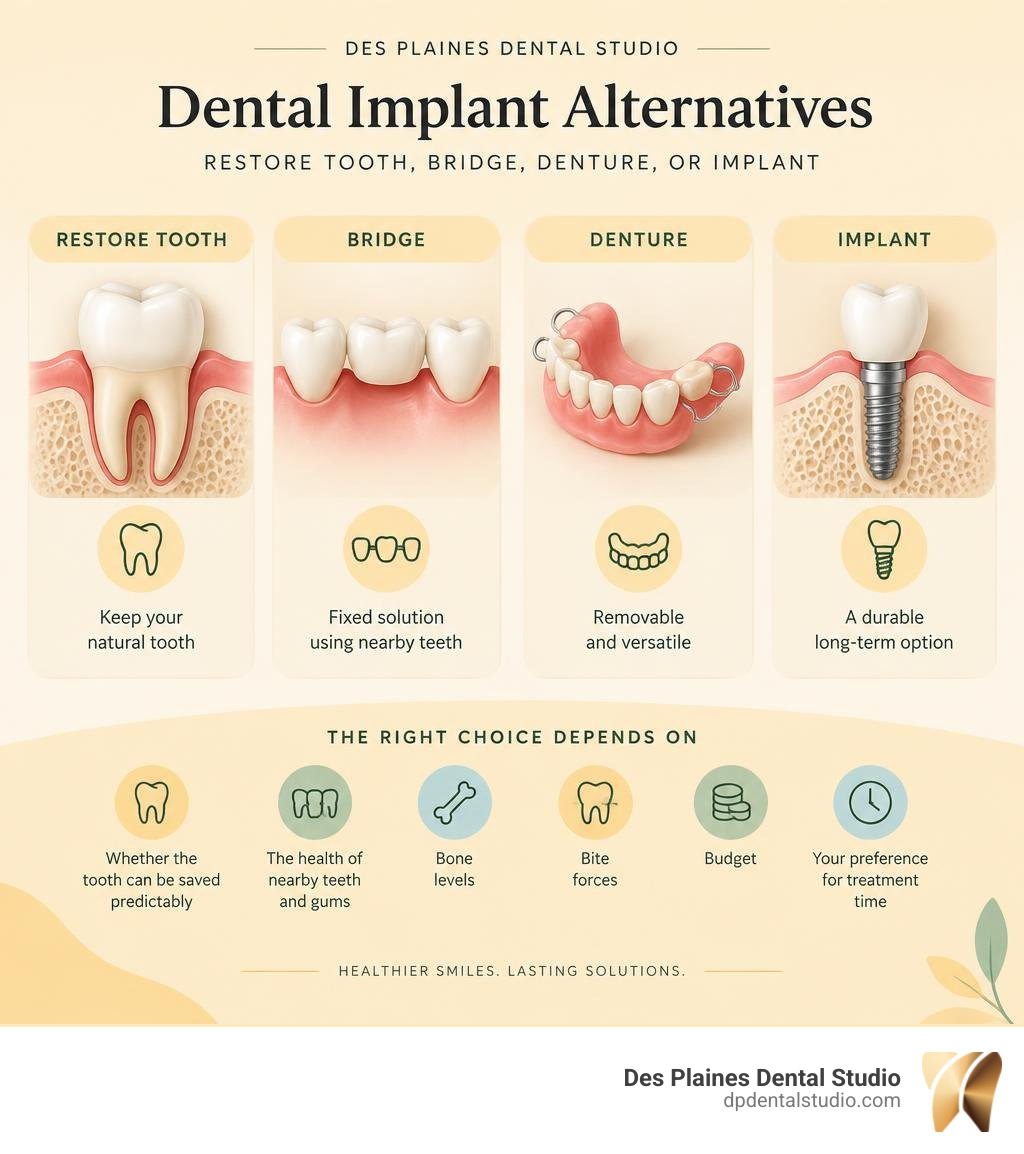
Dental implant alternatives include saving and restoring a damaged natural tooth, using a fixed bridge, choosing a removable partial denture, or, in select cases, using a minimally invasive composite bridge or tooth transplant. The best choice depends on whether the tooth can be predictably saved, the health of nearby teeth and gums, bone levels, bite forces, budget, and your preference for treatment time.
Implants can be an excellent option for a missing or non-restorable tooth. But extraction is permanent, and implant treatment involves surgery, healing time, ongoing hygiene, and potential complications such as inflammation around the implant. When a tooth is stable enough to restore, preserving it often avoids those steps while keeping the natural ligament and sensory feedback that help guide chewing.
This guide compares the main options clearly, including non-prep bridges, fiber-reinforced composite bridges, traditional bridges, dentures, and biologic options for carefully selected patients. It also explains when an implant may still be the most dependable solution.
I am Marta Milejczyk, a general dentist with advanced training in restorative, cosmetic, and implant dentistry, including comprehensive rehabilitation care. My experience with dental implant alternatives centers on helping patients understand when conservative restoration, replacement, or implant treatment best fits their oral health and goals.
Why Consider Tooth Preservation and Alternatives Over Extraction?
In modern dentistry, dental implants are frequently presented as the ultimate fix for damaged or failing teeth. While implants are a solution, rushing to extract a restorable natural tooth skips past the incredible biological engineering already present in your mouth.
Natural teeth possess an intricate support apparatus that titanium and zirconia simply cannot replicate. Furthermore, implants are not completely immune to complications. Studies indicate that peri-implant diseases—inflammatory conditions affecting the soft tissues and bone around an implant—are surprisingly common. In fact, peri-implant mucositis and peri-implantitis are present in approximately half of all implants after 10 years.
Understanding the value of saving restorable natural teeth allows us to explore conservative restorative dentistry procedures that protect your oral health without the financial and surgical demands of immediate extraction.
Natural Tooth Mechanics vs. Implant Rigidity
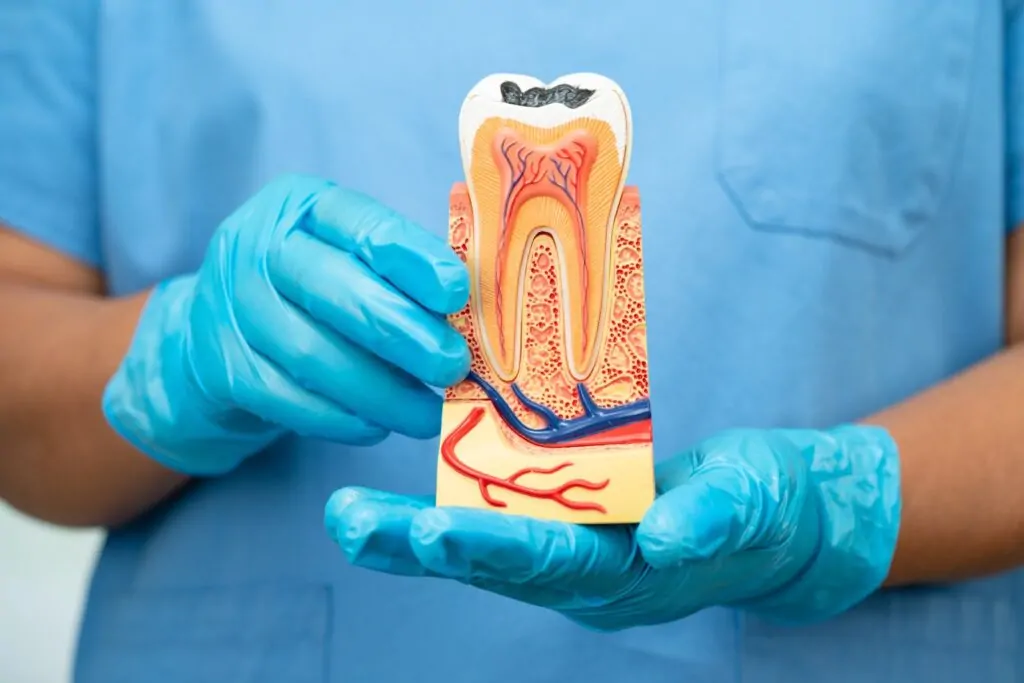
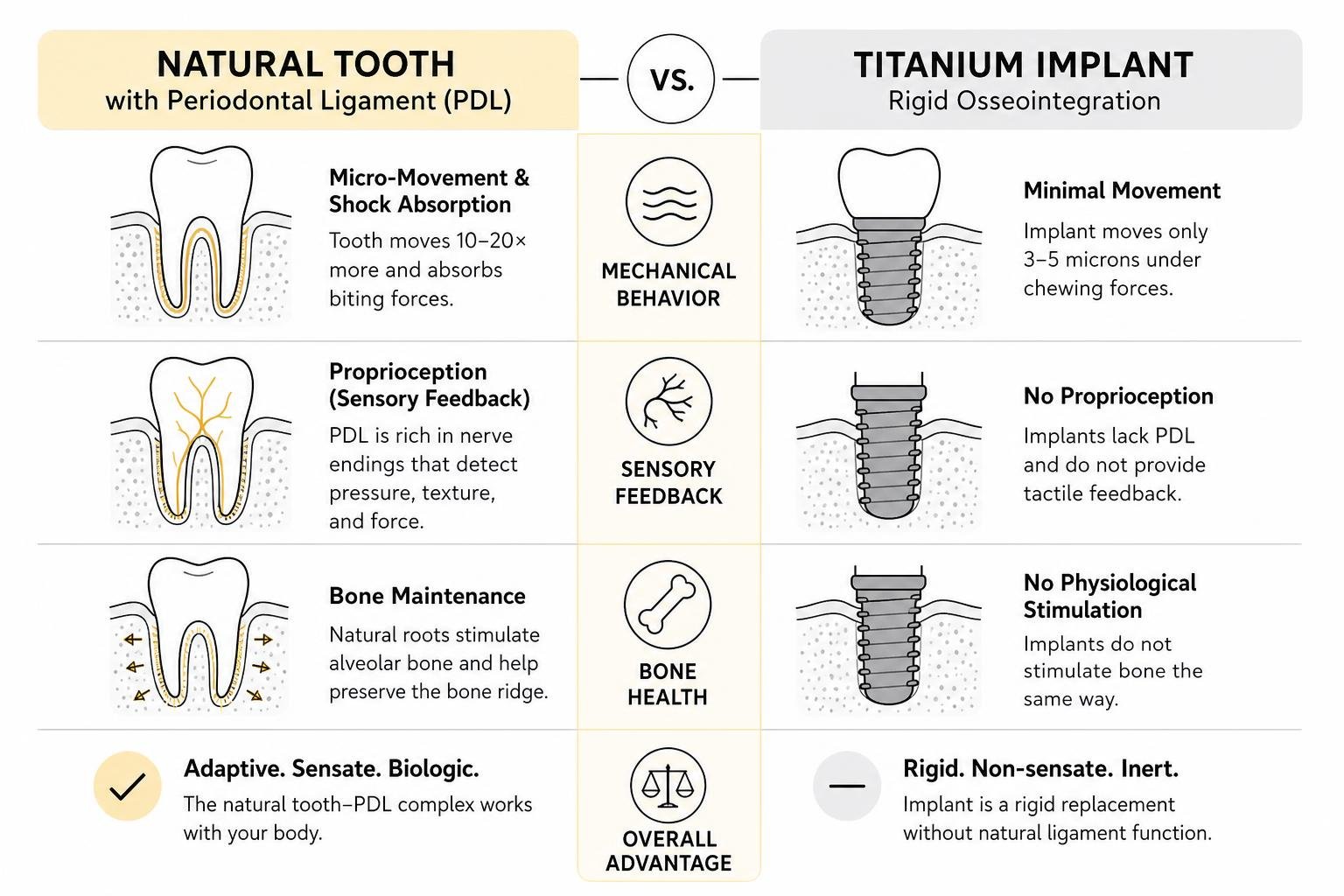
The secret superpower of a natural tooth is the periodontal ligament (PDL). The PDL is a tiny suspension system of connective tissue fibers that anchors the tooth root to the surrounding jawbone.
This micro-cushion provides crucial mechanical advantages:
- Micro-Movement and Shock Absorption: During chewing, a natural tooth moves between 25 to 100 microns (or more) within its socket. In contrast, an osseointegrated implant moves only 3 to 5 microns under chewing forces. Natural teeth move 10 to 20 times more than implant-supported restorations, allowing them to absorb biting stress and adapt dynamically to bite changes.
- Proprioception (Sensory Feedback): The PDL is rich in nerve endings that detect pressure, texture, and force. When you bite down on an unexpected popcorn kernel, your natural teeth signal your brain instantly to stop biting, preventing catastrophic fractures. Implants lack this delicate tactile feedback mechanism.
- Bone Maintenance: Natural tooth roots stimulate the surrounding alveolar bone through physiological stress, preserving the bone ridge organically.
Restoring Broken-Down Vital Teeth
When deep decay or fractures break down a tooth, extraction is not the only path forward. Advanced biomimetic materials allow us to rebuild even heavily compromised teeth while preserving pulp vitality.
The clinical process focuses on conservative structural reinforcement:
- Pulp Preservation & Caries Removal: Using selective caries excavation and bioceramic liners, we protect the underlying vital nerve whenever possible.
- Adhesive Core Buildups: Modern techniques utilize micro-hybrid or flowable resin composite materials alongside dental bonding agents. By creating structural undercuts and utilizing resin-modified glass ionomer cements, we construct a strong, stable foundation.
- Cuspal Coverage Restorations: Placing a partial onlay or full crown provides the “ferrule effect”—a 360-degree collar of remaining tooth structure that resists biting forces and prevents vertical root fractures.
Comparing the Top Dental Implant Alternatives
If a tooth cannot be saved, or has already been lost, a variety of restorative alternatives exist. Each comes with distinct benefits regarding invasiveness, investment, and durability.
| Restorative Option | Invasiveness | Typical Longevity | Chairside Time | Main Advantage |
|---|---|---|---|---|
| Direct Non-Prep Bridge | Non-invasive (no drilling) | 5–10+ years | 1 visit | Maximum tooth preservation; low cost |
| Fiber-Reinforced Composite (FRC) | Minimally invasive | 5–8+ years | 1–2 visits | Splints mobile teeth; excellent aesthetics |
| Traditional Fixed Bridge | Moderate (preps neighbor teeth) | 10–15 years | 2 visits | High strength; time-tested stability |
| Removable Partial Denture | Non-invasive | 5–10 years | 2–4 visits | Highly affordable; replaces multiple teeth |
| Tooth Autotransplantation | Surgical (donor tooth) | 10–20+ years | 1–2 visits + follow-up | Restores biological PDL and bone growth |
Non-Invasive Dental Implant Alternatives: Non-Prep and Composite Bridges
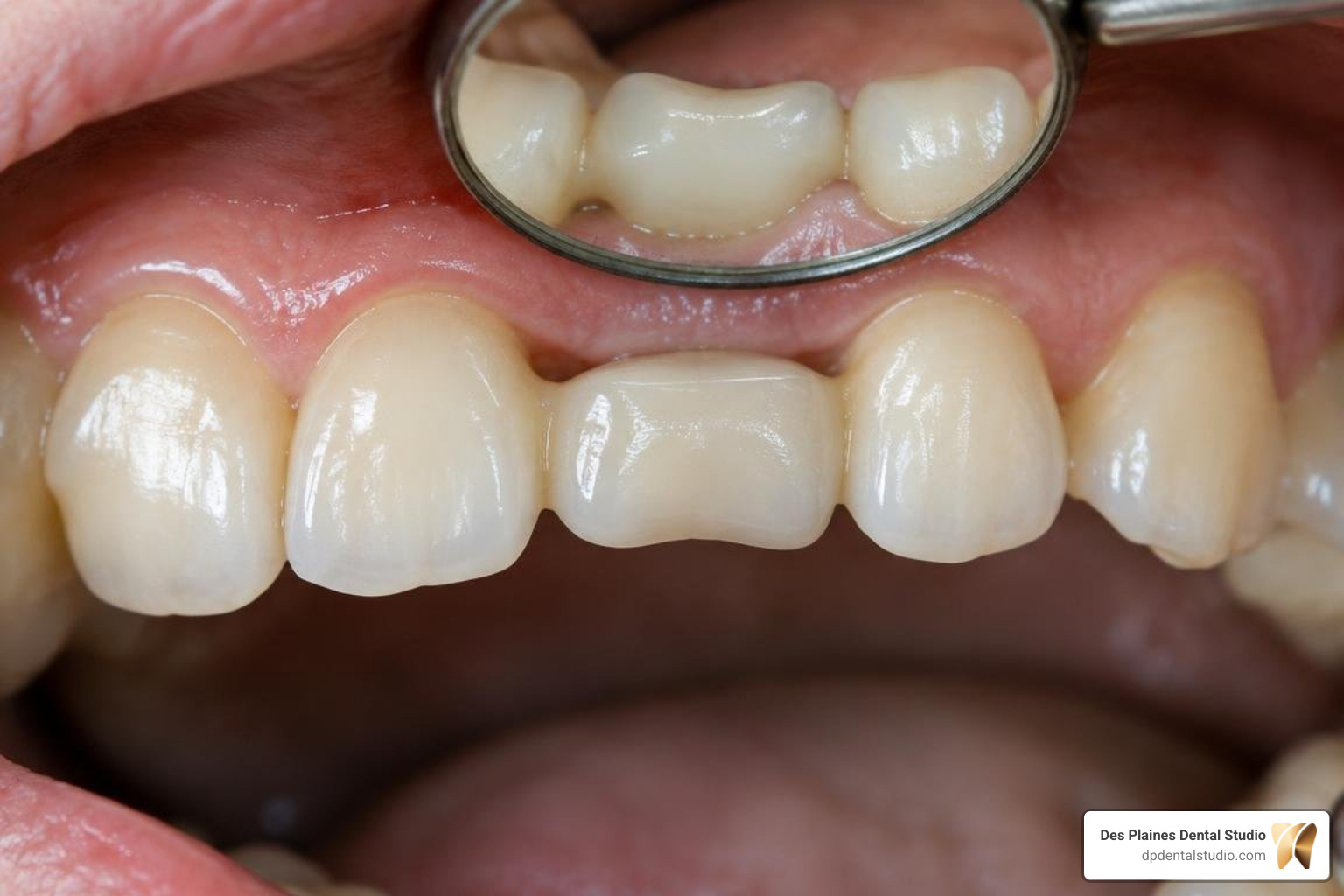
Patients looking to avoid surgery or invasive shaving of neighboring teeth can benefit from innovative adhesive dentistry techniques (Staehle, 2023).
- Non-Prep Bridges (NPBs): Modern composite resins allow dentists to fabricate bridges directly in the mouth or via CAD/CAM milling without grinding down adjacent enamel. A clinical case series evaluating non-prep bridge clinical methods demonstrated that posterior single-tooth gaps can be reliably restored with composite pontics. Over observation periods ranging from 1 to 21.5 years, 50 out of 53 restorations remained intact, showcasing impressive longevity without mechanical preparation.
- Fiber-Reinforced Composite (FRC) Bridges: By embedding high-tensile glass or polyethylene fibers into adhesive composite resins, we can suspend an artificial tooth across an empty gap. Systematic reviews show an overall survival rate of 94.4% at 4.8 years for FRC restorations.
- Natural Tooth Pontics: In cases where an anterior tooth must be removed due to severe localized bone loss, the crown of the patient’s own natural tooth can be cleaned, sealed, and bonded back into place. Clinical studies highlight splinting with natural tooth pontic bridges as a way to provide unmatched natural aesthetics and shade matching while simultaneously stabilizing adjacent mobile teeth (Tavangar et al., 2022).
When considering these conservative options, working with an experienced team ensures that custom dental bridges are engineered for optimal strength and cleanability.
Traditional Fixed Bridges and Removable Dentures
For decades, conventional fixed prosthetics and removable appliances have formed the backbone of restorative tooth replacement.
- Fixed Crown-Supported Bridges: A traditional bridge suspends a false tooth (pontic) between two crowns cemented onto shaved adjacent abutment teeth. They offer exceptional chewing strength and lifelike porcelain aesthetics. However, they require irreversible reduction of adjacent healthy enamel.
- Cantilever and Maryland Bridges: Cantilever bridges anchor to a single neighboring tooth, ideal for areas with lower biting pressure. Maryland (resin-bonded) bridges utilize thin metal or zirconia wings bonded to the back of neighboring teeth, preserving significant natural structure.
- Removable Partial Dentures (RPDs): Modern acrylic or cast-metal partial dentures provide a cost-effective, non-surgical method for replacing single or multiple teeth. When managing multiple spaces, repairing smiles with removable dentures offers immediate aesthetic restoration and chewing function without surgical recovery. Exploring these options for replacing missing teeth allows patients to select the path that best aligns with their budget and comfort levels.
Biological Autotransplantation and Advanced Frameworks
Beyond conventional prosthetics, specialized surgical alternatives exist for specific anatomical and developmental scenarios.
- Tooth Autotransplantation: This technique involves surgically transferring an otherwise unnecessary donor tooth (such as an impacted third molar or premolar) into an empty tooth socket within the same patient (Meto et al., 2025). A comprehensive review of tooth autotransplantation applications highlights that autotransplanted teeth with open apices have success rates between 80% and 95%. This procedure preserves the natural periodontal ligament, encourages continuous alveolar bone formation, and is ideal for young, growing patients who cannot yet receive implants.
- Custom Subperiosteal Frameworks: For patients with severe jawbone resorption who cannot undergo extensive bone grafting, modern digitally designed, 3D-printed titanium frameworks offer a specialized alternative. Exploring modern subperiosteal implant designs shows that these custom frameworks rest directly on top of the jawbone ridge under the periosteal tissue rather than inside drilled bone channels, achieving short-term survival rates of approximately 97.8%.
Clinical Candidacy and Patient Selection
Choosing between a dental implant and an alternative depends heavily on individual health factors, oral habits, and clinical circumstances:
- Periodontal Health: Active gum disease must be treated before placing any restoration. However, FRC bridges and splinted bridges can provide functional stability for teeth that have lost bone support.
- Occlusal Forces & Bruxism: Severe teeth grinding (bruxism) places heavy stress on non-prep and resin-bonded bridges, increasing the risk of debonding. In heavy grinders, full-coverage bridges or nightguard-protected restorations are critical.
- Oral Hygiene Compliance: Non-prep bridges and fixed partial dentures require meticulous cleaning with floss threaders and interdental brushes to avoid secondary decay along the margins.
When Are Dental Implant Alternatives the Best Clinical Choice?
Implant alternatives are frequently the preferred clinical route in several common scenarios:
- Severe Bone Loss Without Bone Grafting: Patients who lack sufficient jawbone density and wish to avoid invasive sinus lifts or ridge augmentations benefit greatly from adhesive bridges or partial dentures.
- Medical Contraindications: Patients undergoing intravenous bisphosphonate therapy, active chemotherapy, or those with uncontrolled diabetes have elevated risks of implant failure or osteonecrosis. Non-surgical bridges and dentures eliminate these surgical risks.
- Adolescent and Young Patients: Dental implants act like ankylosed teeth and do not move as the jaw grows. Placing an implant in a growing arch can cause significant cosmetic misalignment. Autotransplantation or non-prep resin bridges preserve the gap safely until skeletal growth completes.
- Immediate Economic Restraints: Restoring a natural tooth or placing an adhesive bridge delivers immediate function at a fraction of the initial cost of implant surgery and bone grafting.
Frequently Asked Questions About Dental Implant Alternatives
What is the most affordable alternative to a dental implant?
A removable partial denture or a direct resin composite bridge is typically the most affordable initial alternative. Acrylic partial dentures replace one or multiple teeth with minimal initial lab costs and no surgical expenses. Direct resin bridges can often be completed in a single dental appointment without dental lab fees.
How long do fiber-reinforced composite bridges last?
Fiber-reinforced composite bridges typically last between 5 and 8 years or longer when properly maintained. Research shows a 94.4% survival rate at nearly 5 years. Routine dental checkups ensure that minor resin chipping or edge wear can be easily polished or repaired chairside without replacing the entire bridge.
Can a severely broken tooth be saved instead of getting an implant?
Yes, in many cases. If the tooth has sufficient sound structure above the bone level (at least 1.5 to 2 mm of healthy tooth height, known as the ferrule effect) and stable root anatomy, it can often be restored. Through root canal therapy, structural core buildups, and full-coverage crowns, even heavily broken teeth can provide decades of functional service.
Conclusion
Every smile is unique, and dental treatment should never follow a one-size-fits-all approach. While dental implants are an outstanding advancement in modern medicine, preserving your natural dentition or choosing a minimally invasive alternative can save healthy tooth structure, protect sensory feedback, and lower treatment costs.
At Des Plaines Dental Studio, we believe in patient-centered care that prioritizes biological preservation and your personal lifestyle goals. Whether you are exploring conservative tooth repair or exploring the average cost of dental implants and alternatives, our team is dedicated to providing transparent, pain-free dental solutions tailored to your long-term wellness.
Scientific References
Staehle HJ. “New Methods for Replacing Single Missing Teeth with Non-prep Bridges (NPBs) – A Case Series..” The journal of adhesive dentistry, 2023. PMCID PMC11734248. Tavangar MS, Aghaei F, Nowrouzi M. “Reconstruction of Natural Smile and Splinting with Natural Tooth Pontic Fiber-Reinforced Composite Bridge..” Case reports in dentistry, 2022. PMCID PMC9722297. Meto A, Çota K, Meto A, Bara S, Boschini L. “Tooth Autotransplantation in Contemporary Dentistry: A Narrative Review of Its Clinical Applications and Biological Basis..” Journal of clinical medicine, 2025. PMCID PMC12429413.