


Rest Easy: How to Choose the Best Sleep Dentist in Your Area
Why Finding a Sleep Apnea Dentist Near Me Could Change Your Life
If you’re looking for a sleep apnea dentist near me, here’s what you need to know right away:
How to find a qualified sleep apnea dentist near you:
- Look for a dentist with advanced training in dental sleep medicine
- Confirm they offer custom oral appliance therapy (not just CPAP referrals)
- Check that they collaborate with sleep physicians for official diagnosis
- Verify they accept medical insurance (not just dental insurance) for sleep apnea devices
- Read patient reviews and confirm credentials like AADSM membership or ABDSM board certification
You wake up exhausted. Your partner nudges you awake — again. You’ve tried the CPAP machine, but it’s loud, bulky, and impossible to sleep with. Sound familiar?
You’re not alone. Over 50% of patients prescribed CPAP machines eventually stop using them — not because the therapy doesn’t work, but because the machine itself gets in the way.
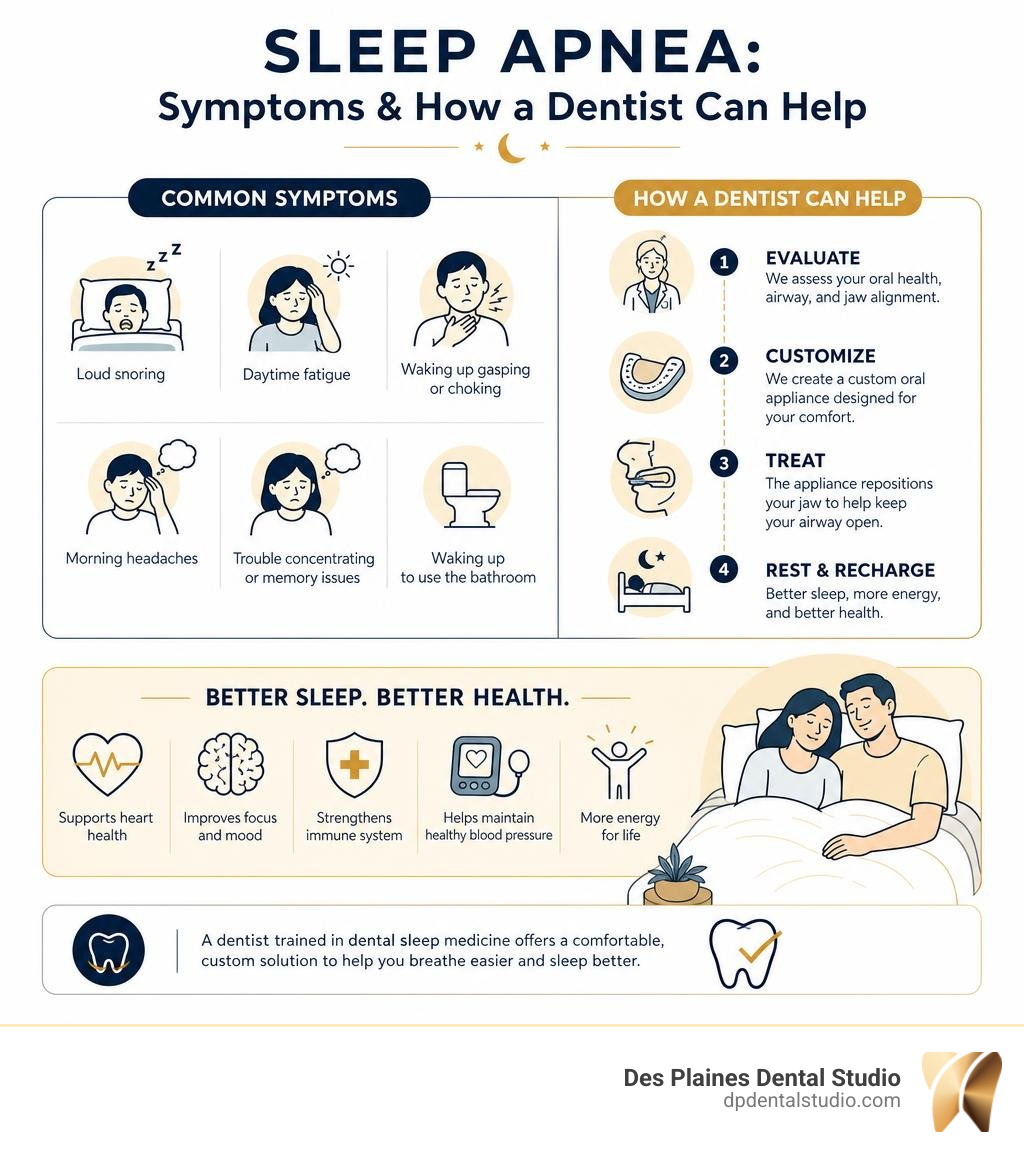
What many people don’t realize is that a dentist — specifically one trained in dental sleep medicine — can offer a quieter, more comfortable solution. A custom oral appliance worn at night can gently reposition your jaw to keep your airway open, reducing or eliminating the breathing interruptions that make sleep apnea so dangerous.
And dangerous it is. Untreated sleep apnea is linked to high blood pressure, stroke, heart disease, and type 2 diabetes. This isn’t just a snoring problem. It’s a health problem — and it’s treatable.
This guide will walk you through everything you need to know: what sleep apnea is, how a dentist can help, and exactly what to look for when choosing the right provider near you.
I’m Dr. Marta Milejczyk, a general dentist practicing in Chicago’s northwest suburbs since 1997, with advanced clinical training that includes rotations in internal medicine and anesthesiology — experience that directly informs how I approach complex, health-connected conditions like sleep apnea. As your local sleep apnea dentist near me resource at Des Plaines Dental Studio, I want to make sure you have the clear, honest information you need to take the next step.
Understanding Sleep Apnea and Its Impact on Your Health
To understand why a dentist plays such a critical role in treating sleep apnea, it helps to look at what actually happens to your body when you sleep.
The most common form of this condition is Obstructive Sleep Apnea (OSA). OSA occurs when the muscles and soft tissues in the back of your throat relax too much during sleep. Under the pull of gravity, these tissues collapse backward, physically blocking your airway. When your airway is blocked, your body stops receiving the oxygen it needs to function properly.
Your brain eventually notices this drop in oxygen and triggers a brief survival response: it jolts you awake just enough to tighten your throat muscles and take a breath. This jolt often sounds like a loud snort, gasp, or choking sound. Because this cycle can repeat dozens or even hundreds of times every single night, your body never gets the deep, restorative sleep it needs.
This constant oxygen deprivation and nighttime stress do far more than just leave you feeling sluggish the next day. Every time your breathing stops, your sympathetic nervous system kicks into overdrive, releasing stress hormones that spike your blood pressure. Over time, this chronic cardiovascular strain dramatically increases your risk of:
- High blood pressure (hypertension)
- Heart attacks and heart disease
- Stroke
- Type 2 diabetes
- Depression and cognitive decline
By focusing on airway-focused dental health, modern practitioners of dental sleep medicine look beyond your teeth and gums to evaluate how your oral anatomy affects your breathing, helping you protect your long-term cardiovascular and systemic health.
When to Search for a Sleep Apnea Dentist Near Me
Many people live with sleep apnea for years without realizing they have it. They might assume they are simply “bad sleepers” or that their partner’s complaints about loud snoring are just an annoyance. However, if you experience any of the following warning signs, it is time to search for a qualified sleep apnea dentist near me:
- Loud, chronic snoring: This is the most common and recognizable sign of an obstructed airway.
- Choking or gasping during sleep: If you wake up suddenly feeling like you cannot breathe, your airway has likely collapsed.
- Morning headaches: Frequent dull headaches upon waking are often caused by low oxygen levels and high blood pressure overnight.
- Excessive daytime fatigue: Feeling exhausted even after getting a full eight hours of sleep is a major red flag.
- Frequent nighttime awakenings: Waking up repeatedly to use the bathroom or tossing and turning constantly.
- Waking up with a dry mouth or sore throat: Often caused by mouth breathing throughout the night.
- Teeth grinding (bruxism): Clenching or grinding your teeth is highly correlated with breathing sleep disorders.
The Link Between Sleep Apnea and Bruxism
It might surprise you to learn that teeth grinding (bruxism) and sleep apnea are deeply interconnected. Approximately 10% of adults and 15% of children suffer from bruxism, which is a hereditary condition that causes involuntary jaw clenching and tooth grinding during sleep.
But why do we grind our teeth when we cannot breathe?
When your airway collapses during an apnea episode, your brain sends a panic signal to your jaw muscles to tense up. By clenching your jaw and grinding your teeth, your body is actually attempting to pull your lower jaw forward to reopen your airway. While this subconscious survival mechanism helps you breathe, it takes a massive toll on your teeth, leading to severe tooth wear, fractures, jaw joint (TMJ) pain, and morning muscle stiffness.
A sleep dentist can evaluate both your airway and your wear patterns to address the root cause of both issues simultaneously.
How a Sleep Apnea Dentist Near Me Can Help
While a medical doctor or sleep specialist must provide the official diagnosis for sleep apnea, a dentist trained in dental sleep medicine is uniquely qualified to provide comfortable, non-surgical treatment options.
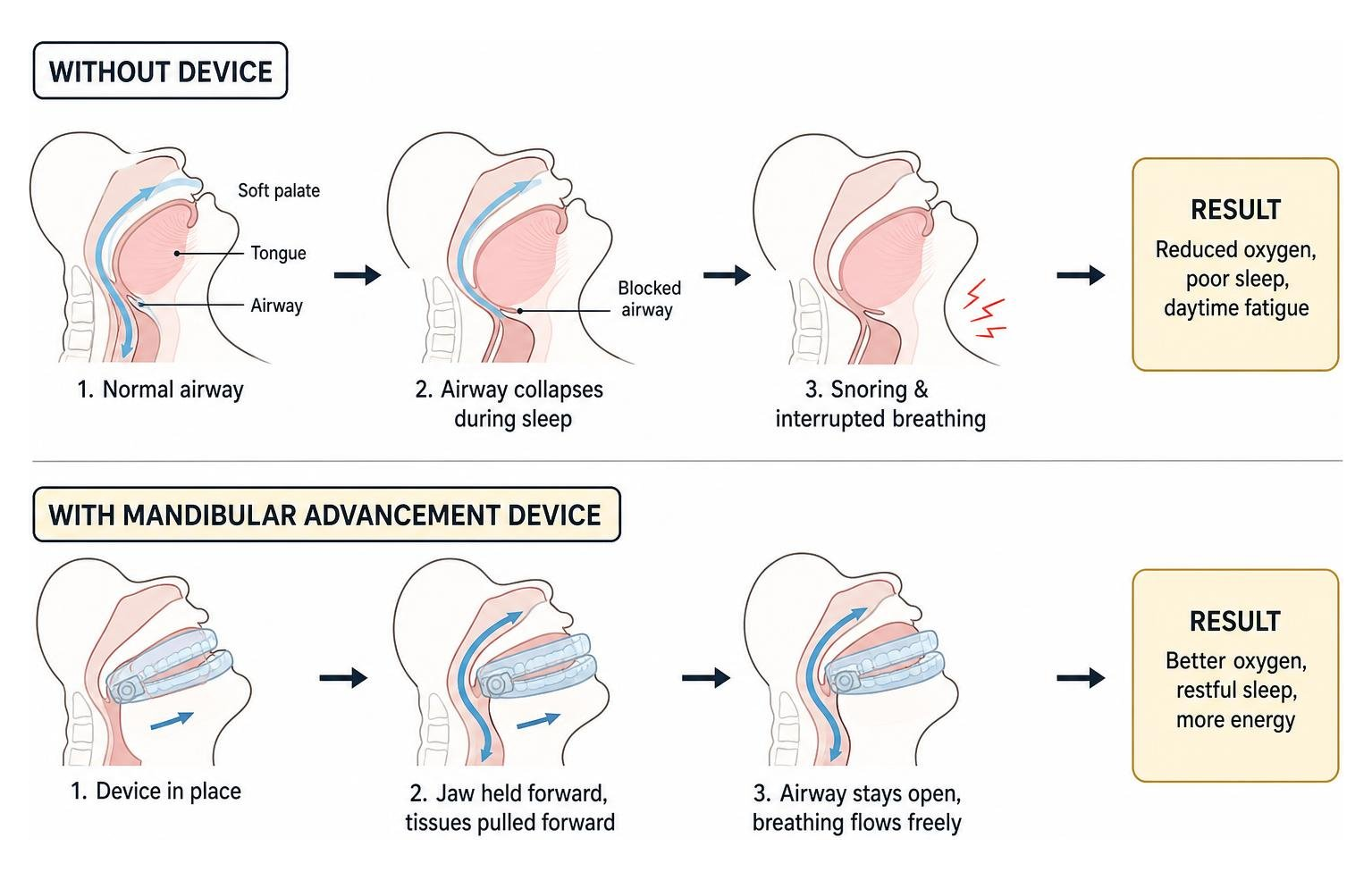
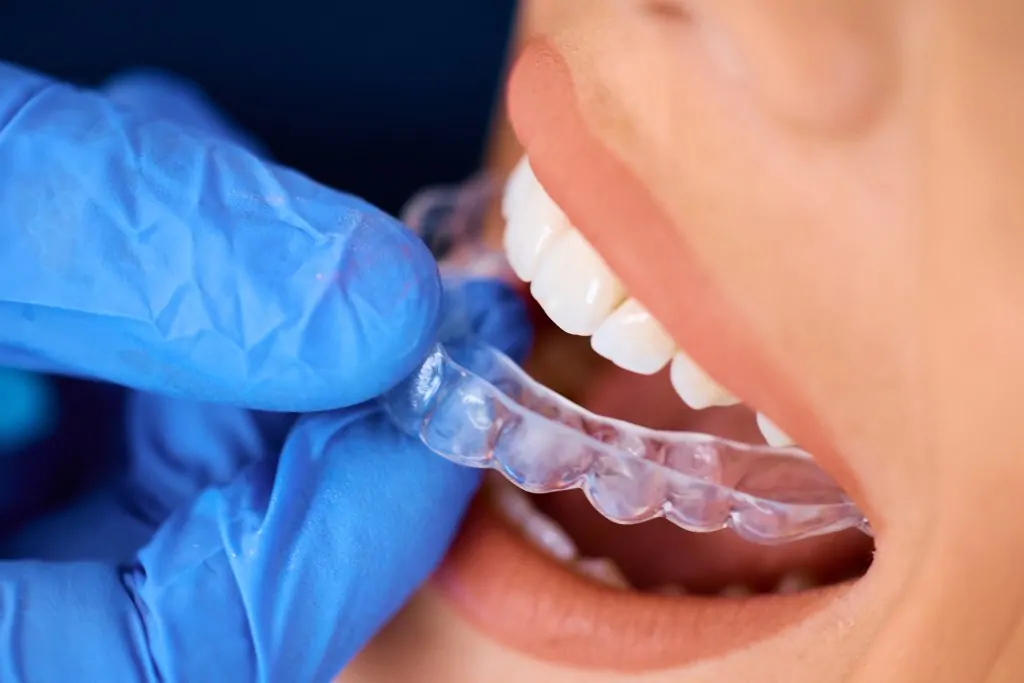
Dentists treat obstructive sleep apnea using custom-made oral appliances. These are not the bulky, one-size-fits-all mouthguards you find at a sporting goods store. Instead, they are highly precise, FDA-approved medical devices designed to fit your teeth perfectly.
The most common type of oral appliance is a Mandibular Advancement Device (MAD). This device fits over your upper and lower teeth, much like a pair of thin retainer splints. It works by gently and precisely holding your lower jaw (mandible) in a slightly forward position. Because your tongue and the soft tissues of your throat are physically connected to your lower jaw, moving the jaw forward pulls these tissues forward as well. This creates physical airway expansion, preventing the collapse of your airway and allowing oxygen to flow freely throughout the night.
For some patients, a tongue retaining device may be used to hold the tongue forward directly, though mandibular advancement devices are generally the preferred and most comfortable option. By using a custom oral appliance for sleep apnea, you can enjoy a quiet, comfortable night of sleep without the restriction of a mask or hose.
How to Choose the Best Sleep Apnea Dentist Near Me
When searching for a sleep apnea dentist near me, it is important to remember that not all dental offices offer the same level of care for sleep disorders. Because sleep apnea is a serious medical condition, you want to partner with a practitioner who has dedicated training in this specific field.
Here is what you should look for when choosing a good dentist near me for sleep apnea care:
- Advanced Training: Look for a dentist who has completed extensive continuing education in dental sleep medicine, such as certifications from the American Academy of Dental Sleep Medicine (AADSM).
- Collaborative Care Model: A qualified sleep dentist will never work in isolation. They should coordinate closely with local sleep physicians, ENT specialists, and primary care doctors to ensure you receive a comprehensive diagnosis and a safe, legal, and effective treatment plan.
- Coordination of Sleep Studies: Your sleep dentist should help you coordinate a professional sleep study — whether that is an in-lab study or a convenient Home Sleep Apnea Test (HSAT) — which is required to confirm your diagnosis before treatment begins.
- Advanced Technology: Practices that utilize digital intraoral scanners and 3D imaging (like CBCT scans) can more accurately evaluate your airway anatomy and fabricate highly precise custom appliances.
What to Expect During Your Dental Sleep Consultation
If you are ready to explore your options, scheduling an initial consultation with a qualified affordable dentist near me is your first step. Here is a breakdown of what you can expect during the process:
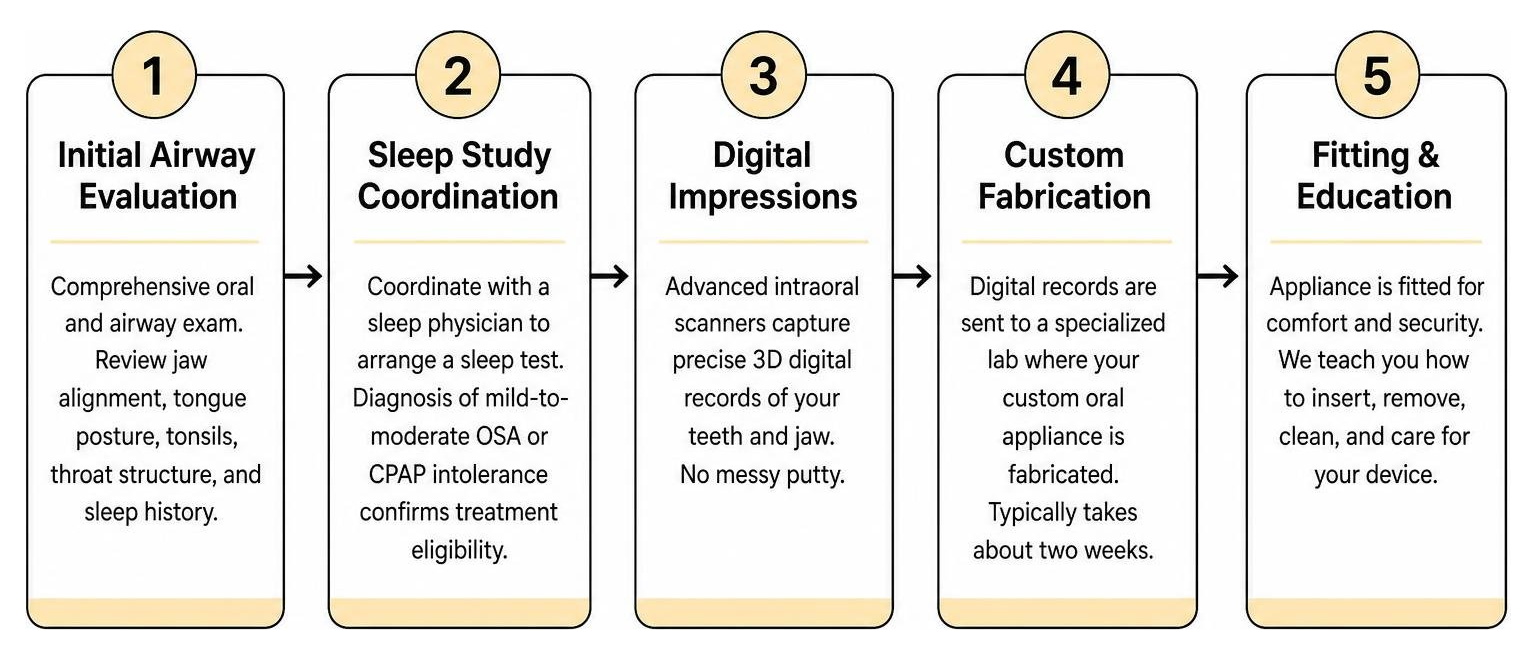
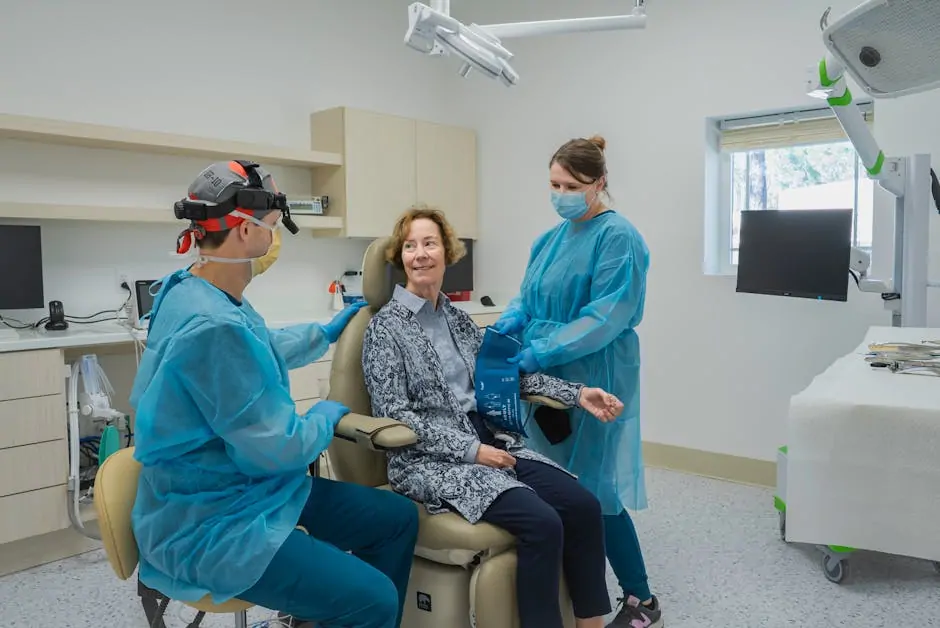
- Initial Airway Evaluation: We will perform a comprehensive oral and airway examination. This includes examining your jaw alignment, tongue posture, tonsils, and the overall structure of your throat. We will also review your sleep questionnaires and symptom history.
- Sleep Study Coordination: If you do not have a recent sleep study, we will coordinate with a board-certified sleep physician to arrange a sleep test. Once the physician confirms a diagnosis of mild-to-moderate obstructive sleep apnea (or CPAP intolerance), we can move forward with treatment.
- Digital Impressions: Using advanced intraoral scanners, we will take precise 3D digital records of your teeth and jaw. No messy, gag-inducing putty required!
- Custom Fabrication: These digital records are sent to a specialized dental laboratory, where your custom oral appliance is fabricated. This process typically takes about two weeks.
- Fitting & Education: Once your appliance arrives, you will return to our office for a fitting. We will ensure the device fits comfortably and securely, and we will teach you how to insert, remove, and clean it.
- Titration Process: Over the next several weeks, we will guide you through a gradual titration process. This involves making microscopic, incremental adjustments to the appliance to gently shift your jaw forward until your snoring stops and your daytime energy returns.
- Follow-Up Calibration: We will perform regular follow-up visits to monitor your progress, protect your bite, and ensure the long-term effectiveness of your therapy.
Oral Appliance Therapy vs. CPAP: Which Is Right for You?
For decades, Continuous Positive Airway Pressure (CPAP) therapy has been considered the clinical “gold standard” for treating sleep apnea. A CPAP machine works by blowing a continuous stream of pressurized air through a mask worn over your nose or mouth, physically forcing your airway to stay open.
While CPAP is highly effective on paper, its real-world success is limited by poor compliance. Many patients struggle with the noise of the machine, the bulkiness of the mask, skin irritation, dry nasal passages, and the feeling of restriction.
Custom oral appliances offer a highly effective, patient-friendly alternative. Let’s look at how these two treatments compare:
| Feature | CPAP Therapy | Oral Appliance Therapy |
|---|---|---|
| How It Works | Forces airway open with pressurized air | Holds lower jaw forward to keep airway open |
| Noise Level | Constant humming/blowing sounds | Completely silent |
| Comfort | Mask and straps can feel restrictive | Low-profile, custom-fit mouthpiece |
| Portability | Requires bulky travel bags and power outlets | Fits easily in a pocket-sized travel case |
| Patient Acceptance | High non-compliance (over 50% stop using it) | Exceptionally high acceptance (90% of patients) |
| Power Source | Must be plugged in (difficult for camping/travel) | No electricity or batteries required |
For patients with mild to moderate obstructive sleep apnea, oral appliance therapy is often the preferred choice because of its comfort and ease of use. Even for those with severe sleep apnea, an oral appliance can sometimes be used in combination with a CPAP machine, allowing the CPAP pressure settings to be lowered to a much more tolerable level.
Who Is a Good Candidate for Oral Appliances?
You are likely an excellent candidate for custom oral appliance therapy if:
- You have been diagnosed with mild to moderate obstructive sleep apnea.
- You suffer from chronic, disruptive snoring but do not have sleep apnea.
- You have tried a CPAP machine and found it impossible to tolerate.
- You travel frequently and want a quiet, portable solution that doesn’t require packing heavy equipment or finding power outlets.
- You have an active lifestyle and want a treatment that integrates seamlessly into your routine.
Frequently Asked Questions About Dental Sleep Medicine
How long does it take to see results from oral appliance therapy?
Many patients notice a significant improvement in their sleep quality and a dramatic reduction in snoring within the very first few nights of wearing their custom appliance. However, achieving optimal clinical results typically takes a few weeks to a couple of months.
During this time, we perform careful titration — making small, gradual adjustments to the appliance to gently advance the jaw. This slow movement ensures your jaw joints and muscles adjust comfortably while we safely maximize your airway opening.
To give you an idea of how powerful this therapy can be: in clinical studies, patients with severe sleep apnea (experiencing 47 apnea episodes per hour) have successfully reduced their episodes to just 3.1 per hour after six weeks of custom oral appliance use.
Will my medical insurance cover sleep apnea treatment from a dentist?
Yes! Because obstructive sleep apnea is a diagnosed medical condition, oral appliance therapy is typically covered under your medical insurance (including Medicare and Tricare), rather than your dental insurance.
At Des Plaines Dental Studio, our experienced team will help you navigate this process. We work directly with medical insurance companies to verify your benefits, obtain necessary preauthorizations, and help you understand any out-of-pocket costs before we begin treatment. You can find more helpful information on our patient resources page.
Can a custom oral appliance help with teeth grinding (bruxism)?
Absolutely. Because sleep apnea and bruxism are so closely linked, a custom-fit oral appliance can be designed to address both issues at once.
Many high-quality appliances feature a durable, dual-layer design with a soft inner lining for comfort and a hard outer shell to withstand heavy clenching and grinding. By holding your jaw in a stable, forward position, the appliance reduces the muscle tension that triggers grinding while physically protecting your teeth from severe wear and structural damage.
Take the Next Step Toward Restful Sleep
You don’t have to live with chronic fatigue, disruptive snoring, or the frustration of an unused CPAP machine. If you are ready to reclaim your energy, protect your cardiovascular health, and finally get a peaceful night’s rest, we are here to help.
At Des Plaines Dental Studio, we provide compassionate, patient-centered care in a welcoming and pain-free environment. As an experienced des plaines dentist, Dr. Marta Milejczyk and our dedicated team will guide you through every step of your journey — from your initial airway evaluation to your custom appliance fitting and long-term follow-ups.
Don’t wait to get the deep, restorative sleep your body deserves. Book an appointment with us today or explore our specialized dental sleep medicine services to learn more about how we can help you breathe easier and sleep better.