


Royally Covered: A Guide to Dental Insurance for Crowns
When Your Tooth Needs a Crown, What Does Insurance Actually Pay?
Dental coverage for crowns is one of the most common — and most confusing — insurance questions patients face. Here’s the short answer:
| What You Want to Know | The Quick Answer |
|---|---|
| Is a crown covered by insurance? | Usually yes, if medically necessary |
| How much does insurance pay? | Typically 50% of the cost after your deductible |
| What’s the average cost without insurance? | $800 – $2,500 per tooth |
| What’s the average cost with insurance? | $400 – $1,250 out of pocket |
| Are there waiting periods? | Often yes — commonly 6 to 12 months for new plans |
| Does Medicare cover crowns? | Original Medicare does not; some Medicare Advantage plans do |
Most dental plans treat crowns as a major restorative procedure, which means they fall into the lowest reimbursement tier — typically 50% coverage — after you’ve met your deductible and within your annual maximum.
That sounds straightforward. But in practice, factors like your plan type, the crown material, your dentist’s network status, and fine-print rules like the 60-month replacement limit can dramatically change what you actually pay.
This guide breaks all of it down in plain language so you can walk into your appointment — and your insurance conversation — with confidence.
I’m Dr. Marta Milejczyk, and after nearly three decades of restorative and cosmetic dental practice in Chicago’s northwest suburbs, I’ve helped hundreds of patients navigate dental coverage for crowns — from understanding their benefits to getting the right documentation submitted so claims don’t get denied. My goal here is to give you the same clear, practical guidance I give my own patients at Des Plaines Dental Studio.
What is a Dental Crown and When is it Medically Necessary?
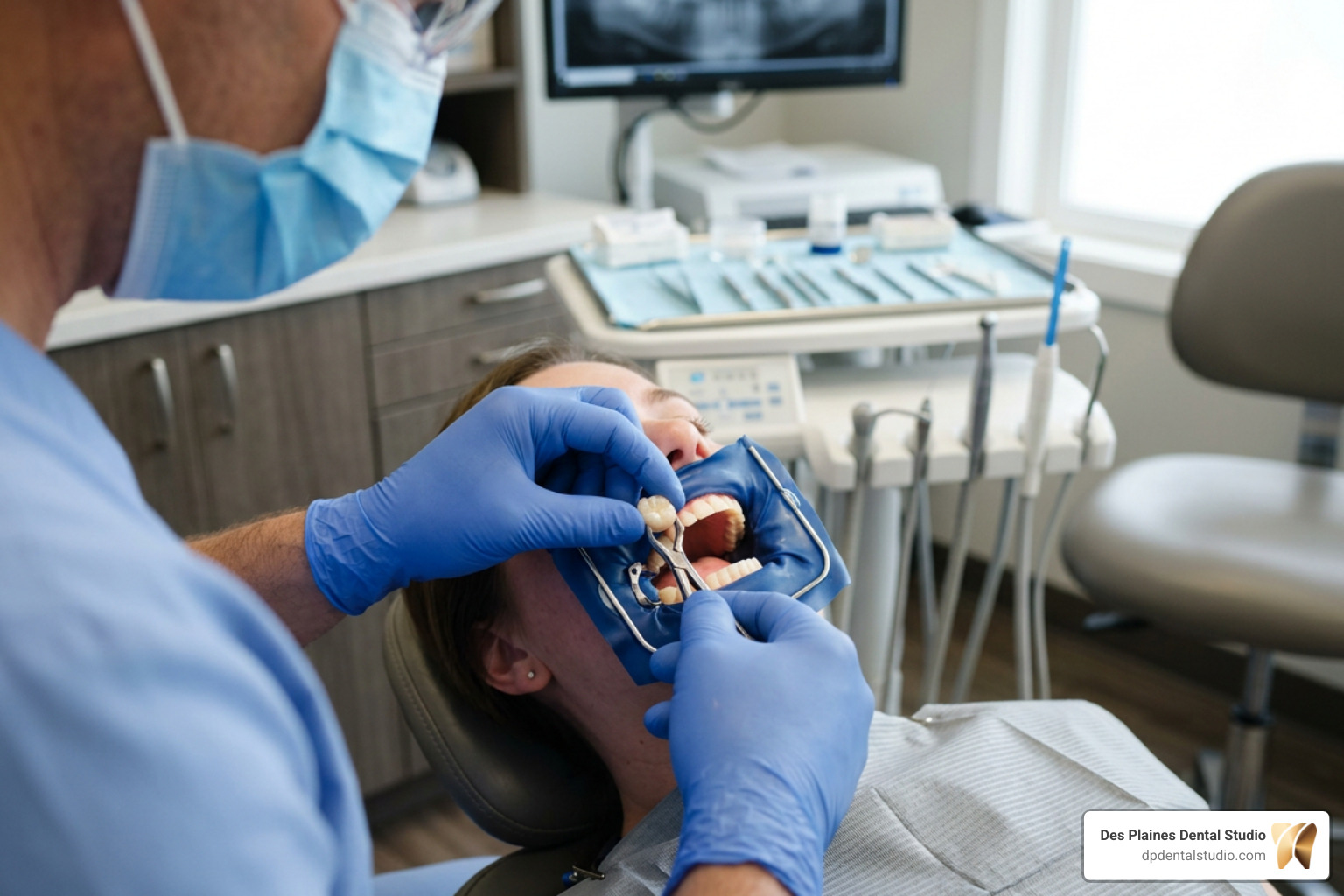
Before diving into the complex world of insurance policies, let’s talk about what a dental crown actually is. Think of a crown as a custom-fitted, tooth-shaped “helmet” that completely encases a damaged tooth above the gumline. Its primary job is to restore the tooth’s shape, size, strength, and overall function.
But here is the catch: insurance companies do not pay for crowns just because you want one. They require the procedure to be classified as a “medical necessity.”
So, when is a crown considered medically necessary? Insurance providers typically look for specific clinical triggers:
- Extensive Tooth Decay: When a cavity is so large that there is not enough healthy enamel left to hold a standard filling.
- A Cracked or Fractured Tooth: To hold a cracked tooth together and prevent the fracture from spreading down into the root.
- Post-Root Canal Protection: After a root canal, the tooth becomes brittle and hollow. A crown is almost always required to keep it from shattering under chewing pressure.
- 50% Coronal Structure Loss: Most standard clinical guidelines require that at least 50% of the natural coronal (visible) tooth structure is missing or compromised before they will approve coverage for a full crown.
If your tooth only has minor damage, insurance will likely recommend a standard dental filling instead. To explore the full range of ways we can restore damaged teeth, take a look at our guide on restorative dentistry procedures.
Understanding Dental Coverage for Crowns: How Much Does Insurance Pay?
If your procedure meets the standard for medical necessity, how much will your insurance actually pay?
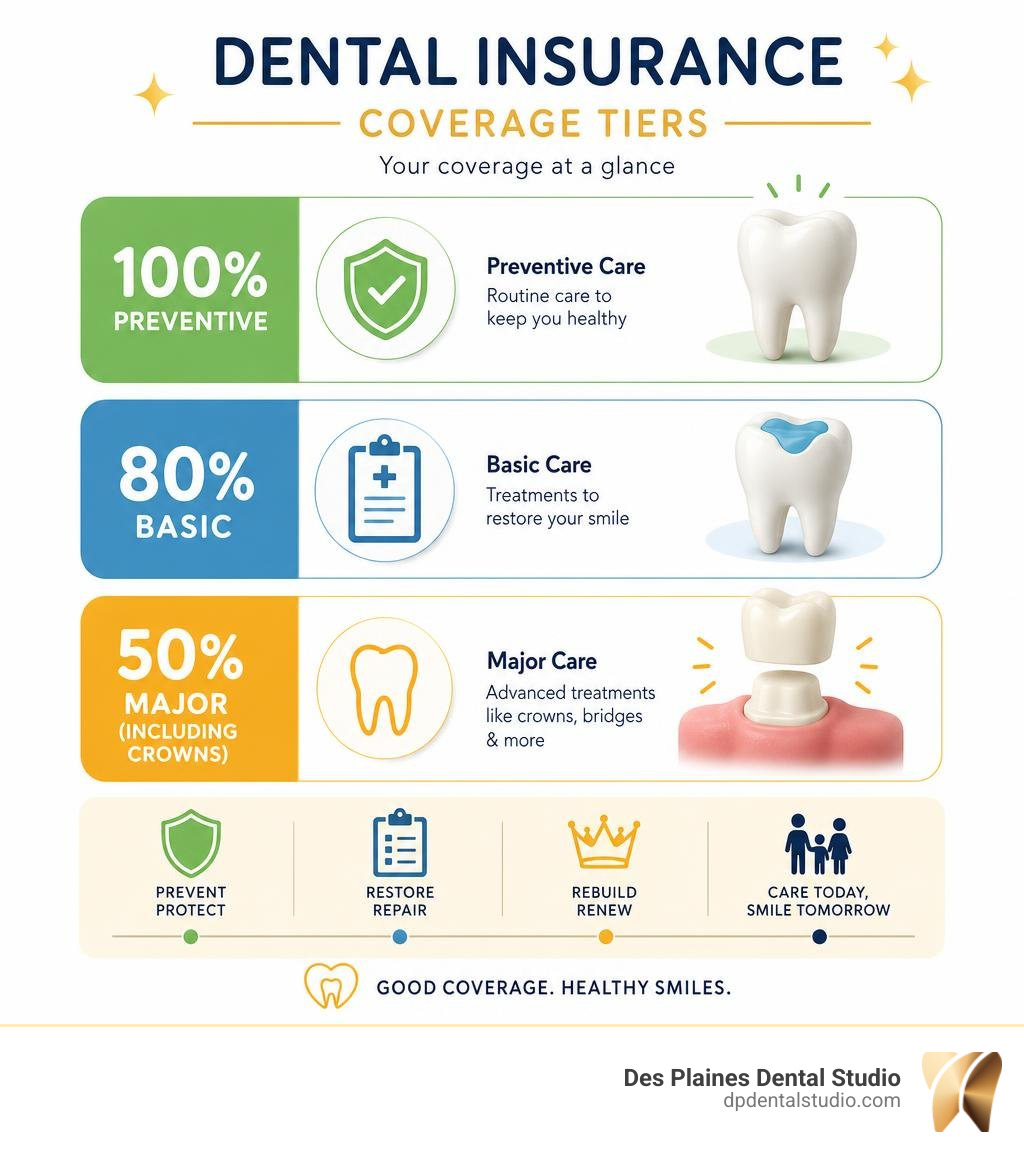
Most dental plans divide their covered treatments into three distinct categories:
- Preventive Care (Class A): Cleanings, exams, and routine X-rays. Usually covered at 100%.
- Basic Restorative Care (Class B): Simple fillings and basic extractions. Usually covered at 80%.
- Major Restorative Services (Class C): Bridges, dentures, and dental crowns. Usually covered at 50%.
Because crowns are categorized under Class C Major Restorative Services, you should expect your plan to cover roughly 40% to 50% of the cost.
However, “50% coverage” does not always mean you pay exactly half of the final bill. Here is why:
- The Deductible: This is the flat fee (typically $50 to $150) you must pay out of pocket each year before your insurance kicks in.
- The Annual Maximum: Most dental insurance plans cap their total annual payout between $1,250 and $2,000. If your crown costs $1,500 and your plan pays 50% ($750), that amount is deducted from your annual maximum. If you need multiple crowns in a single year, you can easily exceed this limit, leaving you responsible for 100% of the remaining balance.
- UCR Fees: Insurance companies base their payouts on “Usual, Customary, and Reasonable” fee schedules. If your dentist charges more than the insurance company’s allowed UCR fee for your area, you may have to pay the difference.
Without insurance, the average out-of-network cost for a permanent dental crown ranges from $1,100 to $2,000 (and can go up to $3,500 depending on the materials used). With a solid insurance plan, your out-of-pocket share typically drops to between $400 and $1,250.
According to industry reports, average national costs stand at approximately $1,399 for a porcelain crown, $1,114 for a porcelain-fused-to-metal (PFM) crown, and $697 for a temporary resin crown.
Waiting Periods and Frequency Limits in Dental Coverage for Crowns
If you just purchased a new dental insurance policy, you might run into a major roadblock: the dreaded waiting period.
To prevent patients from buying a policy only when they need immediate, expensive work, 80% to 90% of dental plans impose a waiting period of 6 to 12 months for major restorative care. If you try to get a crown during this window, your claim will be denied, and you will have to pay the full cost out of pocket.
Additionally, insurance companies enforce strict frequency limits on replacements. The industry standard is the 60-month rule (or 5-year limit). Under this rule, your insurance will not pay to replace an existing crown on the same tooth unless at least 5 years have passed since it was originally placed.
Crucially, this limit applies even if the original crown was placed under a completely different insurance policy. For billing purposes, the official completion date used to calculate this limit is the cementation date (the day the permanent crown is glued in), not the preparation date. You can learn more about these technical rules in the 9.02.506 Dental Restorations guidelines.
PPO vs. HMO vs. DHMO: Plan Types and Your Benefits
The structure of your dental plan plays a massive role in your final out-of-pocket costs and your freedom to choose a dentist.
- Dental Preferred Provider Organization (DPPO): DPPOs offer the most flexibility. You can see any licensed dentist, though you will save significantly by choosing an in-network provider who has agreed to discounted fee rates. DPPOs have annual maximums, deductibles, and waiting periods.
- Dental Health Maintenance Organization (DHMO) / HMO: DHMOs require you to choose a primary care dentist from a restricted network. There are typically no annual maximums, no deductibles, and no waiting periods. Instead of paying a percentage (coinsurance), you pay a flat copay for your crown. However, your choice of providers is highly limited.
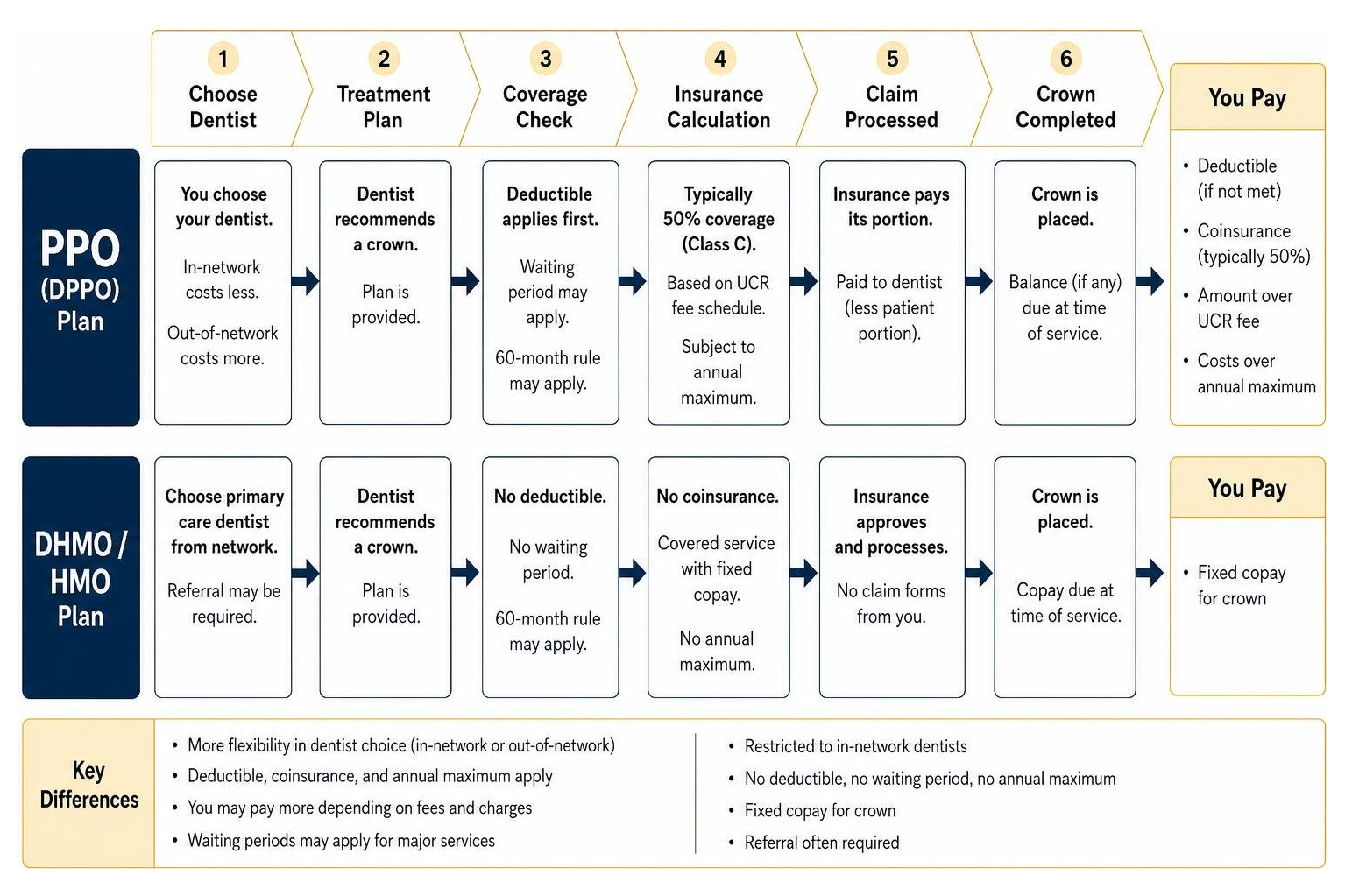
Here is a quick look at how these plan structures compare when you need a crown:
| Feature | DPPO Plans | DHMO / HMO Plans |
|---|---|---|
| Dentist Choice | High (In-network or out-of-network) | Low (In-network network only; requires referral) |
| Annual Maximum | Yes (Typically $1,250 – $2,000) | No annual maximum limit |
| Waiting Periods | Yes (Commonly 6 – 12 months) | No waiting periods |
| Payment Structure | Coinsurance (You pay ~50% after deductible) | Flat Copay (Set dollar amount per procedure) |
Factors Affecting the Out-of-Pocket Cost of a Dental Crown
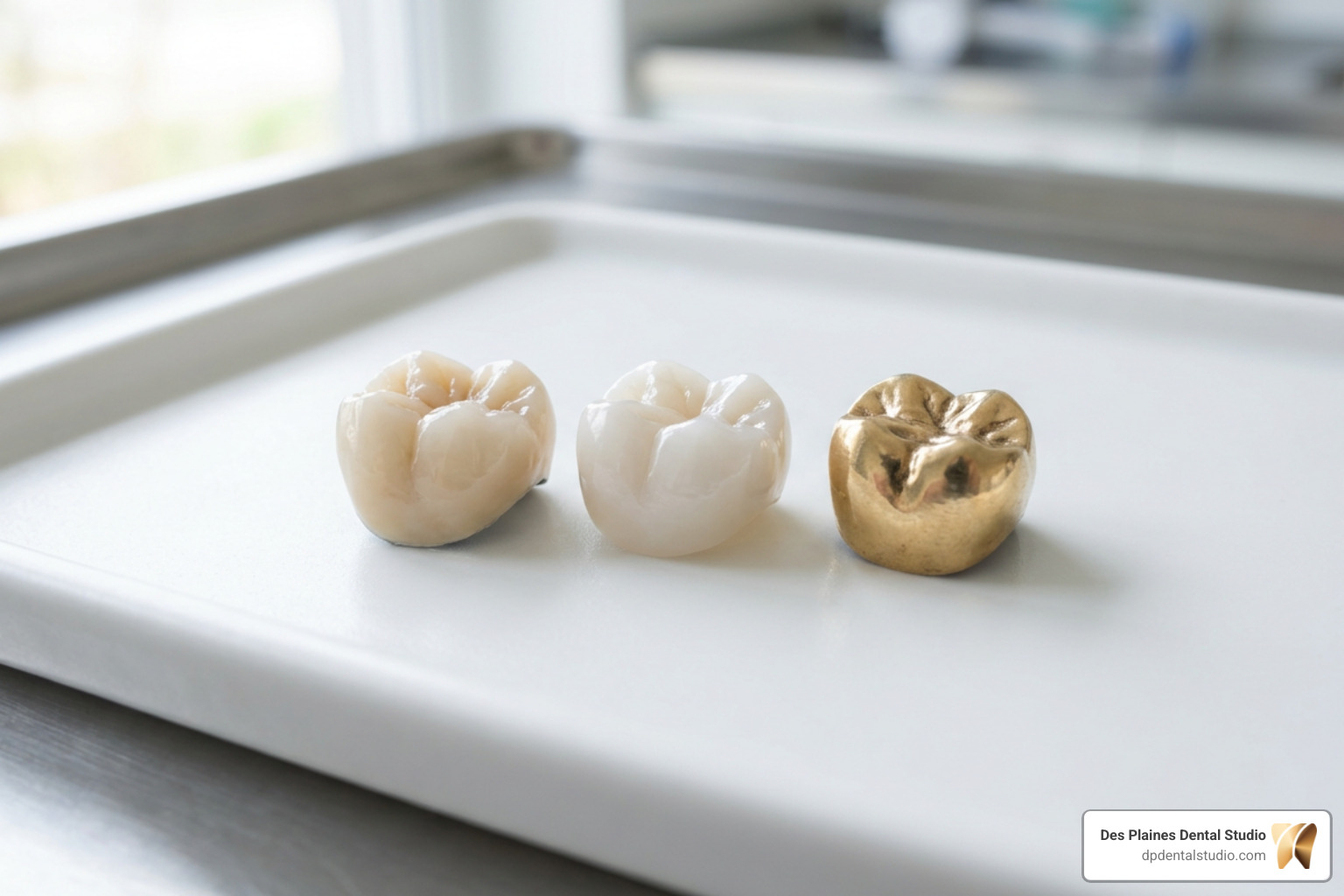
Not all crowns are created equal, and the decisions you make with your dentist will directly impact your final bill.
- The Materials Used:
- Porcelain / Ceramic: Excellent for front teeth because they mimic the natural translucency of enamel, but they can be more expensive.
- Zirconia: Incredibly durable and highly aesthetic, making them a premium choice for both front and back teeth.
- Porcelain-Fused-to-Metal (PFM): A strong, classic option, though they can sometimes show a dark metal line at the gumline over time.
- Gold / Metal Alloys: Virtually indestructible and ideal for out-of-sight back molars, but the cost of precious metals can drive up the price.
- The “Least Expensive Alternative Treatment” (LEAT) Clause: Many insurance plans include a LEAT clause. If you choose a premium zirconia crown, but your insurance decides a basic metal crown would technically restore the tooth’s function, they will only pay the 50% equivalent of the metal crown. You must pay the difference out of pocket.
- Geographic Location: Dental fees reflect the local cost of living. Getting a crown in the Chicago metropolitan area, including Des Plaines, IL, will carry different baseline costs than in rural areas.
- Preparatory Procedures: Before a crown can be placed, the tooth often needs a “core buildup” (filling in the hollowed-out center) or even a root canal. These preparatory steps are billed under separate CDT codes and have their own insurance coverage rules.
To get a better idea of how materials and local factors influence the overall pricing structure, review the Dental crown costs and insurance: What you need to know resource. If you currently have a temporary restoration in place and are wondering how much time you have to plan your budget, you can read about how long does a temporary crown last des plaines dentist.
Exclusions, Limitations, and Medicare Rules for Crowns
While dental insurance is incredibly helpful, it is also packed with exclusions designed to limit the insurance company’s financial liability.
- Cosmetic Exclusions: If you want a crown purely to cover up minor staining or to reshape a slightly crooked tooth, your insurance will classify it as a cosmetic treatment. Cosmetic dentistry is universally excluded from standard coverage. To understand the boundaries between health-focused treatments and cosmetic enhancements, read about what is a cosmetic dentist des plaines il dentist.
- The Missing Tooth Clause: If you are seeking a crown as part of a bridge to replace a tooth that was already missing before you signed up for your current insurance plan, the insurer may refuse to pay for the restoration.
- Medicare Restrictions: Original Medicare (Parts A and B) does not cover routine or restorative dental care, including crowns. However, about 98% of Medicare Advantage (Part C) plans offer some form of dental benefits. That crowns are classified as major restorative services, so you will likely need to be enrolled in a premium, high-coverage tier to get them covered. You can check local Illinois guidelines at Dental Coverage.
Alternatives to Crowns and Their Insurance Coverage
If a full crown is not the right fit for your budget or your tooth’s condition, there are alternative options:
- Inlays and Onlays: Often called “partial crowns,” these are custom-made restorations used when the damage is too large for a standard filling but not severe enough to warrant grinding down the entire tooth for a full crown. Because they preserve more natural tooth structure, they are highly recommended. Insurance typically covers them at the same 50% major restorative rate.
- Dental Veneers: Thin shells of porcelain bonded to the front of the teeth. These are almost always classified as cosmetic and are rarely covered by insurance.
- Dental Implants: If the tooth is completely unsalvageable and must be extracted, an implant is the gold standard for replacement. While some modern plans offer implant coverage, many still classify them as cosmetic or elective, meaning you may have to cover a significant portion of the cost yourself.
For a complete breakdown of how to replace missing or severely damaged teeth, read our detailed guide on des plaines dentist filling in the gaps your options for missing teeth.
How to Estimate and Manage Your Out-of-Pocket Costs
No one likes financial surprises, especially in the dental chair. Fortunately, you do not have to guess what your final bill will look like.
Before beginning any treatment, we highly recommend requesting a pre-treatment estimate (also known as a pre-authorization) from your insurance provider. Our administrative team will submit your clinical records, X-rays, and intended CDT codes to your insurer. Within a few weeks, the insurance company will send back a statement detailing exactly what they will cover and what your remaining out-of-pocket balance will be. You can learn more about setting up these plans through Individual Dental Insurance Plans.
Managing the Remaining Balance
If you are left with a substantial out-of-pocket bill after insurance pays its 50%, you can use tax-advantaged healthcare savings accounts to cover the difference tax-free:
- Health Savings Account (HSA): If you are enrolled in a high-deductible health plan, you can use pre-tax HSA funds to pay for dental crowns, fillings, and other restorative treatments.
- Flexible Spending Account (FSA): These employer-sponsored accounts allow you to set aside pre-tax dollars for medical and dental expenses. Just remember the “use-it-or-lose-it” rule — FSA funds must be spent before the end of the plan year.
How to Maximize Your Dental Coverage for Crowns
Only 3% to 5% of people with dental insurance actually reach their annual maximum limit each year. If you plan strategically, you can make sure you are getting the absolute most out of your benefits:
- Time Your Treatment Strategically: If you need extensive work that will exceed your annual maximum, ask if the treatment can be split across two calendar years. For example, we can prepare the tooth and place a temporary crown in December (using this year’s benefits) and cement the permanent crown in January (using next year’s benefits).
- Coordinate Benefits: If you are covered under two separate dental plans (for example, your own plan and your spouse’s plan), we can coordinate benefits to cover up to 100% of the cost.
- Use the Five-Step Insurance Check:
- Step 1: Get the exact CDT procedure codes from our office.
- Step 2: Call your insurance provider and verify if there is an active waiting period on your plan.
- Step 3: Ask for your remaining annual maximum and deductible amounts.
- Step 4: Confirm if the plan has a LEAT (Least Expensive Alternative Treatment) clause that could downgrade your crown material coverage.
- Step 5: Ask our team to submit a pre-treatment estimate to get the final numbers in writing.
Frequently Asked Questions About Dental Crowns and Insurance
Why would an insurance company deny a dental crown claim?
The most common reasons for denial include a lack of documented clinical necessity (e.g., the X-rays do not show at least 50% structure loss), trying to replace a crown that is less than 5 years old (violating the 60-month rule), or attempting to get treatment during an active waiting period.
Does insurance cover a crown replacement if my old one breaks?
Yes, but only if the existing crown has met the plan’s frequency limit (usually 5 to 10 years) or if the tooth underneath has suffered new decay or a structural fracture that makes replacement medically necessary.
Can I get a dental crown covered without a waiting period?
Yes, some employer-sponsored plans waive waiting periods entirely. Additionally, if you are transitioning directly from one continuous dental insurance policy to another without a gap in coverage, many insurers will waive the waiting period if you provide proof of prior coverage.
Conclusion
Navigating the details of dental insurance can feel like trying to decode a foreign language, but you do not have to do it alone.
At Des Plaines Dental Studio, we are committed to providing patient-centered, high-quality care in a warm and welcoming environment. Our experienced administrative team is always here to help you maximize your insurance benefits, handle the tedious paperwork, and explore flexible financing options so you can get the care you need without the financial stress.
If you suspect you need a crown or want to discuss your treatment options, contact us today to schedule your consultation. Let us help you protect your oral health and keep your smile shining bright!