Understanding Periodontal Disease: Stages, Symptoms, and Diagnosis
Gum disease, or periodontal disease, is an infection of the tissues supporting your teeth caused by the accumulation of bacterial plaque. A clinical evaluation combined with periapical X-rays allows us to look below the gumline to assess plaque accumulation and evaluate bone levels. We also conduct systemic risk assessments to see how your overall health influences your gum condition. To learn more about how gum infections develop, read about What is Periodontal Disease Dentist in 60016.
The Four Stages of Periodontal Progression
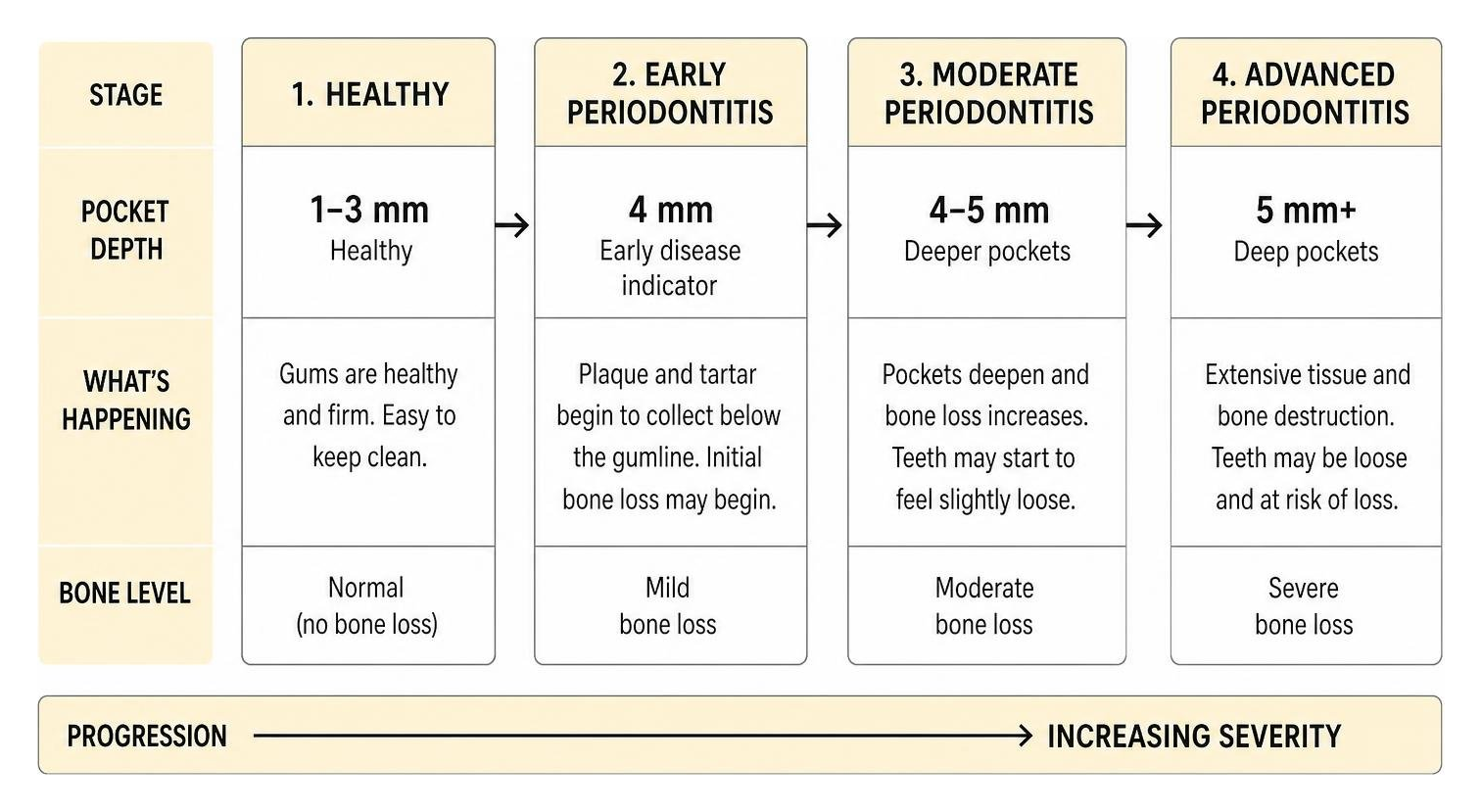
Gum disease progresses through four distinct stages:
- Gingivitis: The mildest form, marked by red, swollen gums that bleed easily. At this stage, the bone has not been affected.
- Early Periodontitis: The infection spreads beneath the gumline, starting to damage the supporting bone structures.
- Moderate Periodontitis: Bone loss increases, gum pockets deepen, and teeth may begin to feel slightly loose.
- Advanced Periodontitis: Extensive tissue and bone destruction occurs, leading to loose teeth, severe infection, and high risk of tooth loss.
For a deeper dive into early intervention, check out The Truth About Reversing Early Periodontal Disease.
Key Diagnostic Metrics and Pocket Depth Evaluation
When we measure your gums, we insert a small probe between your tooth and gum tissue to measure pocket depth:
- 1-3 mm: A healthy pocket depth that is easy to keep clean with normal brushing and flossing.
- 4 mm: An early indicator of disease where plaque and tartar begin to collect below the surface.
- 5 mm or deeper: A deep pocket threshold indicating clinical attachment loss and bone destruction.
Clinical guidelines emphasize capturing these measurements accurately to map out an effective treatment plan, as detailed in the Guidelines for Periodontal Therapy.
First-Line Steps in Periodontal Therapy: Behavioral and Risk Control

Before jumping into advanced procedures, periodontal therapy focuses on fundamental behavioral steps. Eliminating supragingival plaque and disrupting the bacterial biofilm daily requires strong patient compliance and effective daily habits. Explore our approach to overall oral health through Preventative Dental Care Des Plaines IL.
Behavioral Changes and Daily Hygiene Protocols
Proper toothbrushing technique is critical. Using soft nylon bristles prevents gum trauma while sweeping away plaque. Using interdental cleaning tools like floss or tiny brushes ensures clean surfaces between teeth. Electric toothbrushes are particularly effective at removing biofilm smoothly; read more about this in our guide on Dentist Des Plaines One Tool for Better Gum Health.
Systemic Risk Factor Modification
Your lifestyle and systemic health directly impact how your gums respond to treatment:
- Tobacco Cessation: Smoking limits blood flow to the gums, reducing your ability to fight infection and heal after treatment.
- Diabetes Management: Uncontrolled blood sugar worsens gum infection, and gum inflammation makes blood sugar harder to manage. Learn more about this dual dynamic from a Dentist in Des Plaines The Periodontal Disease Diabetes Connection.
- Rheumatoid Arthritis: Inflammatory conditions like arthritis share common inflammatory pathways with gum disease, as outlined in Des Plaines Dentist Periodontal Disease and Rheumatoid Arthritis.
Nonsurgical Interventions and Chemical Adjuncts
When home care alone isn’t enough to reduce deep pockets, non-surgical clinical treatments provide deeper access to clear away infection under local anesthesia.
| Treatment Option | Primary Goal | Best Suited For | Key Benefit |
|---|---|---|---|
| Scaling and Root Planing (SRP) | Mechanical removal of deep tartar & endotoxins | 4mm+ pocket depth with visible tartar | Removes root surface roughness so gums can heal |
| Antimicrobial Adjuncts | Chemical suppression of residual bacteria | Persistent pockets following deep cleaning | Reaches micro-bacterial niches that tools miss |
Learn more about deep cleanings at Scaling and Root Planing Des Plaines IL.
Deep Cleaning Through Scaling and Root Planing
Scaling removes calculus (tartar) and bacterial plaque from above and beneath the gumline. Root planing gently smooths out rough spots on the tooth roots, removing bacterial endotoxins that fuel inflammation. This double step encourages gum tissue to reattach tightly to clean roots, leading to pocket depth reduction. Read more on Beyond the Brush Why You Might Need a Deep Teeth Cleaning in Des Plaines.
Antimicrobial Adjuncts in Non-Surgical Periodontal Therapy
To help gums recover, we often combine deep cleaning with targeted medications:
- Sub-antimicrobial Doxycycline (Periostat 20mg dose): Modulates body enzyme response to prevent tissue breakdown without encouraging antibiotic resistance.
- Minocycline Microspheres: Placed directly inside deep pockets to continuously release medication over time.
- Chlorhexidine Rinse: An antimicrobial mouthwash designed to suppress surface bacteria during initial healing.
- Photodynamic Laser Therapy: Uses specific wavelengths of light to target and destroy bacteria in deep pockets.
For professional guidelines on these treatments, review the ADA Chairside Guide for Nonsurgical Treatment of Chronic Periodontitis.
Surgical Treatment Options for Advanced Bone Loss
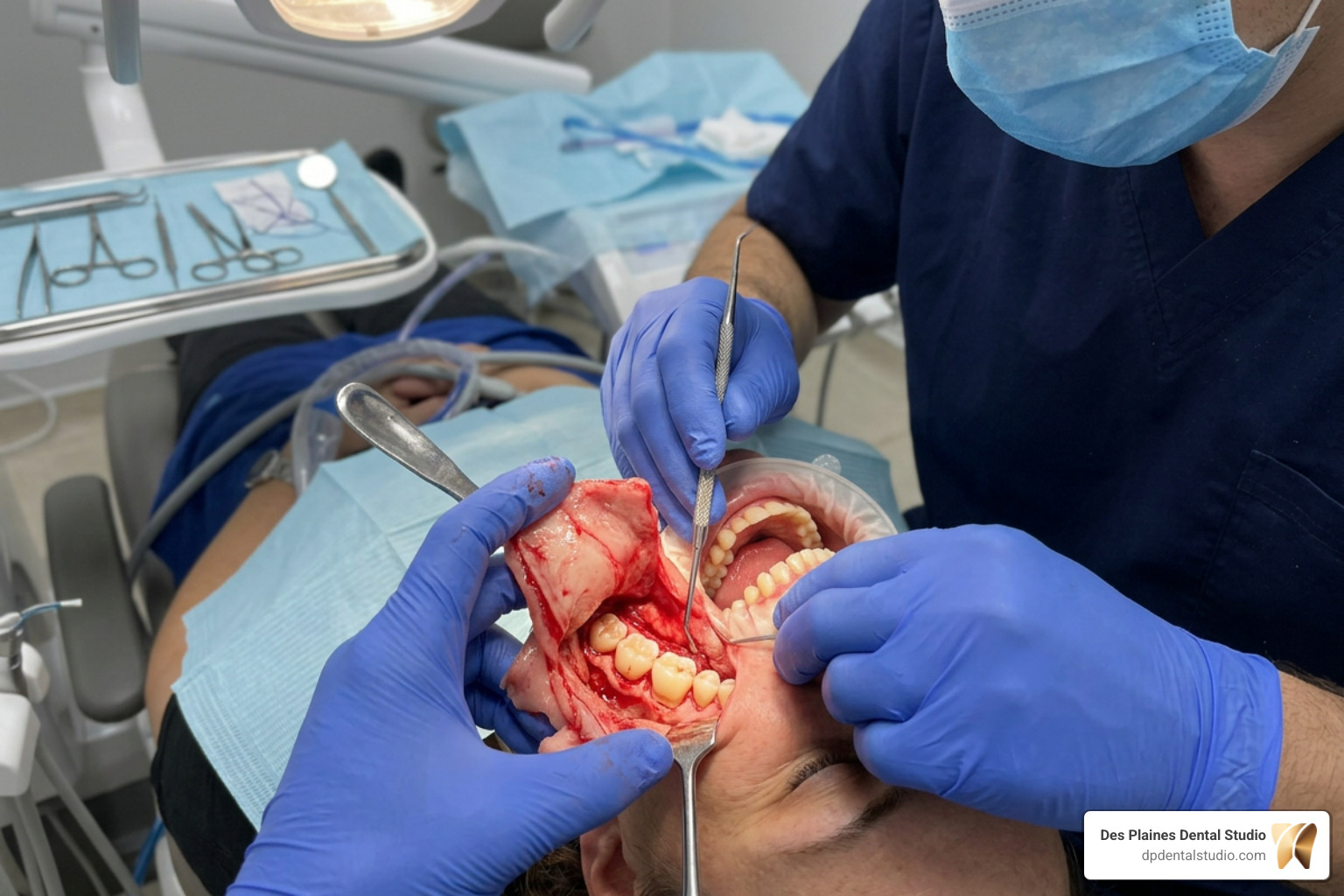
If deep pockets and persistent inflammation remain after a re-evaluation checkup, surgical interventions help repair clinical attachment loss and restore structural support around your teeth.
Flap Surgery and Pocket Reduction
During flap surgery, the surgeon makes a small incision to temporarily lift back (reflect) the gingival tissue. This allows direct subgingival access to clean deep root pockets thoroughly. Osseous recontouring reshapes damaged bone to eliminate shallow craters where bacteria hide. Finally, tissue suturing places the gums neatly back around the tooth structure for improved pocket reduction.
Regenerative Techniques and Grafting Procedures
Advanced bone loss requires active restoration to build back destroyed support:
- Bone Grafting Materials: Placed into areas of bone loss to provide a scaffold for new bone growth.
- Soft Tissue Grafts: Replaces receding gum tissue using natural tissue or structural donor matrices.
- Guided Tissue Regeneration (GTR): Places a membrane barrier fabric between bone and gum tissue to allow slow-growing bone cells to regenerate without fast-growing skin tissues crowding them out.
- Tissue-Stimulating Gels & Platelet-Rich Fibrin (PRF): Biological materials packed with growth factors that accelerate tissue and bone healing.
For more details on evidence-based surgical guidelines, review the Treatment of stage I–III periodontitis—The EFP S3 level clinical practice guideline.
Maintenance Care and Long-Term Prevention
Following primary treatment, a post-treatment re-evaluation is scheduled at 6–8 weeks to check disease stability, evaluate plaque index scores, and ensure long-term disease recurrence prevention. Routine evaluations are detailed in Dental Cleanings and Exams.
Long-Term Supportive Periodontal Therapy and Maintenance Schedules
Periodontal disease is a chronic condition, meaning long-term maintenance is essential:
- 3-Month Maintenance Interval: Scheduling cleanings every three months interrupts bacterial growth cycles before subgingival biofilm can harden into damaging tartar.
- Mechanical Biofilm Disruption & Attachment Level Tracking: Ongoing debridement coupled with measurement tracking allows us to catch any localized flare-ups early.
See the formal clinical guidelines under the Treatment of stage I–III periodontitis guideline.
At-Home Care and Preventive Lifestyle Habits
- Use a power toothbrush daily to disrupt sticky surface plaque efficiently.
- Rinse regularly with prescribed or OTC antibacterial rinses.
- Commit to toothbrush replacement every 3 months (or sooner if bristles fray).
- Clean between teeth daily using interdental brushes tailored to your space sizes.
- Senior patients can find customized advice under Healthy Gums for Seniors Des Plaines IL Dentist.
Frequently Asked Questions About Gum Disease Treatment
What are the estimated costs of non-surgical and surgical gum treatments?
Cost varies depending on the severity of the infection and how many areas require attention:
- Scaling and Root Planing (SRP): Usually priced per quadrant (quarter of the mouth). Fees typically range from $200 to $400 per quadrant before insurance.
- Surgical Treatments & Grafting: Flap surgery, bone grafting, or tissue grafts can cost between $600 and $3,000+ per quadrant depending on the materials used.
- Insurance Coverage: Most dental insurance plans partially cover non-surgical deep cleanings and necessary surgical therapies.
Read our complete breakdown in The Definitive Guide to Dental Cleaning Costs.
How long is the recovery period following periodontal surgery?
Initial post-operative healing generally takes 7 to 14 days. Suture removal usually occurs within 1 to 2 weeks. Full internal tissue maturation and bone remodeling can take several months. Mild post-op swelling or tenderness is easily managed with prescribed or over-the-counter pain medications and salt-water rinses.
Is advanced periodontal disease completely curable?
While early gingivitis is completely reversible, moderate to advanced periodontitis is a chronic condition. Structural bone loss cannot be completely undone naturally, but it can be managed. With proactive periodontal therapy and routine maintenance, we can halt disease progression and save your natural teeth for a lifetime.
Conclusion
Controlling gum disease takes a multi-tiered approach—from daily interdental cleaning to surgical bone restoration. Maintaining healthy gums protects your natural smile, avoids costly complications down the road, and helps safeguard your overall systemic health.
At Des Plaines Dental Studio, we provide warm, welcoming, and pain-free care tailored around your personal needs and insurance coverage. If you are experiencing bleeding gums or want a thorough gum evaluation, visit our page on Periodontitis Treatment Services and schedule your visit with our team today!