


The Truth About Reversing Early Periodontal Disease
What “Early Periodontitis Is Reversible” Actually Means — And What It Doesn’t
Is early periodontitis reversible? The short answer depends on exactly how far the disease has progressed.
Here is the key distinction:
| Stage | Bone Loss? | Reversible? |
|---|---|---|
| Gingivitis | No | Yes — completely |
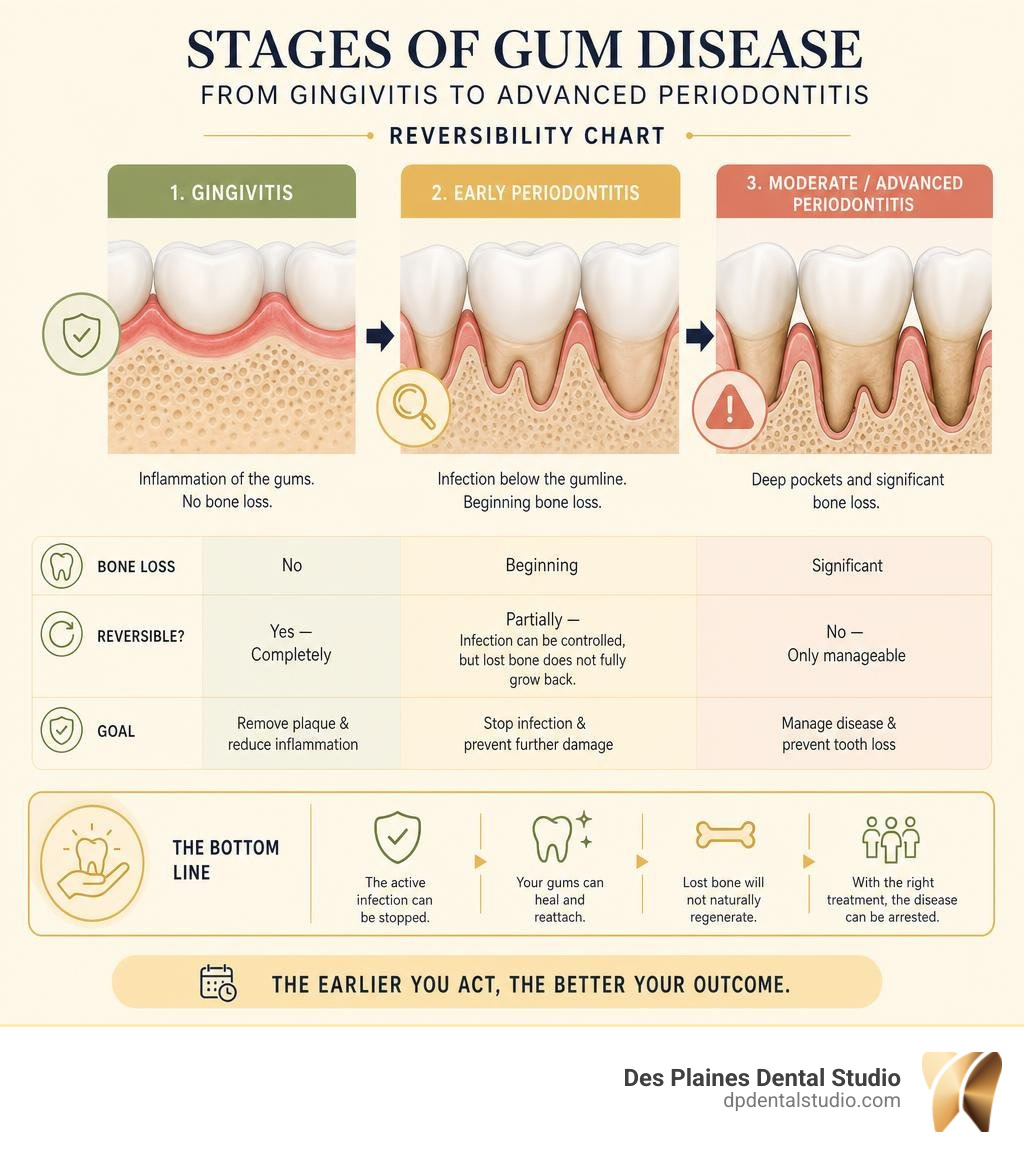
| Early Periodontitis | Beginning | Partially — infection can be controlled, but lost bone does not fully grow back |
| Moderate/Advanced Periodontitis | Significant | No — only manageable |
So if you have been told you have early periodontitis, here is what that means in plain terms:
- The active infection can be stopped
- Your gums can heal and reattach
- Any bone already lost will not naturally regenerate on its own
- With the right treatment, the disease can be arrested — preventing further damage
The earlier you act, the better your outcome. Almost half of all U.S. adults have some form of gum disease, and most don’t know it because the early stages are usually painless.
I’m Dr. Marta Milejczyk, a general dentist practicing in Chicago’s northwest suburbs since 1997, with advanced clinical training in periodontics through Loyola University Medical Center’s General Practice Residency program. Understanding is early periodontitis reversible is one of the most important questions I help my patients answer, because catching gum disease at the right stage makes all the difference in what we can do for your smile.
Gingivitis vs. Periodontitis: Is Early Periodontitis Reversible?
To understand how to save your smile, we have to look at the exact transition point between gingivitis and periodontitis. Many people use these terms interchangeably, but in the dental world, they represent two very different sides of a biological line.
Gingivitis is the first, mildest stage of gum disease. It is caused by a build-up of bacteria-laden plaque and tartar on your teeth. When plaque sits along your gumline, the bacteria release toxins that irritate, inflame, and redden your delicate gum tissue. At this stage, the inflammation is entirely superficial. There is no damage to the underlying bone or the ligaments holding your teeth in place. Because of this, gingivitis is totally reversible with proper treatment and a tune-up to your daily brushing and flossing routine.
Once that inflammation spreads deeper and begins to degrade the bone structure supporting your teeth, you have officially crossed the line into periodontitis.
Here is a direct comparison of how these two stages stack up:
| Clinical Feature | Gingivitis | Early Periodontitis (Stage I) |
|---|---|---|
| Gum Inflammation | Present (redness, swelling, bleeding) | Present (often deeper redness, bleeding on probing) |
| Alveolar Bone Loss | None | Beginning stages of bone degradation |
| Periodontal Pocket Depth | 1 to 3 mm (normal) | 4 to 5 mm (pockets starting to form) |
| Clinical Attachment Loss | None | 1 to 2 mm of attachment loss |
| Reversibility | 100% reversible | Active infection is reversible; bone loss is permanent |
| Primary Treatment | Professional cleaning & home care | Scaling and root planing (SRP) & maintenance |
According to the CDC: Periodontal Disease statistics, about 4 in 10 U.S. adults aged 30 or older have some level of periodontitis. If you fall into this group, understanding this distinction is vital. While you cannot naturally grow back the bone that has been lost, you can absolutely halt the active infection. By stopping the disease in its tracks, you prevent the damage from progressing to moderate or advanced stages, effectively “freezing” the disease and preserving your natural teeth. To learn more about how this process begins, check out our guide on Understanding Gingivitis.
The Biological Threshold: When Is Early Periodontitis Reversible?
The biological threshold of reversibility hinges entirely on your alveolar bone (the jawbone socket that holds your teeth) and the periodontal ligament.
When your mouth is healthy, your gums fit snugly around each tooth like a tight turtleneck sweater. As plaque hardens into tartar, it acts like a wedge, slowly pushing the gum tissue away from the tooth. This creates a gap known as a periodontal pocket.
In a healthy mouth, these pockets measure between 1 and 3 millimeters deep. When you develop early periodontitis, the pocket depth typically stretches to 4 or 5 millimeters. This pocket becomes a dark, oxygen-deprived sanctuary where harmful bacteria thrive, completely out of reach of your toothbrush and dental floss.
As the bacteria multiply inside these deep pockets, your body’s immune system tries to fight them off. Unfortunately, this chronic inflammatory battle backfires. The immune response releases enzymes that slowly break down the periodontal ligament and the surrounding alveolar bone.
This brings us to the primary reason why periodontitis cannot be fully reversed naturally: the biological limit of bone regeneration. Once jawbone tissue is destroyed by chronic inflammation, it does not naturally regenerate on its own. While advanced surgical procedures like bone grafting can sometimes rebuild lost support in severe cases, the natural, spontaneous recovery of lost bone is not biologically possible.
Thus, when asking is early periodontitis reversible, the answer is that the active infection and inflammation can be completely reversed, but any structural bone loss is permanent. This is why early detection is so critical. If you want to dive deeper into the mechanics of this process, read our article on What is Periodontal Disease.
Warning Signs That Gum Disease Has Progressed Beyond the Reversible Stage
Because periodontal disease is famously a “silent” condition, it rarely causes pain in its early stages. Many patients are surprised to learn they have it because their teeth feel perfectly fine. However, your body does leave clues.
If you notice any of the following warning signs, your gum disease may have progressed beyond the fully reversible stage of gingivitis:
- Persistent Bleeding Gums: If your gums bleed consistently when you brush, floss, or eat hard foods, it is a major red flag. Healthy gums do not bleed. If you have ever wondered, “Why do my gums bleed?”, you can explore the underlying causes in our detailed post, Why Do My Gums Bleed.
- Gum Recession: If your teeth suddenly look longer, or if you can see the darker, rougher root surfaces near the gumline, your gums are actively pulling away due to bone loss.
- Chronic Bad Breath (Halitosis): If you have bad breath or a lingering metallic taste in your mouth that doesn’t go away after brushing or using mouthwash, it is often caused by volatile sulfur compounds produced by deep-pocket bacteria.
- Slight Tooth Mobility: Do your teeth feel like they have a tiny bit of “give” when you press on them? Even minor shifting or changes in how your teeth fit together when you bite can indicate that the supporting bone has begun to degrade.
How to Treat and Manage Early Periodontal Disease
If you have been diagnosed with early periodontitis, do not panic! While you cannot change the past bone loss, you have incredible power to control the future of your smile. The goal of modern periodontal therapy is to eliminate the bacterial infection, reduce those deep pockets back to a manageable depth, and help your gums firmly reattach to the clean surfaces of your teeth.
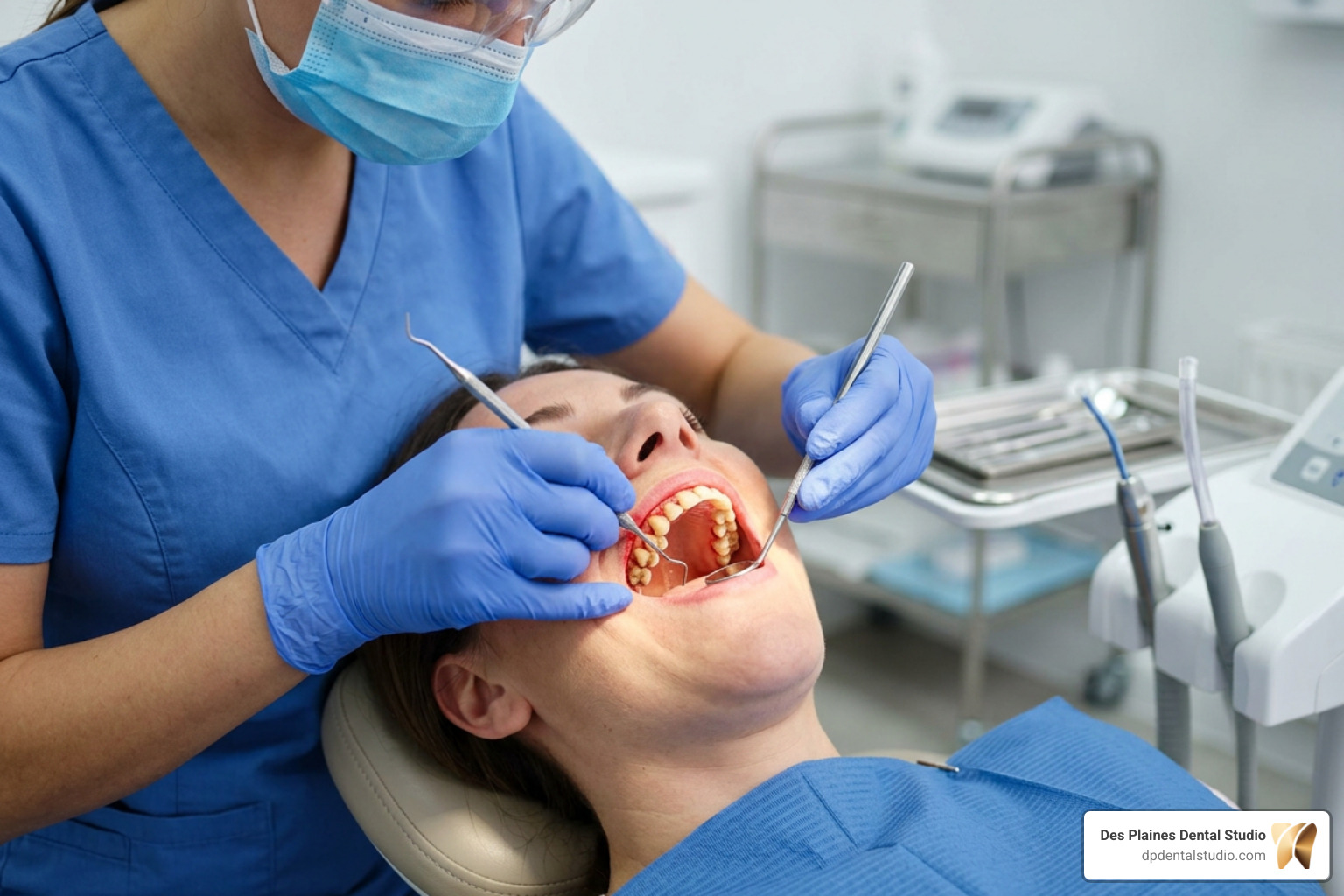
The gold standard clinical treatment for managing early periodontitis is a non-surgical deep cleaning known as scaling and root planing (SRP).
Unlike a standard preventive cleaning which only focuses on the parts of your teeth above the gumline, scaling and root planing goes deep into the periodontal pockets. The process is typically broken down into two steps:
- Scaling: We use specialized hand instruments and ultrasonic scaling technology (such as the Cavitron Touch) to carefully shatter and sweep away the hardened tartar and bacterial plaque from the tooth surfaces and beneath the gumline.
- Root Planing: We smooth out the rough root surfaces of your teeth. This is crucial because bacteria love to cling to rough areas. By smoothing the roots, we remove the bacterial toxins embedded in the root structure and create a clean, pristine surface. This allows your gum tissue to naturally heal, tighten, and reattach to the tooth, effectively shrinking the pocket depths.
According to the evidence-based guidelines in the Treatment of stage I–III periodontitis clinical practice guide, non-surgical mechanical debridement (SRP) is the foundational step for managing early to moderate periodontitis. It has been shown to predictably reduce pocket depths by 0.7 to 1.5 mm and yield significant gains in clinical attachment.
At Des Plaines Dental Studio, we prioritize your comfort during this procedure. We use localized numbing agents and advanced, gentle techniques to ensure your deep cleaning is entirely pain-free. To understand what to expect during this process, read more about our approach to Scaling and Root Planing and Deep Teeth Cleaning.
Home Care vs. Professional Treatment: Is Early Periodontitis Reversible Without a Dentist?
We often have patients ask: “Can I treat my early periodontitis at home with specialized mouthwashes, dental floss, and high-tech toothbrushes?”
To be completely honest: No, early periodontitis cannot be reversed or controlled with home care alone.
Here is why: once plaque has hardened into tartar (calculus) and settled deep inside a 4 or 5-millimeter pocket, it is physically impossible to remove at home. Tartar is chemically bonded to your tooth structure. No toothbrush, water flosser, or antibacterial rinse can dissolve or scrub it away. Only a licensed dental professional using specialized ultrasonic and manual scaling instruments can safely remove subgingival tartar.
However, home care is 50% of the equation once the professional cleaning is complete! Think of your dentist as the construction crew that clears the debris and puts out the fire, and your home care as the daily maintenance team that keeps the site clean. Without a stellar home routine, the bacteria will recolonize those pockets within just a few weeks.
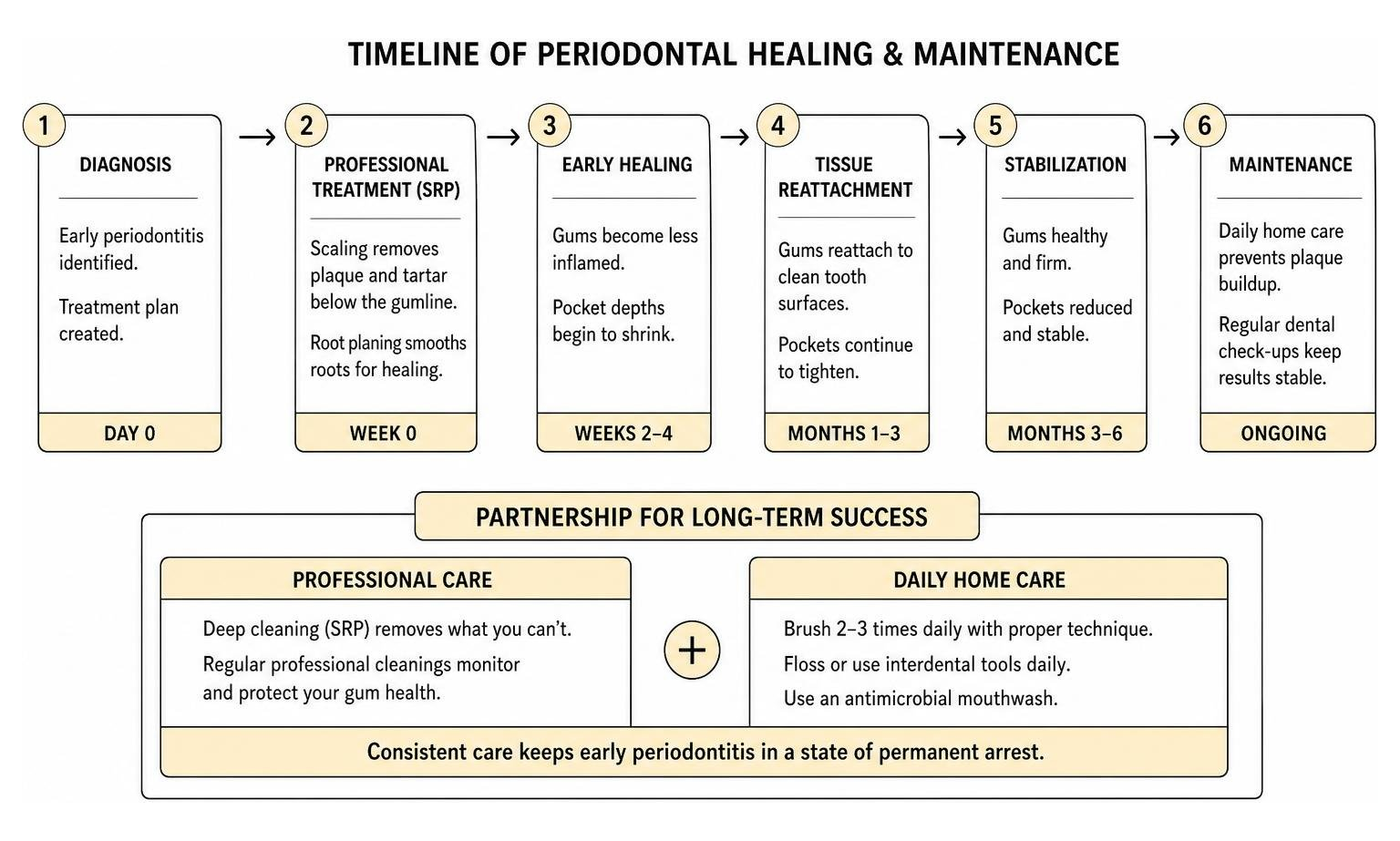
To maintain your results and keep early periodontitis in a state of permanent arrest, you should commit to:
- Brushing properly: Brush your teeth two to three times a day using a soft-bristled or electric toothbrush. Angle the bristles at a 45-degree angle toward your gumline to sweep away plaque before it hardens.
- Daily Flossing: Clean between your teeth at least once a day. If you struggle with traditional string floss, interdental brushes or water flossers can help clean those hard-to-reach gaps.
- Antimicrobial Mouthwashes: Using a therapeutic, alcohol-free antibacterial rinse can help lower the overall bacterial load in your mouth.
To build the ultimate daily routine, take a look at our expert recommendations for The Optimal Oral Health Routine and explore our general Dental Hygiene tips.
The Role of Antibiotics and Advanced Therapies
While mechanical scaling and root planing is the absolute foundation of periodontal treatment, we sometimes use advanced therapies and antibiotics as supportive tools to fight highly aggressive bacteria.
In certain cases—especially when a patient has a highly active, aggressive form of gum disease or isn’t responding fully to standard mechanical cleaning—we may prescribe systemic antibiotics or place localized antimicrobials directly into the healing pockets.
For instance, clinical research published in the systematic review Treatment of Periodontitis Affecting Human Primary Teeth highlights that combining mechanical scaling and root planing with systemic antibiotics (such as a combination of amoxicillin and metronidazole) results in highly favorable improvements in probing depths and clinical attachment.
Additionally, historic clinical studies like the Resolution of early lesions of juvenile periodontitis with tetracycline therapy have shown that specific antibiotic therapies, such as tetracycline, can target aggressive pathogens directly, helping to resolve deep lesions and stabilize bone levels when used alongside professional care.
At Des Plaines Dental Studio, we evaluate your specific bacterial risk and systemic health to determine if adjunct therapies—like local antibiotic gels or specialized antimicrobial rinses—are necessary to give your gums the ultimate healing advantage.
Lifestyle Adjustments: Smoking Cessation and Anti-Inflammatory Diet
Your oral health does not exist in a vacuum. Your body’s ability to heal and fight off periodontal infections is heavily influenced by your overall lifestyle, systemic health, and daily habits.

If you want to maximize your chances of stopping early periodontitis, focus on these three lifestyle pillars:
- Smoking Cessation: Smoking is the single greatest risk factor for periodontal disease progression and treatment failure. Tobacco restricts blood flow to your gums, which masks the early warning signs of disease (like bleeding) and starves your tissues of the oxygen and nutrients they need to heal. According to the Treatment of aggressive periodontitis literature, smokers represent a remarkably high percentage of “non-responders” to standard scaling and root planing. Quitting smoking is the best gift you can give your gums.
- Managing Systemic Conditions (Like Diabetes): There is a dual-directional relationship between gum disease and diabetes. Uncontrolled blood sugar levels fuel the inflammatory response in your gums, making periodontal infections much more severe. Conversely, treating your gum disease can actually help lower your systemic blood sugar levels! You can learn more about this biological pathway in our article on The Periodontal Disease Diabetes Connection.
- Adopting an Anti-Inflammatory Diet: Your body needs raw materials to rebuild and heal. Focus on eating a nutrient-rich diet packed with fruits, vegetables, lean proteins, and healthy fats (like Omega-3s). Minimize processed sugars, refined carbohydrates, and artificial preservatives, which trigger systemic inflammation and feed the bacteria in your mouth. Drinking plenty of water also keeps your saliva flowing, which naturally washes away bacteria and protects your teeth.
Timeline and Prognosis After Periodontal Therapy
Once you complete your professional periodontal treatment and establish your home care routine, what does the road to recovery look like?
The healing process begins almost immediately. Within the first few weeks after scaling and root planing, you will notice a dramatic reduction in gum swelling, redness, and bleeding. Your gums will start to transition from a puffy, dark red color to a healthy, firm, pale pink.
By the 4 to 6-week mark, we will have you back in our Des Plaines office for a periodontal re-evaluation. During this quick visit, we gently measure your pocket depths again. In most cases of early periodontitis, we see pocket depths shrink from 4 or 5 mm down to a healthy, stable 1 to 3 mm.
What is the long-term prognosis for your teeth? It is exceptionally bright!
Historically, clinical studies tracking patients with periodontal disease have shown that with consistent professional maintenance and great home care, even teeth with a compromised, questionable, or “hopeless” prognosis can survive healthy and functional for decades.
By acting early, you protect your teeth from ever reaching the point of mobility or tooth loss. To learn more about how we help our patients find long-term comfort and stability, check out our guide on Providing Relief from Periodontal Disease and read the public health guidelines on the NIDCR: Periodontal (Gum) Disease resource page.
Frequently Asked Questions About Gum Disease Reversibility
Can periodontal disease go away on its own?
No, periodontal disease is a chronic, progressive bacterial infection that will not go away on its own. While symptoms like bleeding or swelling may temporarily seem to improve or fluctuate, the bacteria living deep within the periodontal pockets will continue to destroy your supporting bone and ligament fibers silently over time. Professional intervention is required to remove the hardened tartar and plaque that fuel the infection.
Is gum disease contagious through kissing?
Yes, the bacteria responsible for periodontal disease can be transmitted between individuals. While you cannot “catch” gum disease from a single casual contact, repeated, long-term saliva sharing (such as through kissing or sharing utensils with a long-term partner) can transfer these harmful oral pathogens. If your partner has severe, untreated gum disease, it can increase your own risk of developing the condition, making oral health a family affair!
How often do I need periodontal maintenance?
Once you have been treated for periodontitis, you will transition from standard preventive cleanings to a specialized schedule known as periodontal maintenance. Because periodontal bacteria can easily recolonize deep below the gumline within 90 to 120 days, we typically recommend scheduling these maintenance visits every 3 to 4 months. This frequent schedule allows us to clean those deep pockets and stop any new bacterial build-up before it can cause further bone damage. You can read more about what these visits entail by checking out our Dental Cleanings and Exams page.
Conclusion
At Des Plaines Dental Studio, we believe that a healthy smile is the foundation of a healthy life. While the phrase is early periodontitis reversible has some clinical nuances, the most important takeaway is that your smile can be saved, stabilized, and protected for a lifetime.
If you are experiencing bleeding gums, persistent bad breath, or haven’t had a dental check-up in a while, our compassionate, patient-centered team is here to help. We offer a welcoming, pain-free environment and work closely with your dental insurance to ensure you get the high-quality, stress-free care you deserve right here in Des Plaines, IL.
Don’t let silent gum disease compromise your health. Contact us today to schedule your comprehensive periodontal evaluation, and let’s work together to keep your smile healthy, bright, and strong. For more details on our specialized gum therapies, visit our page on Early Periodontitis.