How Much Do Cosmetic Dentistry Veneers Cost?
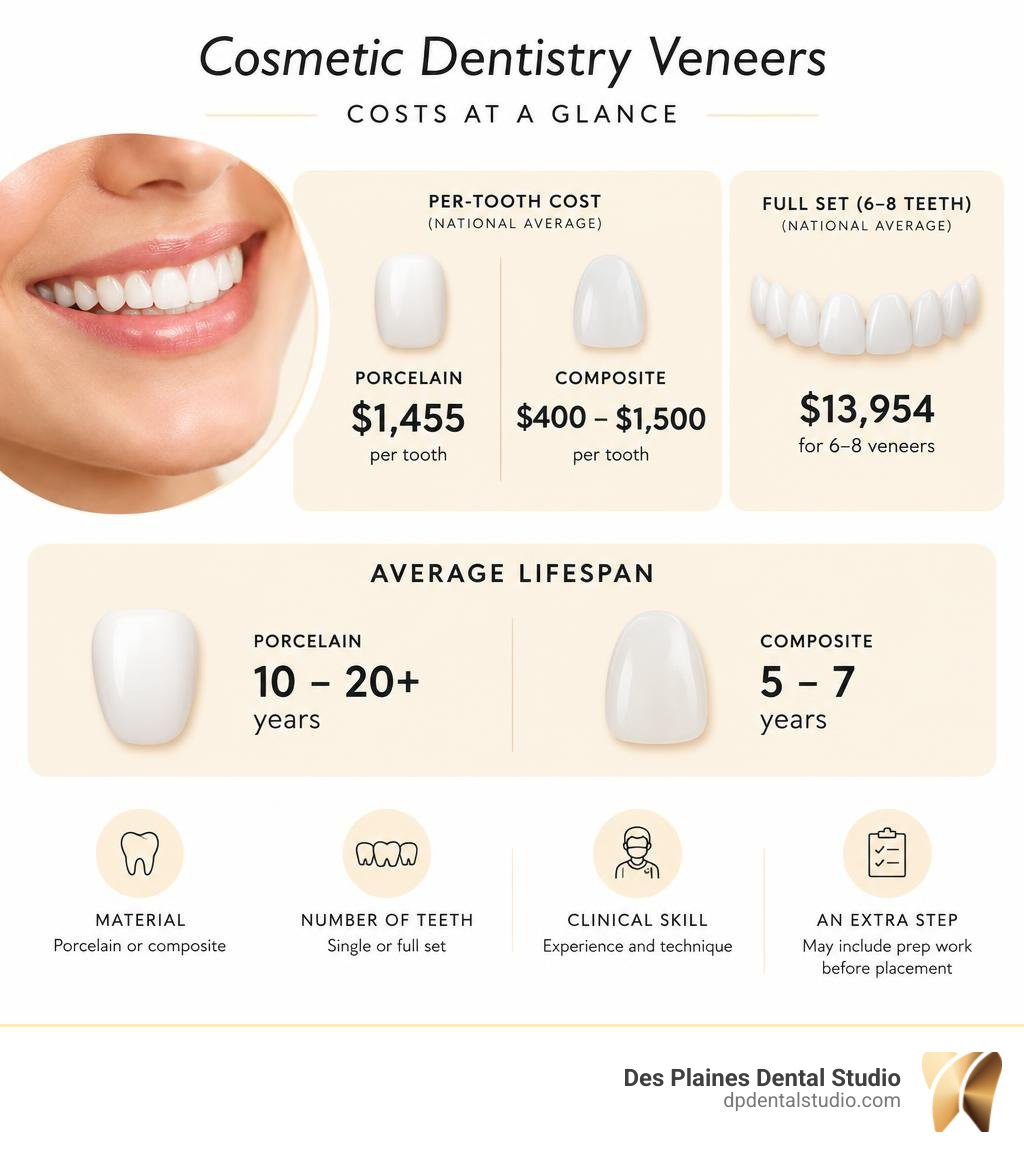
Porcelain veneers average about $1,455 per tooth nationally, while composite veneers often cost $400 to $1,500 per tooth. A set of six to eight veneers averages about $13,954. Your price will depend on the material, the number of teeth treated, and the work needed before placement.
The lower upfront cost of composite is only part of the decision: it typically lasts five to seven years, compared with 10 to 20 years or more for porcelain. A written estimate can help you compare both the initial price and the likely cost of future replacement.
I’m Dr. Marta Milejczyk, and I’ve practiced dentistry in Chicago’s northwest suburbs since 1997. My advanced training in cosmetic smile restoration helps me explain cosmetic dentistry veneers cost alongside the long-term choices behind it.
Understanding Cosmetic Dentistry Veneers Cost: National Averages and Overview
When exploring the overall cosmetic dentistry veneers cost, patients quickly discover that pricing is shaped by the material selected, the number of teeth treated, and the clinical skill involved. Dental veneers are custom-crafted shells designed to cover the front surface of teeth, masking deep stains, chips, minor misalignments, and irregular spacing. According to Cleveland Clinic’s dental veneers overview, veneers provide a transformative solution for multiple aesthetic concerns by bonding durable materials directly over natural enamel.
Across the United States, the national average for a single veneer lands around $1,455 per tooth, though individual fees generally span from $1,020 to $2,506 depending on clinical complexity. In Illinois, the average cost per veneer sits close to the national baseline at approximately $1,437, with regional pricing in the greater Chicago area ranging between $1,100 and $2,200 for porcelain restorations.
Understanding whether you need a targeted repair or a comprehensive smile redesign helps establish realistic expectations for your investment.
Porcelain vs. Composite Veneer Costs
The material used is the primary factor determining your overall expenditure. Porcelain and composite resin each offer unique benefits, timelines, and longevity profiles.
| Veneer Material Type | Average Cost per Tooth | Expected Lifespan | Typical Appointments Required | Stain Resistance |
|---|---|---|---|---|
| Direct Composite (Chairside) | $541 – $1,220 (Avg: $751) | 5 – 7 Years | 1 Visit | Moderate (can absorb surface stains) |
| Lab-Fabricated Composite | $783 – $1,760 (Avg: $1,068) | 5 – 8 Years | 2 Visits | Moderate to Good |
| Traditional Porcelain | $1,020 – $2,506 (Avg: $1,455) | 10 – 20+ Years | 2 – 3 Visits | Exceptional (non-porous glass ceramic) |
| Minimal-Prep / Ultra-Thin Laminates | $1,243 – $2,997 (Avg: $1,781) | 10 – 20 Years | 2 Visits | Exceptional |
Direct composite veneers offer an accessible entry point because your dentist sculpts the composite resin directly onto the prepared tooth in a single appointment, eliminating third-party dental laboratory fees. In contrast, porcelain veneers require custom fabrication by master ceramists, utilizing high-grade feldspathic porcelain or lithium disilicate (E-max) ceramics. While porcelain demands a higher initial commitment, its unmatched durability, lifelike translucency, and resistance to coffee, tea, and wine make it a preferred long-term choice.
Single Tooth vs. Full Smile Makeover Pricing
Pricing scales based on how many teeth are visible when you smile and talk.
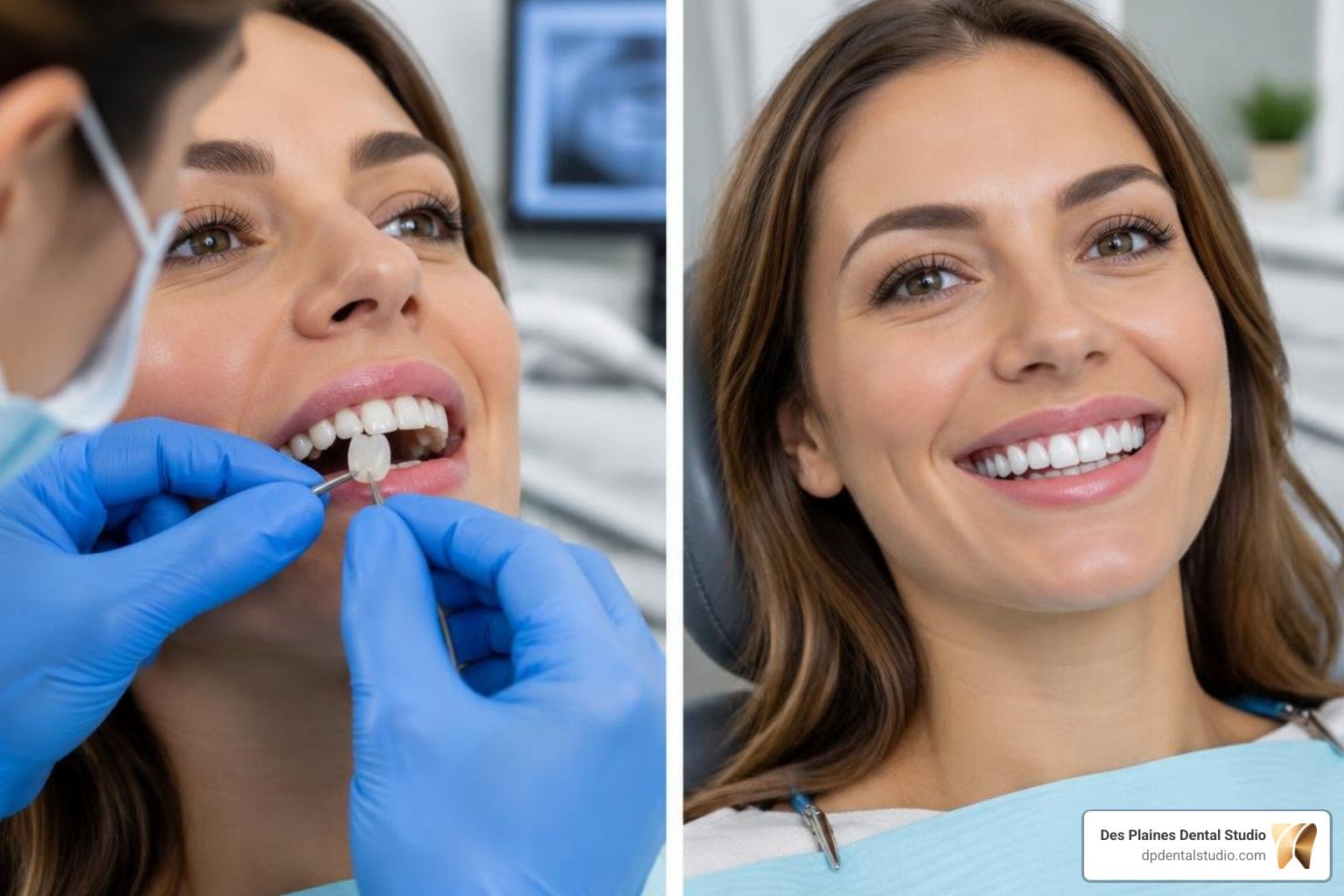
Restoring a single tooth—often required after localized trauma, intrinsic discoloration, or an isolated fracture—demands extraordinary precision. Matching the exact shade, texture, and light reflection of one veneer to neighboring natural teeth is among the most demanding tasks in cosmetic dentistry.
When addressing multiple teeth, dentists frequently plan treatments around the “Social Six” (the six upper front teeth displayed when smiling) or a comprehensive eight-to-ten tooth upper arch restoration. A customized smile makeover in Des Plaines typically costs between $9,000 and $25,000 for porcelain. Dental practices often bundle diagnostic workups, digital previews, and multi-unit placement into a cohesive package, providing better overall per-tooth value than placing restorations one by one over several years.
Comparing Veneer Types: Materials, Longevity, and Procedures
The physical journey of getting veneers differs markedly depending on whether you choose high-strength dental ceramics or direct composite resin.
Porcelain and Minimal-Prep Options: Cosmetic Dentistry Veneers Cost Breakdown
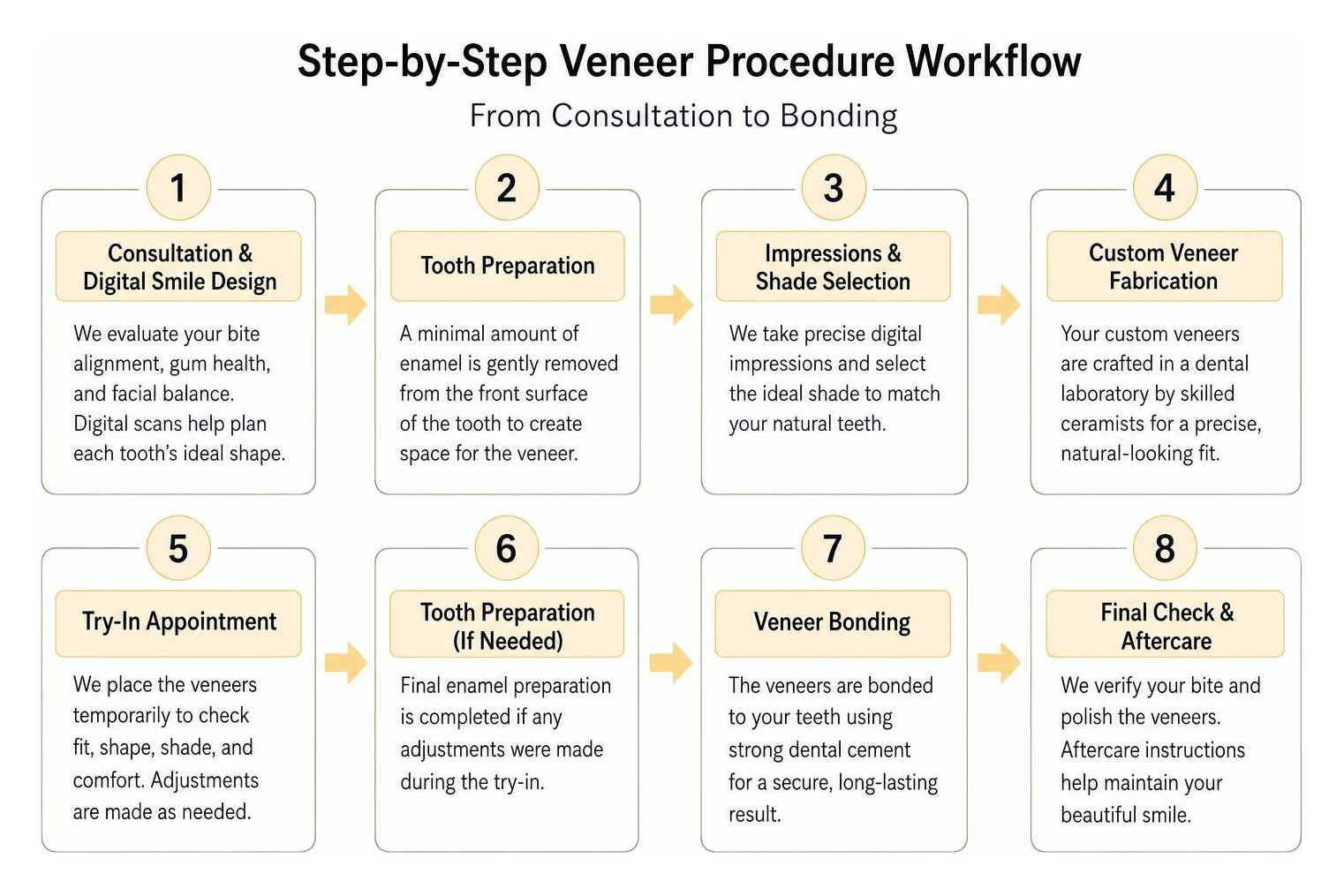
Custom porcelain veneers in Des Plaines represent the gold standard in aesthetic dentistry. Placing traditional porcelain restorations involves a precise, multi-step process:
- Comprehensive Examination and Digital Smile Design: We evaluate your bite alignment, gum health, and facial balance, capturing digital scans to plan each tooth’s ideal shape.
- Enamel Preparation: Approximately 0.5 millimeters of enamel (about the thickness of a fingernail) is removed from the facial surface of the tooth under local anesthesia to ensure the veneer sits flush against the gumline without looking bulky.
- Impressions and Temporaries: Detailed impressions or 3D digital scans are sent to a specialized dental laboratory. Meanwhile, temporary acrylic veneers protect your teeth and allow you to “test-drive” your new aesthetic.
- Permanent Bonding: Once the ceramist completes the restorations (typically within 1 to 2 weeks), the dentist removes the temporaries, etches the enamel surface, and applies specialized light-cured resin cement to lock the porcelain permanently in place.
Minimal-prep or ultra-thin porcelain laminates (such as Lumineers) measure roughly 0.2 millimeters in thickness. These options require little to no enamel removal in select cases, preserving more of the natural tooth structure while delivering excellent aesthetic outcomes.
Composite Resin: Lowering Your Cosmetic Dentistry Veneers Cost
Composite resin offers an effective, single-visit cosmetic solution. Using high-density hybrid resins—the same materials used for tooth-colored fillings—the dentist hand-sculpts the material over the tooth, cures it with a high-intensity light, and polishes the surface to a lifelike sheen.
This method serves as an excellent way to address minor chips or use veneers to close gaps between front teeth without significant preparation. While composite resin can chip more readily and tends to lose its luster over time, it remains easily repairable chairside at a fraction of the cost of porcelain replacement.
Key Factors That Drive What You Pay for Dental Veneers
Every smile presents unique structural requirements. Several variables directly influence what you will pay for your treatment.
If you have underlying tooth decay or gum inflammation, resolving these conditions is essential before beginning elective aesthetic work. We regularly address these foundational topics when answering cosmetic dental questions for our patients.
Geographic Location and Regional Price Discrepancies
Cosmetic dentistry fees reflect regional commercial lease overhead, laboratory accessibility, and local economic conditions.
| Region / Market | Average Cost Range per Porcelain Veneer | Average Cost Range per Composite Veneer |
|---|---|---|
| Midwest (Illinois / Chicago Metro) | $1,100 – $2,200 | $600 – $1,100 |
| East Coast (NYC / Boston) | $1,600 – $3,000 | $800 – $1,500 |
| West Coast (San Francisco / LA) | $1,500 – $3,200 | $750 – $1,400 |
| South / Southeast (Regional Averages) | $1,000 – $2,300 | $500 – $1,000 |
Patients in Illinois benefit from competitive regional pricing that balances access to world-class ceramic laboratories with lower clinical operating overhead compared to coastal metropolitan centers.
Provider Expertise, Lab Customization, and Smile Design
A dentist’s clinical experience, aesthetic training, and laboratory partnerships play a pivotal role in the final result. Premium cosmetic practices work alongside specialized master ceramists who hand-apply microscopic layers of translucent porcelain powder inside vacuum kilns. This technique replicates the natural depth, internal mamelons, and light-reflective characteristics of biological teeth.
Determining whether veneers are right for you involves balancing artistic craftsmanship with functional occlusal health to prevent premature chipping or bite interference.
Insurance Coverage, Financing Plans, and Treatment Alternatives
Because veneers are generally categorized as elective cosmetic enhancements, standard dental insurance policies rarely cover the procedure. As highlighted in Delta Dental’s guide on veneer insurance coverage, benefits are primarily reserved for treatments deemed medically necessary to restore structural function.
Dental Insurance, HSAs, and Financing Options
There are important financial avenues and exceptions to consider:
- Restorative Exceptions: If a veneer is required to repair a tooth damaged by accidental trauma, severe decay, or structural breakdown, your carrier may provide partial coverage under restorative benefit categories. We routinely submit pre-treatment estimates to verify exact insurance allowances.
- HSA & FSA Accounts: Health Savings Accounts and Flexible Spending Accounts allow you to utilize pre-tax dollars for eligible restorative dental procedures, reducing effective out-of-pocket costs by 20% to 35% depending on your tax bracket.
- Third-Party Patient Financing: Medical credit options such as CareCredit and internal monthly payment plans allow patients to divide treatment balances into manageable 6-, 12-, 24-, or 60-month installments, often with zero or low interest.
Comparing Veneers to Crowns, Bonding, and Whitening
Veneers are one of several modalities available to revitalize your smile. Depending on your goals and budget, alternative cosmetic treatments may meet your needs.
| Procedure | Typical Cost Range per Tooth | Surface Coverage | Expected Lifespan | Best Suited For |
|---|---|---|---|---|
| Dental Veneers (Porcelain) | $1,020 – $2,506 | Front and incisal edge | 10 – 20+ Years | Significant discoloration, minor crookedness, wear, spacing |
| Dental Crowns | $1,000 – $2,500 | Full 360-degree encasement | 10 – 15+ Years | Severely fractured, root-canal-treated, or heavily decayed teeth |
| Direct Dental Bonding | $300 – $800 | Localized surface area | 3 – 7 Years | Minor chips, small edge repairs, narrow diastemas |
| Professional Teeth Whitening | $300 – $700 (Full Arch) | Entire natural enamel | 6 – 24 Months | Extrinsic dietary or aging stains across healthy, intact teeth |
For patients seeking conservative, targeted repairs on a budget, dental bonding in Des Plaines offers an immediate, cost-effective solution. If your tooth structure is sound and staining is the primary cosmetic concern, starting with professional teeth whitening can lift shades across your entire smile prior to placing any restorations.
Frequently Asked Questions About Veneers
How long do porcelain vs. composite veneers typically last?
Porcelain veneers typically last 10 to 20 years or longer when supported by diligent home care and biannual cleanings. Composite resin restorations average 5 to 7 years before needing resurfacing or replacement. Wearing a custom nightguard if you clench or grind your teeth protects both materials from micro-fractures.
Is the procedure for getting veneers painful or irreversible?
Veneer placement is designed to be a gentle, comfortable experience. Enamel preparation is performed under local anesthesia to prevent sensitivity. Because traditional porcelain veneers require the removal of roughly 0.5 mm of enamel, the procedure is an irreversible commitment; the prepared tooth will always require a protective restoration going forward.
Does dental insurance ever cover the cost of veneers?
While elective cosmetic treatments are excluded from standard dental insurance plans, coverage may apply if the restoration serves a documented restorative purpose, such as repairing a tooth fractured in an accident or treating significant structural disease.
Conclusion
Investing in your smile is an investment in your self-confidence, professional presence, and overall well-being. By weighing the immediate affordability of composite resin against the unmatched durability, translucency, and stain resistance of handcrafted porcelain, you can select the solution that best aligns with your long-term goals.
At Des Plaines Dental Studio, we deliver patient-centered cosmetic dentistry in a welcoming, comfortable environment. Our team provides transparent pricing, comprehensive insurance support, and gentle care tailored to your unique smile. When you are ready to explore your options, schedule a consultation for veneers in Des Plaines to take the first step toward a radiant, lasting smile.