


Understanding Maryland Bridge Dental Restorations
A Maryland bridge dental restoration is a conservative prosthetic designed to replace a missing front tooth using an artificial tooth (pontic) anchored by discreet wings bonded directly to the back surfaces of adjacent natural teeth. When a single tooth goes missing in the anterior (front) area of your mouth, it creates an immediate aesthetic and functional challenge. While conventional restorative options often involve invasive preparation of nearby healthy teeth, modern dentistry offers more conservative solutions. Developed originally at the University of Maryland, the resin-bonded bridge remains a cornerstone of conservative prosthodontics.
Anatomy of a Maryland Bridge Dental Prosthetic
To understand why this restoration is unique, it helps to examine its structural parts:
- The Pontic: This is the custom-fabricated artificial tooth designed to fill the empty space. It is carefully color-matched and sculpted from high-grade porcelain, ceramic, or composite resin to blend seamlessly with your adjacent natural teeth.
- The Retainer Wings: Extending from one or both sides of the pontic are thin, specialized “wings.” These wings sit against the lingual or palatal (back) surface of your neighboring natural teeth (the abutments).
- Resin Bonding Agent: A composite resin cement bonds the wings directly to the lightly prepared or etched enamel of your abutment teeth.
Modern laboratory technology allows clinicians to choose between different wing frameworks. While traditional designs use cast metal wings, contemporary restorative practices also utilize tooth-colored zirconia or ceramic frameworks. These options provide superior aesthetic results without showing dark metal margins behind translucent front enamel. For more technical specifications on these components, explore Maryland Bridge Dental Restorations | Preferred Dental Laboratory to see how precision milling creates durable, lifelike prosthetics.
Comparing Maryland Bridge Dental Options to Traditional Bridges
The primary distinction between a Maryland bridge and other fixed bridges for teeth comes down to structural preservation.
A traditional dental bridge requires removing a significant layer of enamel from the adjacent healthy abutment teeth to accommodate full-coverage dental crowns. While traditional crowns offer exceptional mechanical retention, altering virgin, healthy tooth structure is an irreversible biological cost.
In contrast, a Maryland bridge bonds directly to the back of existing enamel. This conservative design requires minimal or zero tooth alteration, preserving the biological integrity and nerve health of your natural teeth.
| Feature | Maryland Dental Bridge | Traditional Fixed Bridge |
|---|---|---|
| Preparation Required | Minimal to none (light enamel etching) | Substantial enamel removal for full crowns |
| Primary Indication | Single missing front tooth (low chewing stress) | Front or back teeth (high or low chewing stress) |
| Reversibility | Largely reversible; preserves tooth structure | Irreversible; abutments permanently require crowns |
| Material Framework | Porcelain pontic with metal or zirconia wings | Porcelain-fused-to-metal (PFM) or solid zirconia |
| Invasiveness | Extremely low | Moderate to high |
| Average Cost | Lower initial investment | Higher initial investment |
Advantages and Disadvantages of Resin-Bonded Bridges
Every restorative procedure carries distinct benefits and tradeoffs. Assessing these factors helps clarify whether a resin-bonded restoration aligns with your clinical needs.
Key Benefits for Missing Front Teeth
- Maximal Enamel Preservation: Because the wings adhere only to the backside of your teeth, your natural tooth enamel remains almost entirely untouched.
- Virtually Reversible: If you choose to upgrade to a dental implant later, the bridge can be removed without leaving adjacent teeth damaged or compromised.
- Ideal for Adolescents: Young patients under the age of 18 who lose a permanent tooth due to trauma or congenital absence cannot safely receive implants until their jawbone finishes growing. A Maryland bridge provides a secure, fixed alternative to removable plastic flippers.
- Aesthetic Restoration: Custom-shaded porcelain allows the replacement tooth to match the natural translucency, shade, and contour of your smile, showing how cosmetic dentistry can improve your smile seamlessly.
- Cost-Effective & Rapid: Fabrication and placement involve fewer clinical steps and laboratory stages than implant surgery or multiple full-coverage crowns.
Potential Drawbacks and Debonding Risks
- Lower Retention Strength: Because the restoration relies on surface resin adhesion rather than mechanical crown retention, it has a higher tendency to debond or work loose over time under heavy force.
- Front Teeth Only: Maryland bridges cannot withstand the heavy vertical chewing forces exerted on premolars and molars. They are strictly limited to low-stress anterior zones.
- Metal Translucency (Graying Effect): If thin metal wings are bonded behind naturally translucent front teeth, a slight grayish hue may become visible through the incisal enamel. Choosing modern tooth-colored zirconia wings helps eliminate this aesthetic issue.
- Secondary Decay Risk: If one wing debonds while the other remains attached, bacteria and plaque can accumulate undetected under the loose wing, increasing the risk of localized tooth decay.
Step-by-Step Procedure and Placement Process
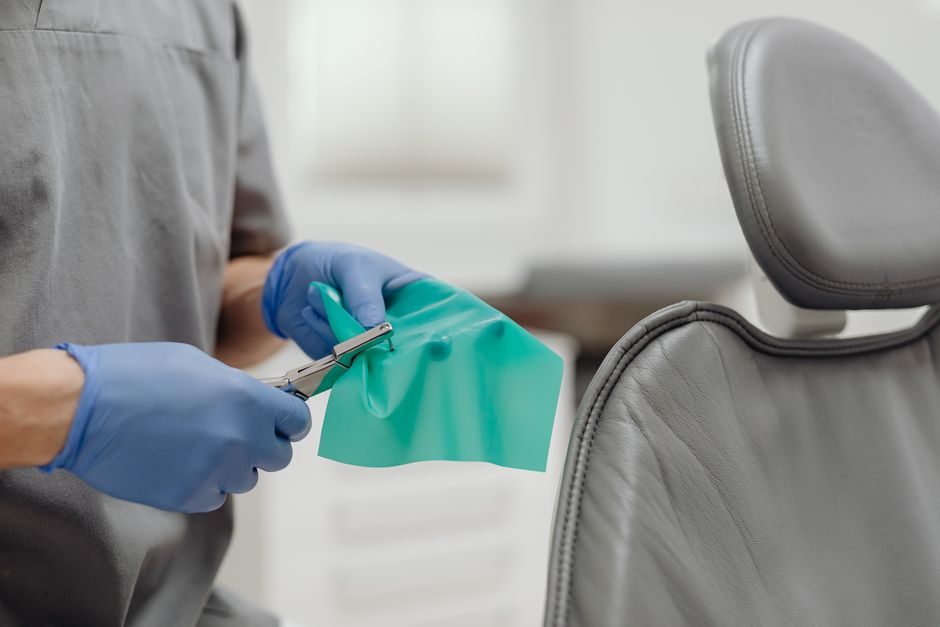
The process of receiving a Maryland bridge is straightforward, gentle, and completed across two comfortable visits.
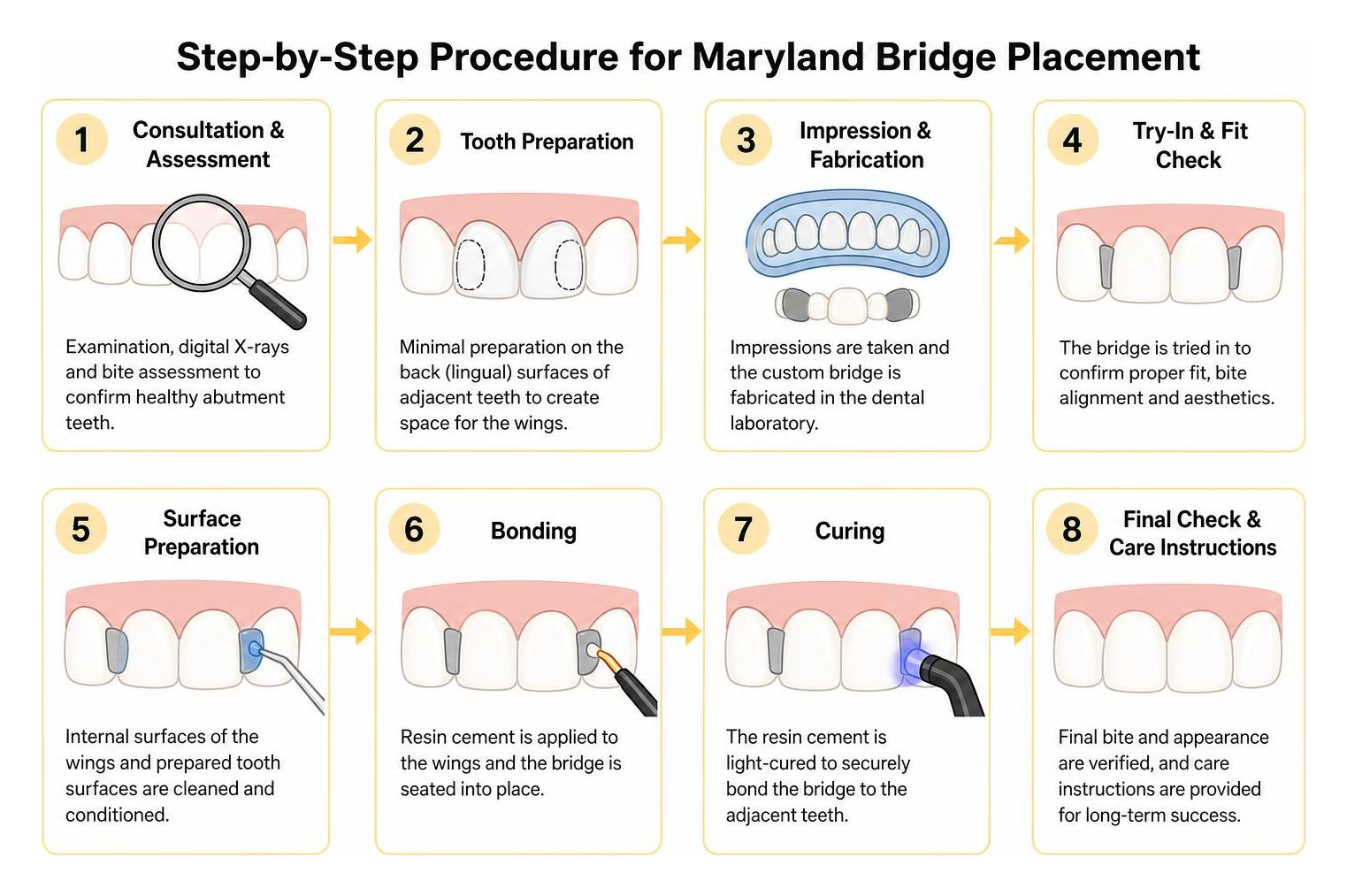
Consultation and Tooth Preparation
During your first appointment, we perform a comprehensive clinical examination, complete with digital X-rays and bite assessments, to verify that your abutment teeth are healthy and free from periodontal disease or decay.
As part of our standard restorative dentistry procedures, preparation involves:
- Micro-Etching: A microscopic layer of enamel on the lingual surface of the abutment teeth is lightly etched. This creates a textured surface for the resin adhesive to grip securely. In most cases, this step requires zero local anesthesia because it stays entirely within the outer enamel layer.
- Digital Impressions: We take precise digital scans of your upper and lower arches to ensure your custom pontic aligns perfectly with your bite.
- Lab Fabrication: Our dental laboratory crafts your restoration, calibrating the shade, shape, and wing contours for an exact anatomical fit.
Bonding and Final Fitting
When you return for your second visit, we focus on securing the bridge in place and verifying fit and aesthetics. To understand how this fits into broader prosthetic care, reviewing what to expect from dental bridges provides helpful context for day-to-day wear.
- Try-In and Aesthetic Check: We temporarily position the bridge to verify color match, contour, and gingival adaptation.
- Surface Conditioning: The enamel and the underside of the retainer wings are conditioned with dental etching gel and bonding primers.
- Resin Polymerization: A high-strength composite resin cement is applied. We position the bridge with steady pressure and cure the resin using a specialized dental curing light.
- Bite Verification: We evaluate your occlusion (bite) during resting, chewing, and lateral movements to confirm that no opposing teeth put excess pressure on the pontic or wings.
Comparing Maryland Bridges vs. Dental Implants
When evaluating tooth replacement options, patients frequently compare resin-bonded bridges to surgical implants. Both offer distinct advantages depending on clinical priorities and budget.
Longevity and Structural Integrity
A dental implant replaces both the root and the crown of a tooth. A titanium or ceramic post is surgically placed into the jawbone, where it undergoes osseointegration over 3 to 6 months.
- Bone Health: A single tooth implant stimulates the alveolar bone, preventing the gradual bone resorption that occurs after tooth loss. A Maryland bridge sits over the gumline without stimulating the underlying bone.
- Longevity: Implants offer long-term durability and rarely loosen once integrated. Maryland bridges rely on adhesive resin cement and may require recementation over their lifespan.
- Adjacent Tooth Impact: Both options protect neighboring teeth from aggressive crown shaving, making dental implant restorations and Maryland bridges two of the most enamel-friendly solutions available.
Cost and Insurance Considerations
Financial investment is often an important factor when deciding on treatment. A Maryland bridge generally requires a lower upfront cost than an implant, which involves surgical placement, healing abutments, and a custom crown.
When evaluating the real cost of a dental bridge, dental insurance policies often cover a portion of resin-bonded bridges under standard major or basic restorative benefits. However, coverage varies by policy, and out-of-pocket expenses should be weighed against the expected lifespan of each treatment.
Maintenance, Aftercare, and Lifespan
With consistent oral hygiene and regular dental checkups, a Maryland bridge provides reliable function for years. Because the pontic sits close to the gumline and the wings border natural enamel, proper cleaning prevents plaque accumulation and gum inflammation.
Follow these best practices to care for your bridge:
- Use Bridge Cleaners Daily: Traditional flossing cannot pass through the contact points where the bridge is bonded. Use floss threaders, flexible interdental brushes, or a water flosser once daily to clear food debris from beneath the pontic.
- Brush with Nonabrasive Toothpaste: Brush twice daily using a soft-bristled toothbrush and nonabrasive fluoride toothpaste to protect the bonding margins.
- Avoid Damaging Chewing Habits: Do not bite down on ice cubes, hard candies, fingernails, or pens. When eating tough foods (like raw apples or crusty bread), cut them into smaller pieces rather than biting directly into them with your front bridge.
- Wear a Nightguard if You Grind: Nocturnal bruxism places heavy lateral shear forces on the wings, increasing debonding risk. A custom nightguard shields the restoration while you sleep.
- Keep Routine Cleanings: Regular six-month examinations allow your dentist to check bond integrity, assess gum tissue, and address any microscopic margin changes early.
Frequently Asked Questions About Maryland Bridges
How long does a Maryland bridge last on average?
A Maryland bridge typically lasts between 5 to 15 years. Longevity depends largely on your bite mechanics, oral hygiene, and whether you avoid heavy biting forces on the restoration. While the bridge framework itself remains durable, the composite resin cement can occasionally loosen over time, requiring professional re-bonding.
Is getting a Maryland bridge painful?
No. Getting a Maryland bridge is one of the most comfortable restorative procedures in dentistry. Because the treatment involves only light enamel etching on the back surfaces of your teeth, drilling into dentin is unnecessary. Many procedures are completed without needing local anesthesia, and there is zero post-treatment downtime.
Can a debonded Maryland bridge be recemented?
Yes. If your Maryland bridge comes loose, keep the appliance safe and contact your dental office promptly. If the bridge framework and supporting natural teeth are intact and free of decay, we can clean the old cement, re-etch the surfaces, and securely recement the bridge in a single, quick appointment.
Restoring Your Smile with Confidence
A missing front tooth does not have to compromise your smile or require aggressive reshaping of healthy enamel. A Maryland bridge provides an aesthetic, minimally invasive, and budget-conscious solution that restores your smile while keeping future treatment options open.
At Des Plaines Dental Studio, we provide gentle, personalized restorative care designed around your comfort and long-term oral health. Whether you are exploring resin-bonded bridges or want to evaluate the average cost of dental implants for permanent tooth replacement, our team is here to guide you toward the right treatment plan. Contact us today to schedule your smile restoration consultation.