


How Much Are Anchored Dentures — and Are They Worth It?
How much are anchored dentures is one of the first questions people ask when they’re done with loose, uncomfortable traditional dentures. Here’s a fast answer:
| Type | Cost Per Arch (2026) |
|---|---|
| Traditional dentures | $1,000 – $1,500 |
| Anchored (snap-in) dentures | $6,000 – $15,000 |
| All-on-4 fixed implants | $8,000 – $15,000+ |
The national average for anchored dentures lands around $5,000 to $12,000 per arch, depending on how many implants you need, your bone health, and where you’re treated. A full upper-and-lower set can run $10,000 to $24,000 or more before factoring in extras like extractions or bone grafting.
That’s a significant investment — but for most patients, the stability, comfort, and long-term bone health benefits make it worth a close look before deciding.
This guide breaks down every cost involved, what affects your price, and how to keep that number as low as possible without cutting corners.
I’m Dr. Marta Milejczyk, and after nearly three decades of practicing restorative and implant dentistry in Chicago’s northwest suburbs — including advanced training in full-mouth rehabilitation — I’ve helped many patients navigate exactly how much anchored dentures cost and which option fits their budget and lifestyle. In the sections below, I’ll walk you through everything you need to know so you can make a confident, informed decision.
What Are Anchored Dentures and How Do They Work?
To understand the financial investment, it helps to understand what you are actually paying for. Anchored dentures — often referred to as snap-in dentures or implant-supported overdentures — are a hybrid solution. They combine the full-arch coverage of a denture with the root-like stability of dental implants.
The system is made up of two primary components:
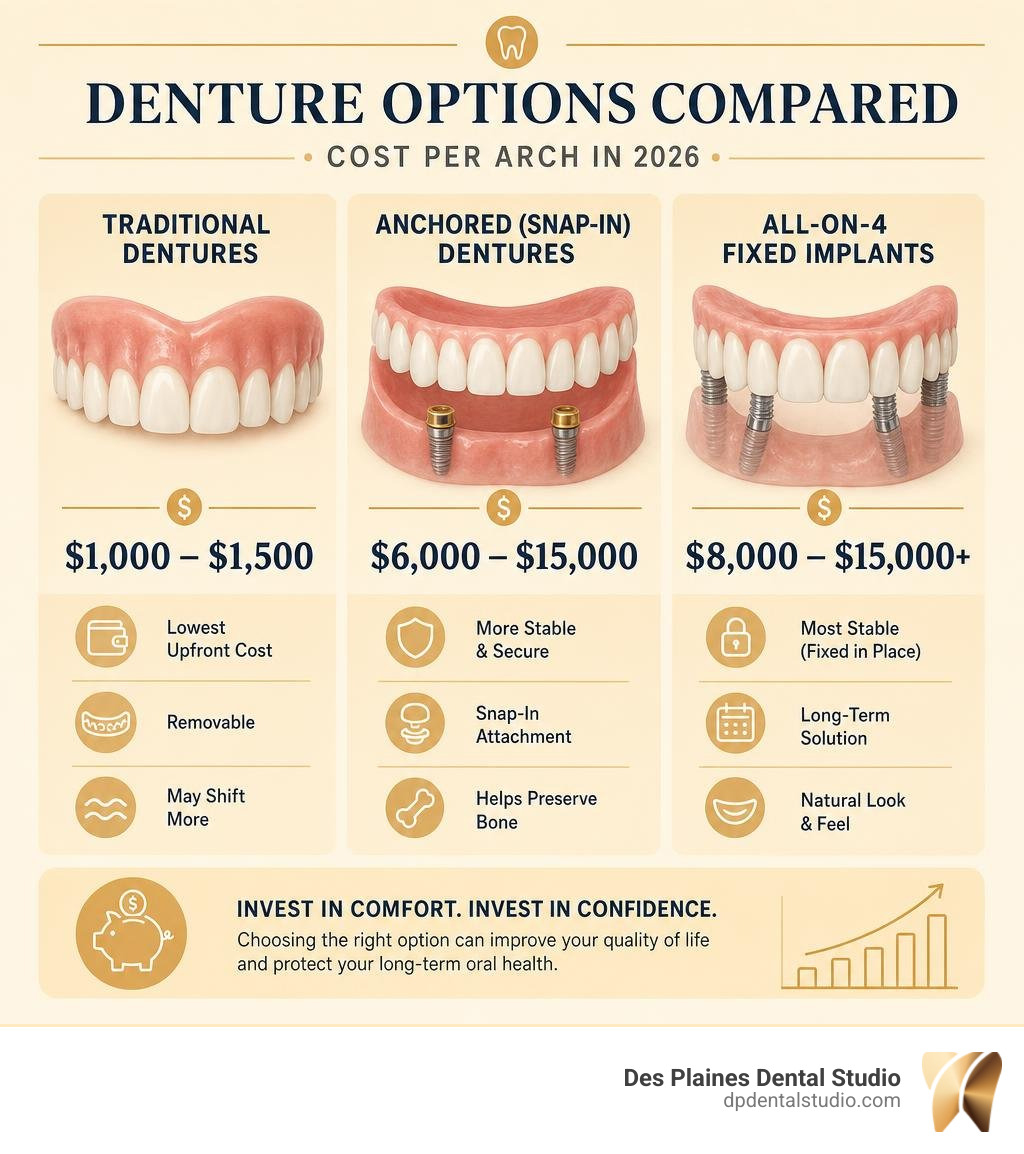
- The Implants (The Anchors): These are small, medical-grade titanium posts surgically placed directly into your jawbone. Over a period of several months, they fuse permanently with your bone through a process called osseointegration.
- The Prosthetic (The Overdenture): This is a custom-designed acrylic or composite plate with tooth restorations. On the underside of this plate, there are specialized attachments designed to connect to the implants.
These components are joined together using one of two primary attachment styles:
- Locator Attachments: These are modern, low-profile snap-on caps that fit over the top of the implant posts. They are widely considered the gold standard because they distribute biting forces evenly and are easy to clean.
- Ball Attachments: An older style where the top of the implant has a ball shape that clicks into a corresponding socket inside the denture.
Unlike traditional plates that rely purely on suction, adhesives, or luck to stay in place, anchored dentures lock firmly onto these titanium anchors. However, they are still removable. You will snap them out at night to clean them and snap them back in each morning. If you are experiencing missing teeth or struggling with failing teeth, you can explore how we repair your smile with dentures or learn more about our custom options at dentures des plaines il.
Comparing How Much Are Anchored Dentures vs. Traditional Options
When comparing options, it is easy to experience sticker shock. Conventional dentures cost less upfront — typically around $1,000 to $1,500 per arch (though in Illinois, the average for standard traditional dentures hovers closer to $1,927). However, the lifestyle and physical differences are night and day.
Traditional dentures rest directly on top of your gums. Because they have no physical anchor, they are prone to slipping, clicking, and wobbling, especially on the lower jaw. This instability limits your chewing power to a mere 20% to 25% of your natural bite force. Trying to eat a crisp apple, a thick steak, or crusty bread becomes an embarrassing chore.
In contrast, anchored dentures restore 60% to 75% of your natural chewing power. They do not slip, slide, or require messy dental adhesives.
More importantly, traditional dentures do not prevent jawbone loss. When you lose teeth, your jawbone naturally shrinks over time because it no longer receives stimulation from tooth roots. This shrinkage is what causes the classic “sunken” facial appearance. Because titanium implants act as artificial roots, they actively stimulate the bone and prevent resorption.
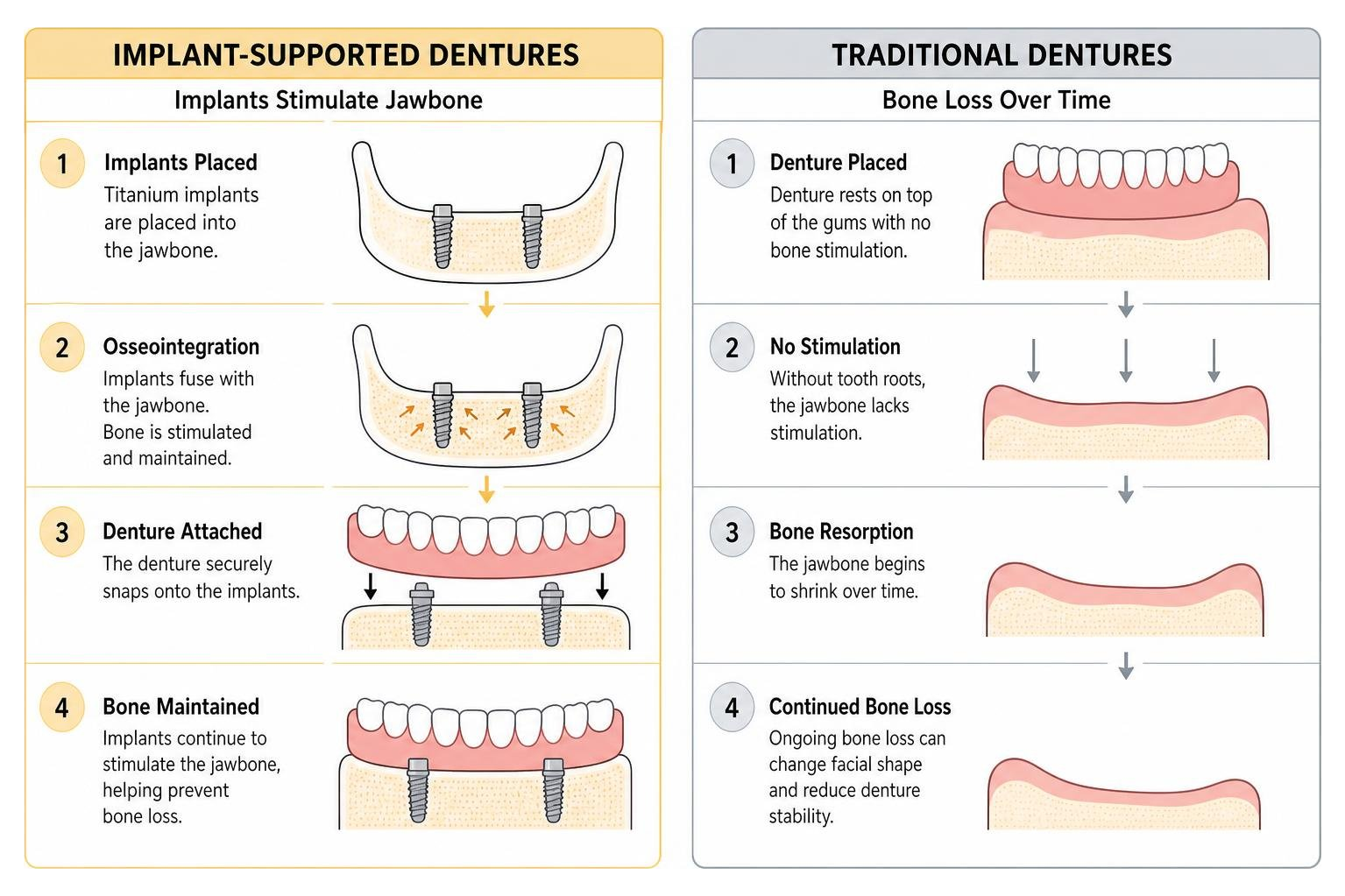
Here is a quick breakdown of how these options compare:
| Feature | Traditional Dentures | Anchored Dentures | All-on-4 Fixed Implants |
|---|---|---|---|
| Upfront Cost (Per Arch) | $1,000 – $1,500 | $6,000 – $15,000 | $8,000 – $15,000+ |
| Stability | Low (prone to slipping) | High (snaps securely) | Maximum (completely fixed) |
| Chewing Power | 20% – 25% | 60% – 75% | 90%+ |
| Bone Preservation | None | Excellent (at implant sites) | Maximum |
| Removability | Removable by patient | Removable by patient | Fixed (removed only by dentist) |
Anchored Dentures vs. All-on-4: Removable vs. Fixed
If you are looking for a completely permanent solution, you might also consider All-on-4 dental implants. While anchored dentures snap in and out, All-on-4 is a permanent bridge that is screwed directly onto four to six implants. It can only be removed by a dentist.
All-on-4 prosthetics are often crafted from premium, highly durable materials like monolithic zirconia, which does not chip, stain, or wear down like the acrylic used in snap-in dentures.
While All-on-4 offers the absolute closest match to natural teeth, it also requires a larger surgical and financial commitment. For many patients, anchored dentures represent the perfect “sweet spot”: they provide the life-changing stability of implants without the premium price tag of a fully fixed bridge. You can read more about these advanced solutions in our guide to all on 4 dental implants des plaines il.
How Much Are Anchored Dentures in 2026?
Let’s explore the actual numbers. In 2026, the cost of anchored dentures remains highly individualized. Because every mouth is unique, there is no single “flat rate.”
According to national benchmarks, a single implant-supported removable (snap-on) denture plate averages $2,480 (with a typical range of $1,901 to $4,729), but this is just for the prosthetic plate itself. When you factor in the surgical placement of the titanium implant posts — which cost an additional $1,500 to $2,500 per implant — the total package price changes.
For comprehensive independent data on these cost structures, you can check out How Much Do Dentures Cost in 2026? Full, Partial & Implant .
National Averages: How Much Are Anchored Dentures Per Arch?
When we calculate the complete cost of the implants, the custom attachments, and the overdenture, implant snap-in dentures in 2026 typically cost between $3,000 and $7,300 per arch, with a national average of $5,000.
However, if you require a highly customized, premium-tier restoration or a bar-retained system (where the denture clips onto a custom metal bar attached to the implants), costs can range from $6,000 to $15,000 per arch.
Your total investment is largely determined by several key factors:
- The Number of Implants: A lower jaw can often be stabilized with just 2 implants, keeping costs closer to the lower end of the spectrum. An upper jaw, however, has softer bone density and almost always requires 4 to 6 implants to ensure stability, which naturally increases the price.
- Material Quality: Standard acrylic teeth are highly affordable, but premium composites or zirconia teeth offer superior durability and stain resistance at a higher cost.
- Geographic Location: Dental fees vary widely by region due to local overhead, rent, and staff salaries. For example, while the national average for implant-supported dentures sits around $12,000 (including all surgical and prosthetic phases), the average in Illinois is slightly higher at $12,144.
For a deeper dive into snap-in pricing models, refer to the Snap-In Denture Costs and Implant Pricing Guide .
Hidden and Additional Costs to Budget For
When researching how much are anchored dentures, many patients overlook the preparatory and diagnostic procedures required before the implants can even be placed. To avoid surprises, make sure your treatment plan accounts for these potential additions:
- 3D Cone-Beam CT (CBCT) Scan: Essential for mapping your jawbone, nerves, and sinus cavities. This highly detailed scan averages $466 (ranging from $361 to $879).
- Tooth Extractions: If you have failing teeth that need to be removed, expect to pay $137 to $335 for a simple extraction, or $281 to $702 for a surgical extraction per tooth.
- Bone Grafting: If you have been missing teeth for a long time, your jawbone may have thinned. A bone graft adds volume and density to support the implant posts. This preparatory step typically adds $1,000 to $3,000 per arch. You can learn more about this vital step at bone grafting for dental implants.
- Anesthesia & Sedation: Depending on your comfort level, dental sedation can range from $494 to $1,253.
The True Long-Term Cost of Ownership and Maintenance
One of the most important things to realize about anchored dentures is that your initial surgical bill is not the final expense. Think of your new smile like a high-quality vehicle: the titanium implants are the “engine” (designed to last a lifetime), while the denture plate and its attachments are the “tires” (which wear down and need periodic replacement).
Over time, you will need to budget for the following maintenance:
- Replacing Locator Caps / O-Rings: The plastic caps inside your denture that snap onto the implants act like snaps on a jacket. With daily removal and chewing pressure, they gradually stretch and lose their grip. You will need to have these replaced every 6 to 12 months. Fortunately, this is a quick, painless office visit costing roughly $30 to $80 per cap.
- Professional Relines: As your mouth changes, the denture plate will need to be professionally relined every 1 to 2 years to maintain a tight, comfortable fit against your gums. A professional reline generally costs between $200 and $500.
- Denture Repairs: Over several years, acrylic can develop micro-cracks or teeth can chip. Keeping a small budget for occasional repairs is a smart move.
For a thorough breakdown of these ongoing maintenance fees, you can explore the Implant-Supported Dentures Cost: $12,000 Avg in 2026 ($6,000–$20,000) .
The Lifetime Value: How Much Are Anchored Dentures Over 20 Years?
While traditional dentures seem cheaper upfront, they must be completely replaced every 5 to 7 years due to constant jawbone shrinkage. Over a 20-year horizon, the repeated costs of new traditional plates, ongoing relines, and a continuous supply of denture adhesives (which can easily cost $200 to $500 per year) add up quickly.
With anchored dentures, the titanium implant posts are a one-time investment. However, the removable acrylic overdenture portion will still experience wear and tear and typically needs to be completely replaced every 5 to 10 years.
Even with this replacement cycle, when you look at a 20-year lifetime cost projection, the gap between traditional and anchored dentures narrows significantly. The massive upgrade in your daily nutrition, self-confidence, and systemic health makes the long-term value of implants clear. Read more about making smart financial choices for your smile in this Affordable Denture Implants: A Realistic Guide to Costs, Options, and Smart Choices – .
Daily Cleaning and Care Routine
Proper daily maintenance is the single best way to protect your investment and avoid unnecessary repair costs. Because acrylic is a porous material, it can easily harbor bacteria, plaque, and odors if neglected.
To keep your anchored dentures in pristine condition:
- Remove and Rinse: Take your dentures out after meals and rinse them under warm water to remove loose food particles.
- Brush Daily: Use a soft-bristled brush and a non-abrasive denture cleaner. Regular toothpaste is too abrasive and will create microscopic scratches where bacteria can multiply.
- Clean Your Gums and Abutments: Before putting your dentures back in, use a soft toothbrush to gently clean your gums, tongue, and the metal abutments protruding from your gums. Specialized tools like interdental brushes ($5 to $15) or a water flosser ($40 to $100+) are excellent for keeping the implant sites clean.
- Soak Overnight: Keep your dentures submerged in water or a mild denture-soaking solution overnight to prevent them from drying out and losing their shape.
For more helpful tips on keeping your restorations fresh, check out our guide: do i really need to clean my false teeth des plaines il dentist.
Candidacy, Treatment Timeline, and the Healing Process
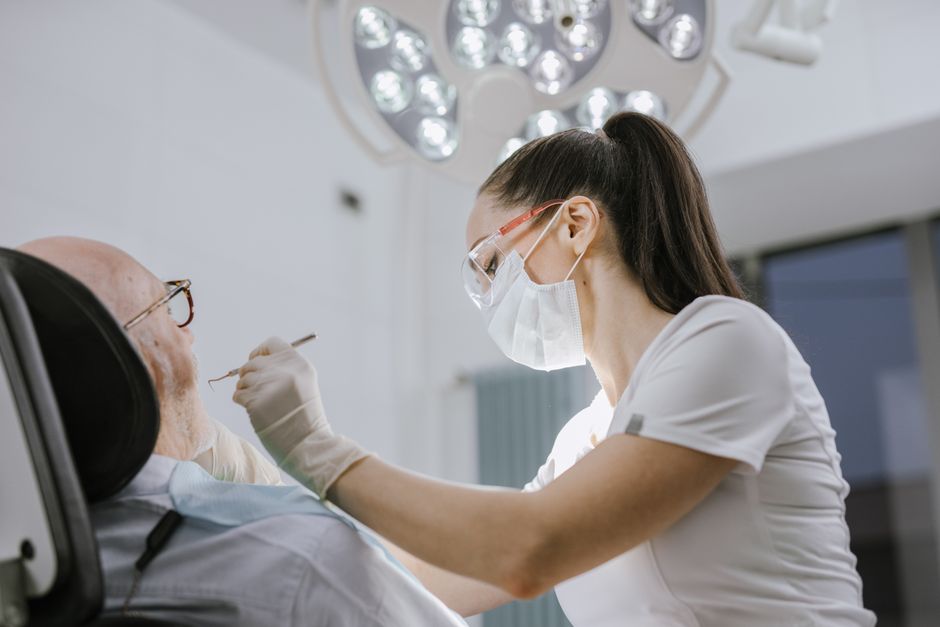
Before moving forward, we must determine if you are a good candidate for dental implants. Ideal candidates should have:
- Good overall systemic health (uncontrolled diabetes or active gum disease can hinder healing).
- Sufficient jawbone density to securely anchor the titanium posts.
- A commitment to excellent daily oral hygiene.
If you are a smoker, your implant success rate may drop by 10% to 20%, so we highly recommend quitting or cutting back significantly before your procedure.
The journey from your first consultation to your final, beautiful smile is a process that requires patience. It typically takes between 4 to 12 months to complete, broken down into these primary phases:
- Consultation and Planning (1–2 visits): We take 3D CBCT scans, evaluate your bone density, and plan the precise placement of your implants.
- Implant Placement Surgery (1 day): The titanium posts are surgically placed into your jawbone under local anesthesia or sedation. If you need extractions, they are often performed during this same visit. We will provide a temporary cosmetic denture so you never have to go without teeth.
- Osseointegration and Healing (2–6 months): You will wear your temporary denture while your bone fuses with the implants. This is a crucial phase where patience pays off!
- Uncovering and Attachments (1 visit): Once healing is complete, we gently uncover the tops of the implants and attach the locator abutments.
- Final Denture Delivery (2–3 visits): We take precise impressions to design your custom overdenture, conduct a wax try-in to ensure perfect aesthetics and bite alignment, and finally snap your brand-new smile into place.
To learn more about what to expect during this surgical journey, you can read How Much Do Implant-Supported Dentures Cost In 2025? .
Insurance, Financing, and Smart Ways to Save

Because anchored dentures are classified as a major restorative service, navigating insurance and financing is key to making your treatment affordable.
- Dental Insurance: Most private dental insurance plans cover up to 50% of the denture portion of your treatment. However, they rarely cover the surgical placement of the implants themselves. Furthermore, standard policies have a strict annual maximum benefit (usually between $1,000 and $2,500) which will cap how much they pay out. We always recommend submitting a pre-treatment estimate to your carrier before starting.
- HSA and FSA Accounts: You can use pre-tax dollars from a Health Savings Account (HSA) or Flexible Spending Account (FSA) to pay for your implants, which can instantly save you 20% to 30% depending on your tax bracket.
- Third-Party Financing: We work with trusted healthcare lenders like CareCredit to offer flexible, low-interest or interest-free monthly payment plans, allowing you to fit your new smile comfortably into your monthly budget.
For more details on maximizing your dental benefits, check out our comprehensive More info about dental implants insurance.
Frequently Asked Questions about Anchored Dentures
Can I convert my existing traditional dentures into anchored dentures?
Yes! If your current traditional dentures are still in good structural condition and fit your bite well, a dental lab can often retrofit them. We place the dental implants, and the lab installs the matching attachment housings directly into the underside of your existing plate. This retrofitting process can save you several thousand dollars compared to manufacturing a brand-new custom overdenture.
Does Medicare or Medicaid cover the cost of anchored dentures?
Original Medicare (Parts A and B) does not cover routine dental care, including dentures or implants. However, some Medicare Advantage (Part C) plans offer optional dental riders that may partially cover these costs. Medicaid coverage varies significantly by state; in Illinois, adult dental benefits are highly limited and rarely cover dental implants, though they may cover basic traditional dentures.
Is the surgical procedure for placing denture anchors painful?
The surgical placement of dental implants is performed under local anesthesia, meaning you will feel zero pain during the procedure. Once the anesthesia wears off, you can expect some mild soreness, swelling, and bruising around the implant sites, similar to the recovery of a standard tooth extraction. This discomfort is highly manageable and typically resolves within 3 to 5 days using over-the-counter pain relievers like ibuprofen or prescribed medications.
Conclusion
Investing in your smile is about so much more than just cosmetics — it is about restoring your ability to laugh without hesitation, speak clearly, and enjoy your favorite meals with absolute confidence.
At Des Plaines Dental Studio, we specialize in providing patient-centered, stress-free restorative care. Our warm, experienced team is here to guide you through every step of your journey, from mapping out a custom treatment plan to maximizing your insurance benefits.
If you are ready to say goodbye to loose, slipping dentures and discover a stable, life-changing solution that fits your budget, Schedule a consultation to learn about the average cost of dental implants with us today!