


Beyond the Brush: Why You Might Need a Deep Teeth Cleaning in Des Plaines
Why Deep Teeth Cleaning in Des Plaines Matters More Than You Think
If you’ve been told you need deep teeth cleaning in Des Plaines, here’s what you should know right away:
Quick answers:
- Deep cleaning (scaling and root planing) removes plaque and tartar below the gumline — where your toothbrush can’t reach
- It treats gum disease before it causes permanent damage like bone loss or tooth loss
- The procedure is done under local anesthetic, so discomfort is minimal
- Most dental insurance plans cover deep cleaning when it’s medically necessary
- Without treatment, gum disease can progress silently and become much harder to reverse
Nearly half of adults over 30 have some form of gum disease — and many don’t know it yet. Gum disease often develops without pain in its early stages, which is exactly what makes it so easy to ignore until the damage is already done. A regular twice-yearly cleaning is great for maintenance, but once tartar builds up under the gumline and gum pockets deepen, a standard cleaning simply isn’t enough.
That’s where deep cleaning comes in.
I’m Dr. Marta Milejczyk, and with over 25 years of experience in periodontics and restorative dentistry — including advanced clinical training at Loyola University Medical Center — I’ve helped countless patients in the Des Plaines area understand and overcome gum disease through deep teeth cleaning in Des Plaines. In the sections below, I’ll walk you through everything you need to know to make a confident, informed decision about your gum health.
Understanding Deep Teeth Cleaning Des Plaines Procedures
To truly understand what a deep cleaning is, we must first look at what is happening beneath the surface of your gums. When you eat, bacteria mix with food particles to form a sticky, invisible film called plaque. If plaque isn’t thoroughly brushed and flossed away, it absorbs minerals from your saliva and hardens into a substance called calculus (often referred to as tartar).
Once calculus forms, it is too hard to be removed with a standard toothbrush or dental floss. If it remains on your teeth, it begins to spread below the gumline. This hard, bacterial fortress irritates your delicate gum tissue, triggering an inflammatory response from your immune system.
A deep teeth cleaning—medically known as scaling and root planing Des Plaines IL—is a highly specialized, non-surgical treatment designed specifically to eliminate this sub-gingival buildup.
The procedure is split into two primary phases:
- Scaling: During this phase, we use specialized manual instruments and ultrasonic scalers to meticulously chip away and wash out the hardened calculus and soft plaque from the surfaces of the teeth and, most importantly, from within the deep pockets beneath the gumline.
- Root Planing: This phase focuses on the roots of your teeth. We carefully smooth out the rough spots on the root surfaces. By smoothing these roots, we accomplish two critical goals: we make it incredibly difficult for new bacteria and calculus to adhere to the root, and we create a clean, welcoming surface that allows your healing gum tissue to firmly reattach to your teeth.
Without these two steps, bacteria will continue to multiply in the dark, warm pockets of your gums, slowly destroying the bone that supports your teeth.
Regular Cleaning vs. Deep Cleaning
A common source of confusion for many patients is the difference between a standard dental cleaning and a deep cleaning. They sound similar, but they serve completely different purposes and target different areas of your mouth.
A regular dental cleaning, also known as prophylaxis, is a preventive procedure. It is designed for patients who have healthy gums and relatively low levels of plaque and tartar. During a routine cleaning, a dental hygienist cleans the visible parts of your teeth above the gumline, polishes away surface stains, and flossing is performed. The goal is to maintain health and prevent issues from starting.
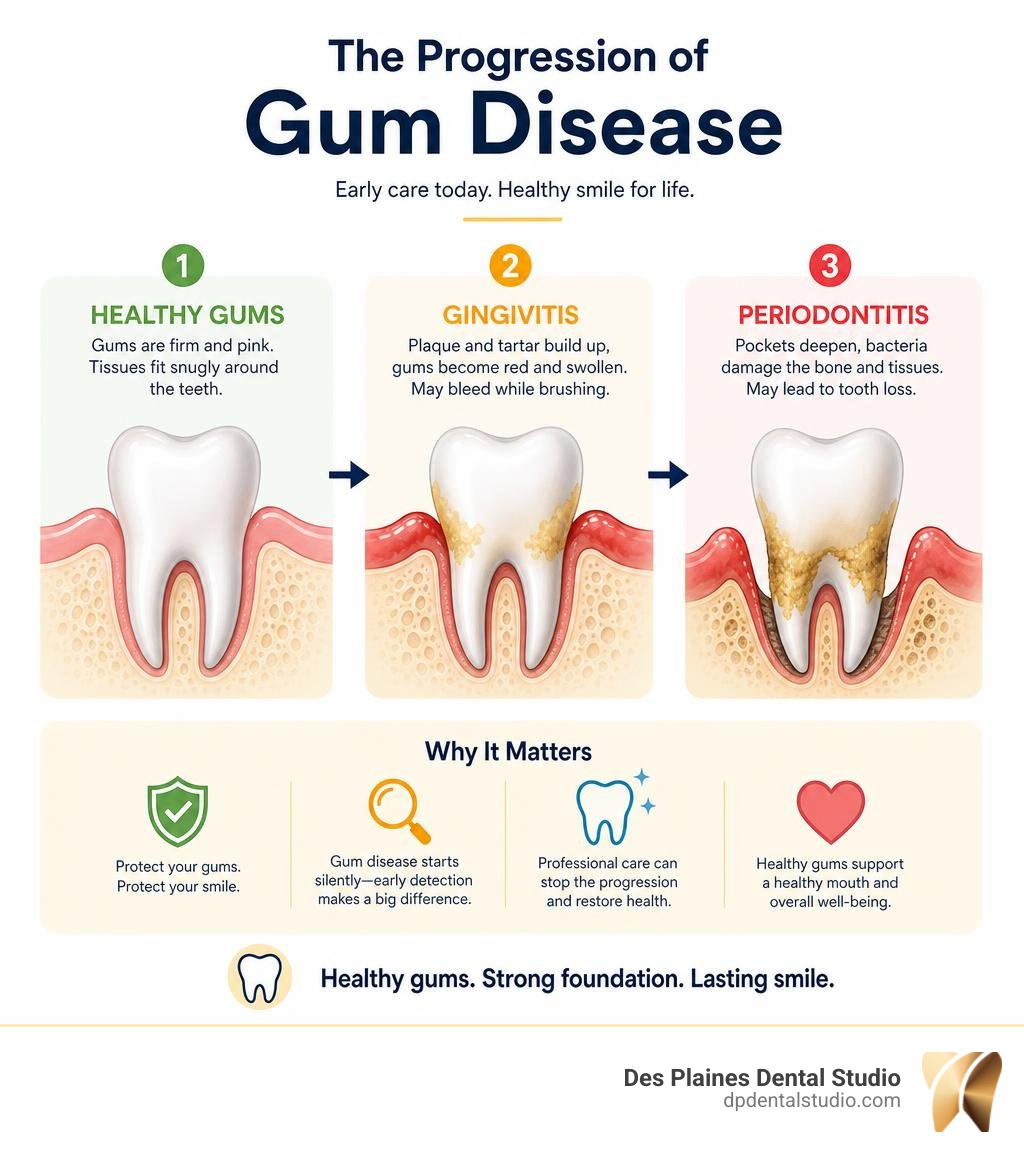
A deep cleaning, on the other hand, is a therapeutic treatment. It is prescribed when a patient shows active signs of periodontal disease. The primary diagnostic tool we use to determine this is a periodontal probe. During your exam, we gently measure the “pocket depth”—the space between your gum tissue and your tooth.
- Healthy Gums: Pocket depths measure between 1 and 3 millimeters, and the gums do not bleed.
- Early Gum Disease (Gingivitis): Pockets may measure 3 to 4 millimeters, often accompanied by redness and bleeding.
- Periodontitis: Pocket depths reach 5 millimeters or deeper. At this stage, a standard cleaning cannot reach the bottom of the pocket, making a deep cleaning absolutely necessary.
To help visualize these differences, look at the comparison table below:
| Feature | Regular Cleaning (Prophylaxis) | Deep Cleaning (Scaling & Root Planing) |
|---|---|---|
| Primary Goal | Prevention and maintenance | Treating active infection and stopping bone loss |
| Target Area | Visible tooth surfaces above the gumline | Below the gumline, targeting root surfaces |
| Anesthesia | Rarely required | Local anesthetic usually recommended |
| Pocket Depth | 1 to 3 mm (Healthy pockets) | 5 mm or deeper (Infected pockets) |
| Typical Visits | Single visit (usually every 6 months) | 1 to 4 visits (usually divided by mouth quadrants) |
| Aftercare | Standard brushing and flossing | Medicated rinses, close monitoring, and maintenance |
While a standard cleaning keeps a healthy mouth clean, it cannot cure an active infection below the gums. If you try to perform a regular cleaning on deep, infected pockets, you are essentially leaving the bacteria at the root of the problem to continue multiplying. For more details on preventive visits, check out our guide on dental cleanings and exams.
Signs and Symptoms of Periodontal Disease
Periodontal disease is often referred to as a “silent” disease because it rarely causes pain in its early stages. Many patients are surprised to learn they have gum disease because they haven’t felt any physical discomfort. However, your body does leave clues.
The earliest stage of gum disease is gingivitis. This is characterized by red, swollen, and tender gums that bleed easily when you brush or floss. If you notice pink in the sink when spitting out your toothpaste, this is not normal—it is an active cry for help from your gums. To understand this symptom better, read our article: 60016 Dentist Why Do My Gums Bleed.
If gingivitis is left untreated, it progresses into periodontitis. At this stage, the bacteria begin to attack the bone and ligaments holding your teeth in place. Symptoms of periodontitis include:
- Persistent bad breath (halitosis) that doesn’t go away with mouthwash or mints
- Gums that appear to be pulling away or shrinking from your teeth (recession), making your teeth look longer
- Pus appearing between your teeth and gums when pressed
- Teeth that feel loose or are shifting when you bite down
- A change in the way your teeth fit together when you chew
Recognizing these symptoms early can be the difference between saving your natural teeth and needing extractions.
Who Needs Deep Teeth Cleaning Des Plaines?
While anyone can develop gum disease due to plaque buildup, certain individuals are at a much higher risk and should pay close attention to their gum health.
The primary risk factors for periodontal disease include:
- Tobacco Use: Smoking or chewing tobacco is one of the most significant risk factors. Tobacco weakens your body’s ability to fight off infections and slows down the healing process, making treatments like deep cleaning less effective if you continue to smoke.
- Poor Oral Hygiene: Missing brushing or flossing sessions allows plaque to calcify quickly.
- Genetics: Some people are genetically predisposed to developing gum disease, even with excellent home care.
- Age: The risk of periodontal disease increases significantly as we get older, with seniors experiencing higher rates of bone loss.
One of the most critical risk factors we monitor closely is the relationship between gum disease and systemic health conditions, particularly diabetes. Research shows that periodontal disease and diabetes have a two-way connection. Uncontrolled diabetes makes it much harder for your body to fight off gum infections. Conversely, severe gum disease can elevate your blood sugar levels, making your diabetes much harder to manage.
Treating gum infections with a deep cleaning can actually help lower your systemic inflammation and improve your blood sugar control. You can learn more about this vital link by reading about The Periodontal Disease Diabetes Connection.
The Deep Cleaning Process and Aftercare
If we recommend a deep teeth cleaning in Des Plaines, we want you to feel completely comfortable and informed about what will happen during your treatment. We believe that anxiety comes from the unknown, so let’s walk through the process step-by-step.
First, we prioritize your comfort. Before we begin scaling, we will apply a local anesthetic to numb your gums and tooth roots in the area being treated. This ensures that you will feel little to no physical discomfort while we work.
Once you are numb, we use an ultrasonic scaler. This advanced tool uses high-frequency vibrations combined with a gentle stream of water to break up the hardened calculus and wash away the bacteria from the deep pockets. After the ultrasonic cleaning, we use fine hand instruments to perform root planing, smoothing out any remaining rough patches on the roots.
By removing these microscopic hiding spots, we provide the ultimate foundation for your body to heal. For more details on how we approach this, explore how we are providing relief from periodontal disease.
What to Expect During Your Deep Teeth Cleaning Des Plaines Visit
A deep cleaning is a highly detailed procedure. Because we want to be incredibly thorough, we typically do not clean your entire mouth in a single session.
Most commonly, we divide your mouth into halves or quadrants (four sections) and schedule the work over two separate visits. Each appointment usually lasts between 60 to 90 minutes. This allows us to focus entirely on one area at a time, ensures you don’t have to keep your mouth open for too long, and prevents your entire mouth from being numb at the same time.
For patients who experience dental anxiety, we offer a range of comfort options. From a warm, welcoming environment to gentle dental techniques and sedation options, we tailor every visit to your needs. Discover how we support your journey with personalized gum disease treatment Des Plaines IL.
Post-Procedure Care and Periodontal Maintenance
Once your deep cleaning is complete, your healing journey begins at home. It is completely normal to experience some mild tooth sensitivity to hot and cold temperatures, as well as slight gum tenderness and light bleeding for a few days following the procedure.
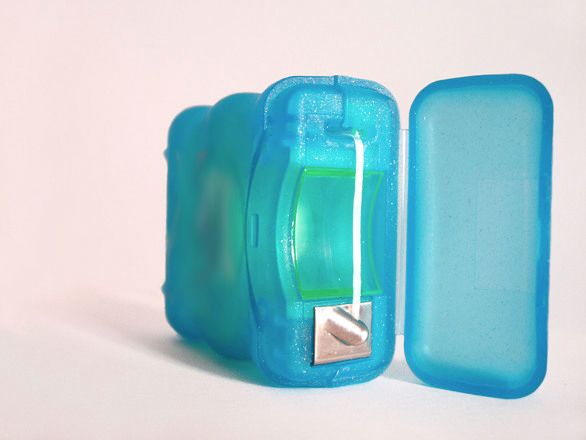
To support your healing and ensure the best possible outcome, we recommend the following post-care steps:
- Avoid Hot, Spicy, or Hard Foods: Stick to soft, nutritious foods for the first 48 hours to avoid irritating your sensitive gums.
- Rinse with Warm Salt Water: Dissolve half a teaspoon of salt in a glass of warm water and gently rinse your mouth 2 to 3 times a day to soothe the tissue and keep the area clean.
- Maintain Your Home Care: Do not stop brushing or flossing! Be very gentle around the treated gums, using a soft-bristled toothbrush.
- Avoid Tobacco: Refrain from smoking for at least 72 hours, as tobacco smoke severely delays healing and increases the risk of reinfection.
Once your gums have healed, you must transition to a specialized routine called periodontal maintenance. Because the bacteria that cause gum disease are incredibly resilient, standard 6-month cleanings are usually not frequent enough to prevent them from returning. Most patients who have undergone a deep cleaning will need to return every 3 to 4 months for professional maintenance to keep the pockets clean and monitor their health.
To set yourself up for long-term success, read our guide on Des Plaines IL Dentist 4 Ways to Achieve Optimal Oral Health.
Frequently Asked Questions About Deep Cleanings
We understand you might still have questions. Here are some of the most common concerns our Des Plaines patients share with us:
Is a deep teeth cleaning painful?
With the use of local anesthetics, the procedure itself is virtually painless. You will feel some pressure as we work, but you should not feel sharp pain. If you have highly sensitive teeth or severe dental anxiety, we can discuss additional sedation options to keep you completely relaxed. Any mild soreness after the numbness wears off can easily be managed with over-the-counter pain relievers like ibuprofen.
How much does a deep cleaning cost in Des Plaines?
The cost of a deep cleaning depends on the severity of the gum disease and how many quadrants of your mouth require treatment. Because scaling and root planing is a medical treatment for an active infection, most dental insurance plans cover a significant portion of the cost (often 50% to 80%). For any remaining out-of-pocket costs, we accept various financing options like CareCredit to ensure your health remains affordable.
For those interested in understanding dental care costs and insurance, resources from the American Dental Association offer guidance on navigating dental benefits and treatment costs.
When should I seek emergency dental care?
While mild sensitivity is normal after a deep cleaning, you should contact us immediately if you experience severe, throbbing pain, swelling in your face or jaw, a high fever, or continuous bleeding that won’t stop. These could be signs of a dental abscess or a more severe infection that requires urgent intervention.
Conclusion
Your smile is one of your greatest assets, but it relies entirely on the foundation supporting it: your gums. Ignoring the warning signs of gum disease can lead to irreversible bone loss and tooth loss, but a deep teeth cleaning can stop the damage in its tracks and give your mouth a fresh, healthy start.
At Des Plaines Dental Studio, we are committed to providing patient-centered, welcoming, and pain-free care. We understand that visiting the dentist can feel overwhelming, which is why we take the time to listen to your concerns, explain your treatment, and support you every step of the way.
Don’t wait for gum disease to impact your overall health and confidence. Schedule your dental cleaning and exam today with our caring team and take the first step toward a lifetime of healthy smiles!