


Implants vs. Keeping Your Teeth: The Ultimate Guide to Early Gum Disease Reviews
What Early Gum Disease Patient Reviews Actually Tell Us
Early gum disease patient reviews consistently reveal one striking pattern: most people had no idea anything was wrong until it was already serious.
Here is what patients most commonly report about early gum disease symptoms and treatments:
| What Patients Report | What It Actually Means |
|---|---|
| “My gums bled a little when I brushed” | Early sign of gingivitis, not normal |
| “I had bad breath that mouthwash didn’t fix” | Bacteria releasing sulfur compounds below the gumline |
| “My teeth looked longer than before” | Gum recession exposing tooth roots |
| “I felt no pain at all” | Gum disease is often completely painless early on |
| “A cleaning fixed it quickly” | Gingivitis is reversible with professional care |
| “I wish I hadn’t waited so long” | Delayed treatment led to irreversible bone loss |
The reality is uncomfortable but important: about 47% of adults over 30 in the U.S. have some form of gum disease, yet most cannot identify it in its earliest, most treatable stage.
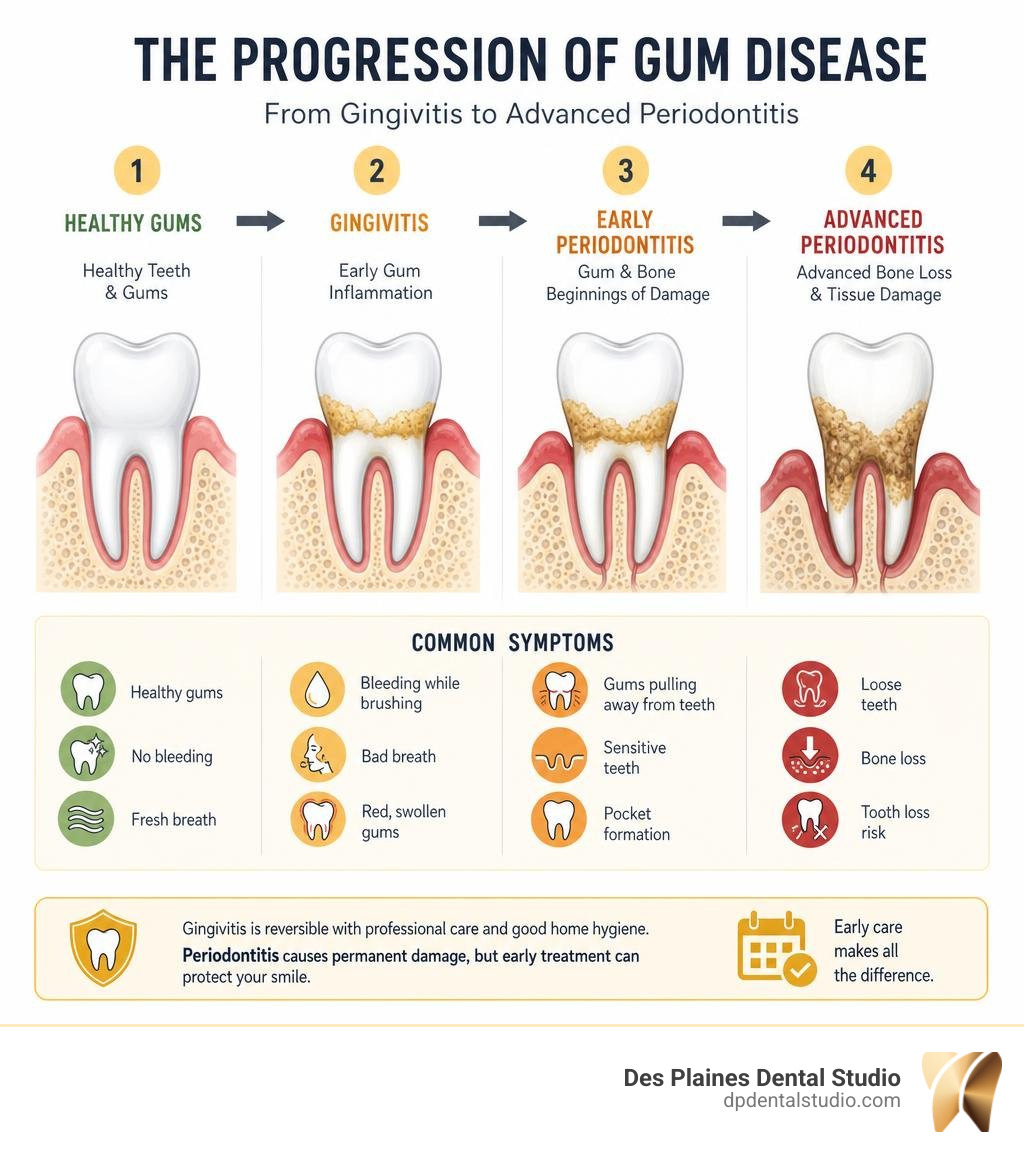
Gingivitis — the first stage — is fully reversible. Once it progresses to periodontitis, the bone loss is permanent.
That gap between “I noticed something” and “I finally went to the dentist” is where the real damage happens. Patients who share their stories online often describe years of ignoring a “pink sink” after brushing, only to learn they had lost significant bone structure around their teeth.
I’m Dr. Marta Milejczyk, a general dentist practicing in Chicago’s northwest suburbs since 1997, with advanced clinical training in periodontics through my General Practice Residency at Loyola University Medical Center — experience that shapes how I interpret early gum disease patient reviews and apply those lessons to real patient care every day. In this guide, I’ll walk you through what those patient stories reveal, what the science confirms, and what you can do right now to protect your smile.
What Early Gum Disease Patient Reviews Reveal About Silent Symptoms
If you spend an evening reading through dental forums, a clear theme emerges: gum disease is a master of disguise. Unlike a cavity, which often announces itself with a sharp, localized pain when you drink cold water, early periodontal disease is notoriously quiet.
The biological process begins innocently enough. Every day, a sticky, bacteria-rich film called plaque forms on our teeth. If we do not brush and floss it away completely, this plaque reacts with the minerals in our saliva and hardens into a rock-like substance called tartar (or calculus) in just a few days. Once tartar forms, it cannot be brushed away at home.
This tartar acts as a physical shield for bacteria, allowing them to nestle deep against your delicate gum tissue. The body’s immune system recognizes these bacteria as invaders and floods the area with blood and inflammatory cells to fight off the infection. This localized battle is what we call gingivitis.
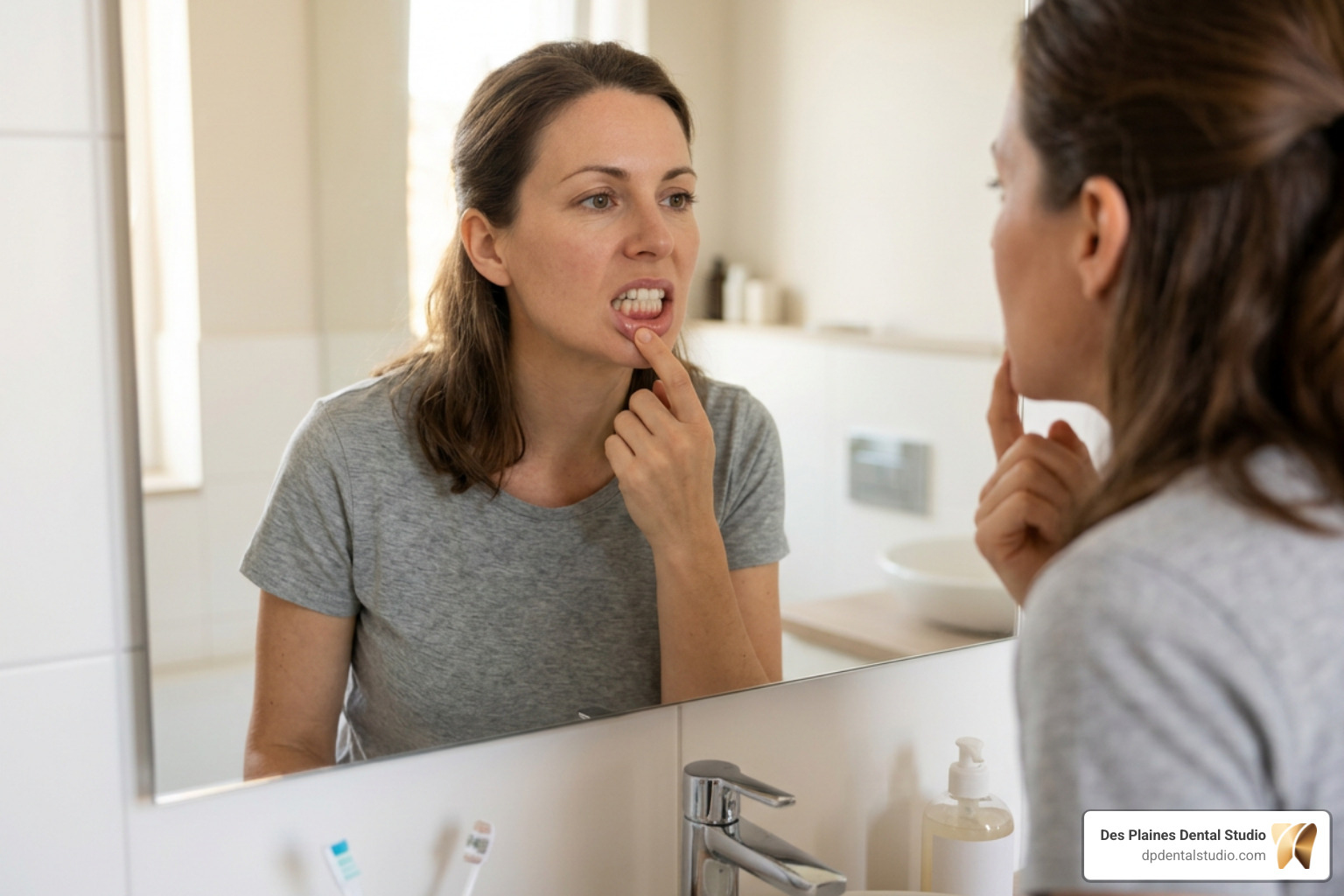
Because this inflammation is confined to the soft tissues in its earliest stages, there is rarely any pain. Patients frequently report looking in the mirror and seeing gums that look slightly red, puffy, or shiny, but because it doesn’t hurt, they assume everything is fine. To truly understand this progression, it helps to read our comprehensive guide on Des Plaines IL Dentist Understanding Periodontal Disease, which outlines how these initial changes set the stage for more advanced issues.
How Patients Describe Bleeding Gums in Early Gum Disease Patient Reviews
In patient forums and personal blogs, the most common phrase you will encounter is some variation of “pink in the sink.” Many people mistakenly believe that a little bit of bleeding during brushing or flossing is normal—perhaps a sign that they brushed “too hard” or used a new toothbrush.
However, healthy gums do not bleed. They can withstand normal brushing and flossing without shedding a single drop of blood. When patients describe their daily routines in early gum disease patient reviews, they often mention noticing blood when biting into hard foods like apples, or seeing red streaks in their toothpaste foam.
A candid example of this progression can be found in the personal story shared in My Periodontal Disease Progression – Cheap and Cheeky. The author explains how easy it is to let regular dental visits slide, especially during periods of disruption like the pandemic, only to find that minor, painless bleeding had quietly escalated into active periodontal infections with pocket depths of 4 to 6 millimeters.
When your gums bleed, it is a direct warning sign that the tissue is inflamed and physically breaking down. Ignoring this “minor” irritation allows the bacterial biofilm to migrate further down the tooth root, eventually reaching the supporting bone.
Spotting the Warning Signs: Bad Breath and Receding Gums
Two other symptoms dominate patient reviews: chronic bad breath (halitosis) and teeth that suddenly look “longer” than they used to.
Patients often write about their frustration with persistent bad breath or a constant metallic, sour taste in their mouth. They describe trying cosmetic mouthwashes, breath mints, and tongue scrapers, only to find the odor returns within minutes. The science explains why: the bacteria associated with gum disease—specifically the destructive “red complex” bacteria like Porphyromonas gingivalis—feed on trapped food particles and cellular debris beneath the gumline. As they do, they release foul-smelling volatile sulfur compounds. No mouthwash can reach deep enough into the periodontal pockets to eliminate these bacteria once they have established themselves.
At the same time, patients may begin to notice gum recession. This occurs when the chronic inflammation causes the gum tissue to pull away from the crown of the tooth. As the gums recede, they expose the cementum—a softer, highly sensitive material that covers the tooth roots. Unlike the crown of your tooth, which is protected by hard enamel, the root lacks this protective barrier.
When cementum is exposed, the microscopic tubules leading directly to the tooth’s nerves are left open to the elements. Patients describe this as a sudden, sharp sensitivity to hot coffee, ice cream, or even cold winter air. For a deeper look at how this transition from simple inflammation to structural damage occurs, you can explore our article on What is Periodontal Disease Dentist in 60016.
Implants vs. Saving Your Teeth: The Real Cost of Progression

When gum disease progresses past gingivitis, it crosses a critical boundary into periodontitis. This is the point where the damage becomes permanent. The bacterial toxins and your body’s own inflammatory response begin to break down the alveolar bone—the specialized bone tissue that anchors your teeth in place.
As this bone dissolves, the attachment between the tooth and the gum is lost, creating deep spaces called periodontal pockets. While healthy gum pockets measure between 1 and 3 millimeters, active periodontitis can push these measurements to 5, 7, or even 10 millimeters. Once these pockets become this deep, they are completely inaccessible to home oral hygiene tools, creating a self-sustaining cycle of infection and bone loss.
When faced with severe bone loss, patients are often forced to choose between undergoing intensive periodontal therapies to save their natural teeth or extracting them in favor of dental implants.
To help visualize this choice, we have put together a comparison of the two paths:
| Feature | Natural Tooth Preservation | Dental Implants |
|---|---|---|
| Primary Goal | Stop infection, regenerate tissue, keep natural teeth | Replace missing teeth with titanium posts and crowns |
| Invasiveness | Non-surgical to minimally invasive (scaling, lasers) | Surgical (extractions, bone grafts, implant placement) |
| Treatment Time | Ongoing maintenance, immediate stabilization | 3 to 9 months (allowing for bone integration) |
| Sensation | Maintains natural biting pressure and nerve feedback | No natural nerves; relies on surrounding bone pressure |
| Maintenance | Diligent home care and regular professional cleanings | Diligent cleaning to prevent “peri-implantitis” |
| Long-Term Outlook | Highly successful if caught early and maintained | Excellent success rate, but requires healthy bone foundation |
While dental implants are a miraculous technology for replacing teeth that are already lost, they are not a simple “quick fix” for gum disease. Implants require a solid foundation of healthy bone to succeed. Furthermore, if the underlying bacterial infection in your mouth is not controlled, the same bacteria that destroyed your natural teeth can attack the tissues surrounding your implant—a serious condition known as peri-implantitis that can lead to implant failure.
Leaving periodontitis untreated carries severe risks that extend far beyond your mouth.
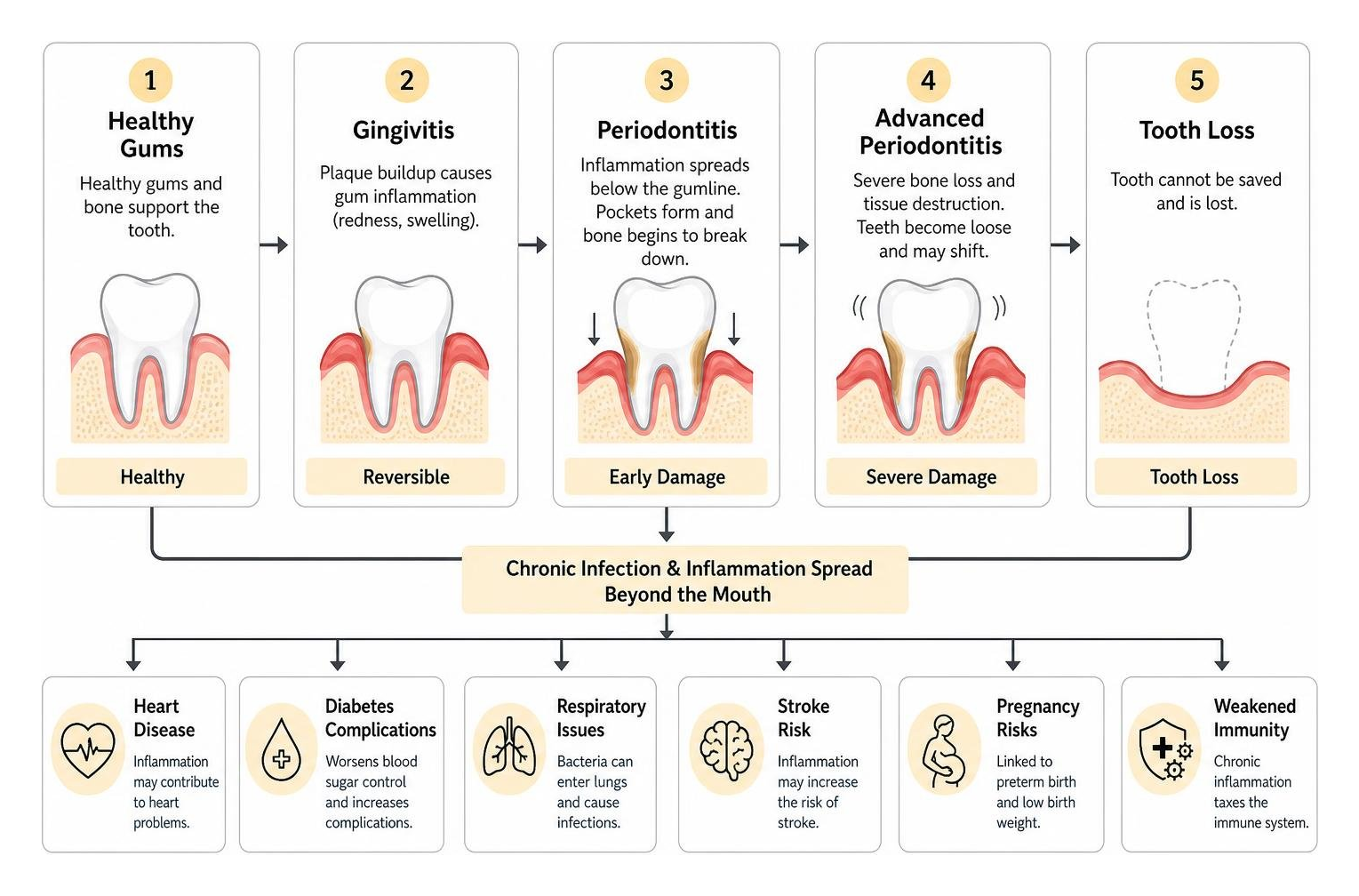
These risks include:
- Rapid, irreversible bone loss that permanently alters your facial structure.
- Tooth mobility and shifting, which changes your bite and makes chewing painful.
- Premature tooth loss, which is the leading cause of tooth loss in adults.
- Chronic systemic inflammation that taxes your immune system daily.
- Increased risk of implant failure if you attempt to place implants in an actively infected mouth.
The Systemic Impact: Diabetes and Heart Health
One of the most important concepts in modern dentistry is the bidirectional relationship between oral health and systemic wellness. The chronic bacterial infection in your gums does not stay in your mouth; it has direct access to your bloodstream through the inflamed, bleeding blood vessels in your periodontal pockets.
For patients living with diabetes, this connection is particularly critical. Chronic inflammation makes it significantly harder for the body to utilize insulin, leading to elevated blood sugar levels. Conversely, poorly controlled blood sugar impairs the body’s ability to fight off infections, accelerating the destruction of gum tissue. We discuss this complex, dangerous cycle in detail in our resource on The Periodontal Disease Diabetes Connection.
Similarly, cardiologists and periodontists agree that the systemic inflammation caused by periodontal disease can contribute to cardiovascular issues. Bacteria from the mouth can travel through the bloodstream, contributing to the formation of arterial plaques and increasing the risk of heart attacks and strokes. Taking care of your gums is quite literally a matter of protecting your heart.
Why Patients Regret Waiting to Treat Early Periodontitis
In clinical literature and patient reviews, a common theme is regret. Many patients assume that gum disease is an “older person’s problem.” However, scientific studies show that periodontitis affects as many as 2 in 5 adults in the United States, and it can progress rapidly in younger individuals.
A scoping review of periodontal health in young adults under 40 revealed that early-onset periodontitis can be aggressive and highly destructive. The study identified several key risk factors that accelerate bone loss in younger populations:
- Smoking: Tobacco use constricts blood vessels, masking the typical warning sign of bleeding gums while severely compromising the tissue’s ability to heal.
- Obesity: Adipose (fat) tissue is metabolically active and secretes inflammatory cytokines (like TNF-α and IL-6), creating a heightened systemic inflammatory state that exacerbates gum destruction.
- Low Bone Mineral Density: Associated with both the severity and extent of periodontal bone loss, even in adolescents.
When younger patients ignore the early signs of gum disease, they often experience rapid clinical attachment loss. By the time they seek treatment, they may have already lost a significant portion of the bone supporting their teeth. To understand how early interventions can halt this damage before it requires surgical correction, read our guide on Early Periodontitis.
Evaluating At-Home Remedies vs. Professional Treatments
When patients first notice bleeding or swelling, their immediate instinct is often to look for at-home solutions. They buy antimicrobial mouthwashes, specialized toothpastes, or online kits. While excellent daily home care is the foundation of oral health, it has physical limitations that cannot be bypassed.
Once plaque has hardened into tartar, it is physically bonded to the tooth surface. No toothbrush, floss, or mouthwash can remove it. Attempting to “cure” gum disease at home without professional intervention is like trying to wash a dish that has burnt-on food without scrubbing it—you might clean the surface, but the underlying debris remains. To understand the full spectrum of clinical care required to safely eliminate this buildup, explore our options for Gum Disease Treatment Des Plaines IL.
Why At-Home Treatments Fail to Resolve Tartar
The primary reason at-home treatments fail to resolve active gum disease is that they cannot reach subgingival tartar—the buildup that sits beneath the gumline on the roots of your teeth.
In dental forums, patients often express confusion when their dentist diagnoses early periodontal disease but does not recommend an aggressive deep cleaning. This exact scenario is discussed in the Dentistry Forums thread regarding early periodontal disease.
As the forum discussion highlights, it is clinically possible to have early signs of periodontitis (such as localized bone loss from a previous, now-stabilized infection) without currently having active, hardened tartar below the gums. In these specific cases, a standard professional cleaning combined with diligent home care is often enough to keep the gums healthy, proving that treatment must always be tailored to your specific, current clinical measurements rather than a generic online protocol.
Some patients use custom dental trays with specialized gels containing 1.7% hydrogen peroxide (such as Perio Protect or its alternatives) to deliver oxygen deep into the periodontal pockets to fight anaerobic bacteria. While these at-home tray therapies are highly effective supportive tools, they are designed to be used in conjunction with professional treatments, not as a replacement for them.
What Patients Say About Deep Cleanings and Laser Therapy
For patients who do require clinical intervention, the standard first line of defense is scaling and root planing (often called a deep cleaning). This non-surgical procedure involves using specialized hand instruments and ultrasonic scalers to carefully remove plaque and tartar from the deep pockets below the gumline, then smoothing the root surfaces to prevent bacteria from easily reattaching.
In patient interviews, such as the one featured in One Patient’s Journey: An Interview with Tonya About Gum Disease – Fight Gum Disease, patients often share their relief after undergoing modern periodontal treatments. Tonya describes living with severe gum disease for over twenty years, fearing painful surgeries and tooth extractions, before discovering minimally invasive options like the LANAP laser protocol. Laser therapy allows dentists to target and destroy bacteria and infected tissue within the pockets without the need for traditional scalpels or sutures, resulting in significantly faster recovery times and minimal discomfort.
For localized, severe tissue loss, advanced regenerative therapies are now available. In My experience with Emdogain, the author shares a detailed, personal account of undergoing a minor surgical procedure utilizing Emdogain—a specialized Swedish gel technology containing enamel matrix proteins that stimulate the regeneration of lost gum and bone tissue. While recovery requires patience and a soft-food diet for a couple of weeks, regenerative treatments offer hope for saving teeth that might otherwise be lost.
To learn more about what to expect during a deep cleaning and how we ensure your comfort throughout the process, visit our dedicated page on Scaling and Root Planing Des Plaines IL.
Frequently Asked Questions About Periodontal Care
What Are the Most Common Concerns in Early Gum Disease Patient Reviews?
When reading through early gum disease patient reviews, the three most common concerns are:
- Fear of Pain: Many patients delay booking their appointments because they worry that deep cleanings or periodontal examinations will be painful. In reality, we use advanced local anesthetics and gentle techniques to ensure you feel completely comfortable.
- Financial Cost: Patients worry about the cost of periodontal therapy compared to standard cleanings. However, treating gum disease early is far more cost-effective than ignoring it and eventually needing extractions, bone grafts, and dental implants.
- Fear of Tooth Loss: Learning you have bone loss can be highly anxious. It is important to remember that with modern therapies, even teeth that have lost significant supporting bone can often be stabilized and saved for a lifetime.
At Des Plaines Dental Studio, we focus on alleviating these anxieties by providing a welcoming, supportive environment. You can read more about how we help patients overcome these hurdles in our guide to Providing Relief from Periodontal Disease.
Can early gum disease be reversed at home?
If you are in the earliest stage—gingivitis—the answer is yes! Because gingivitis only affects the soft tissues and has not yet caused bone loss, it can be fully reversed.
Reversing gingivitis requires a partnership between you and your dental team:
- Professional Cleaning: First, you must visit us to have all hardened tartar professionally removed.
- Gentle Brushing: Brush at least twice a day for two full minutes using a soft-bristled or electronic toothbrush. Avoid hard bristles, which can damage your gums.
- Daily Flossing: Clean between your teeth once a day to remove plaque from areas your toothbrush cannot reach.
- Therapeutic Rinses: Use an antimicrobial mouthwash if recommended to help reduce bacterial counts.
To learn more about building an effective daily routine to protect your smile, explore our tips on the Prevention and Treatment of Periodontal Disease Des Plaines IL Dentist.
What is the difference between gingivitis and periodontitis?
The key difference lies in whether permanent damage has occurred:
- Gingivitis: This is early-stage inflammation confined entirely to the gums. There is no bone loss, and the condition is completely reversible with proper care.
- Periodontitis: This is an advanced, chronic infection where the bacteria have migrated beneath the gumline, actively destroying the supporting bone and tissues. The bone loss that occurs during periodontitis is permanent and requires ongoing professional management to prevent tooth loss.
For a detailed breakdown of these stages and how we diagnose them using precise pocket measurements, see our guide on What is Periodontal Disease Dentist in 60016.
Conclusion
If there is one ultimate lesson to take away from early gum disease patient reviews, it is this: do not wait for pain to tell you there is a problem.
By the time you feel pain, loose teeth, or severe sensitivity, gum disease has already progressed to a stage where permanent bone damage has occurred. Taking a proactive, preventive approach to your oral health is the single best investment you can make in your smile, your systemic health, and your peace of mind.
At Des Plaines Dental Studio, we are dedicated to providing gentle, patient-centered care. Whether you have noticed a little “pink in the sink” or it has simply been a while since your last dental visit, we are here to support you with a welcoming, stress-free experience.
To take the first step toward protecting your smile, we recommend these simple, actionable steps:
- Monitor Your Gums: Pay attention to early warning signs like redness, puffiness, or bleeding during brushing.
- Schedule Regular Visits: Maintain professional cleanings and examinations every six months to catch plaque and tartar before they cause damage.
- Inquire About Pocket Depths: At your next visit, ask us about your periodontal pocket measurements to stay informed about your health.
- Maintain Your Daily Routine: Brush gently twice a day with a soft toothbrush and floss daily.
If you are ready to take control of your oral health or have questions about your gums, schedule your comprehensive evaluation with us today by visiting our page on Early Periodontitis. We look forward to helping you keep your natural teeth healthy, strong, and beautiful for life!