How Much Is an Implant for a Molar, and Is It Worth the Cost?
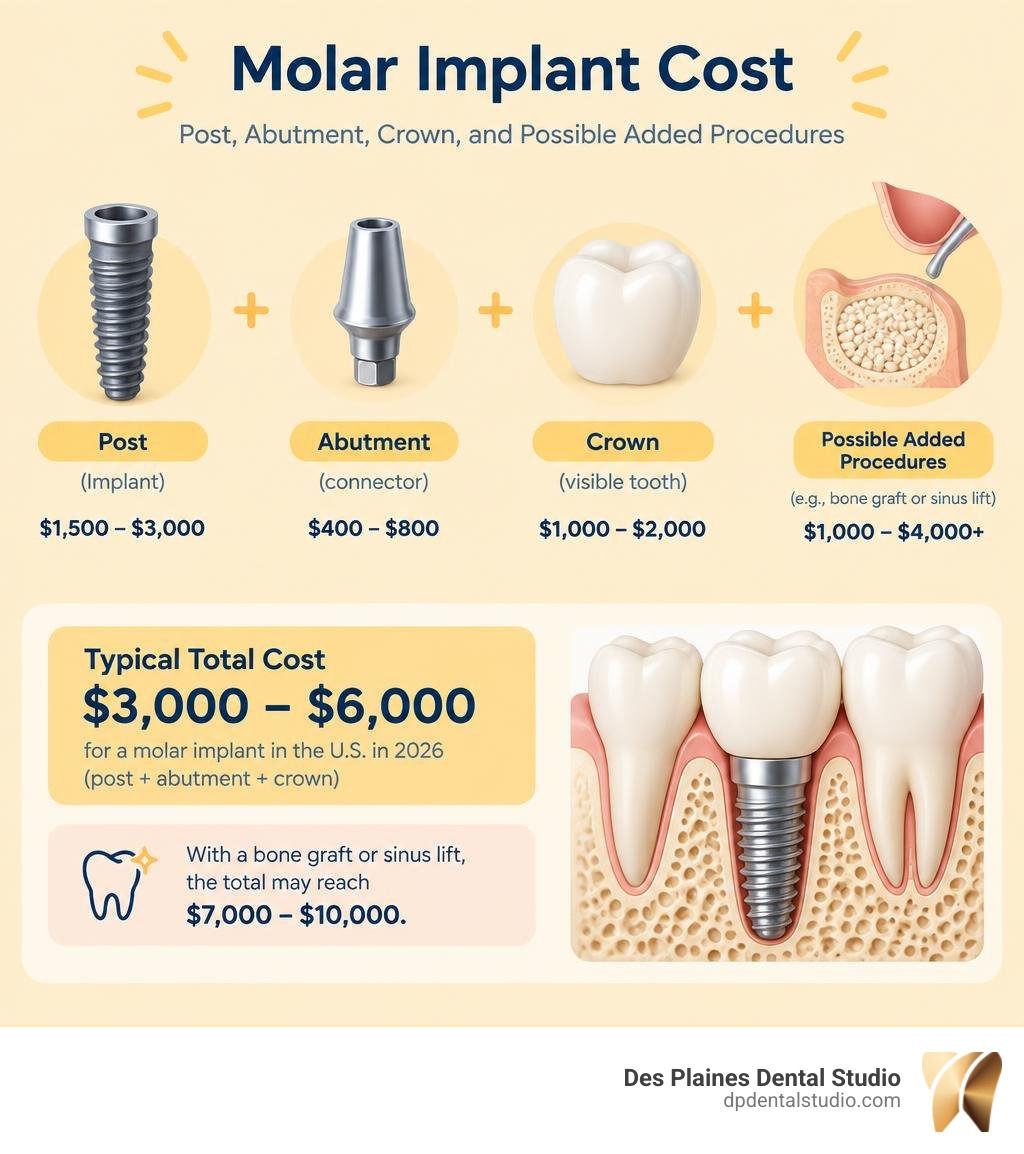
If you’re checking how much is an implant for a molar, budget about $3,000 to $6,000 in the U.S. in 2026. That comprehensive price range typically covers the titanium implant post, the intermediate connector called an abutment, and the custom prosthetic crown. If your anatomical evaluation shows that you need preparatory treatments like a bone graft or a sinus lift, the complete investment may reach $7,000 to $10,000. Always request an itemized fee breakdown from your dental practice so you can clearly see every clinical step and fee included in your treatment plan.
A missing back tooth compromises your daily bite efficiency and makes chewing challenging foods difficult. Beyond immediate functional issues, leaving the space untreated can cause adjacent teeth to shift, tilt, and disrupt your bite alignment over time. However, choosing the most appropriate restorative option depends directly on your individual jawbone anatomy, treatment timeline, and personal financial goals.
I’m Marta Milejczyk, a dentist with a general practice residency and extensive clinical experience in restorative and implant dentistry. In this comprehensive guide, I will outline exactly how much is an implant for a molar, break down the individual procedural components, and explain the key variables that influence your final out-of-pocket expenses.
How Much Is an Implant for a Molar in 2026?
When replacing a back tooth, knowing the baseline price helps you budget effectively. On average across the country, an individual dental implant without extra complications ranges between $2,800 and $5,600, with national estimates centering around $3,000 to $6,000 per tooth when including the final restoration.
Reviewing molar implant costs to replace back teeth reveals that back teeth encounter higher mechanical stress than front teeth. Molars bear the brunt of your daily bite force—often exceeding 150 to 200 pounds of pressure per square inch during vigorous mastication. Because of this heavy workload, restoring a back molar demands robust hardware, precise surgical placement, and exceptionally durable restorative materials designed to resist long-term wear and fracture.
If you are evaluating dental solutions, consulting a practical guide to dental implant cost comparisons highlights how upfront pricing reflects long-term reliability. Unlike temporary fixes such as removable partials or conventional bridges, a standalone implant does not compromise adjacent healthy teeth, require enamel shaving, or wear down prematurely under cyclic chewing stress.
The Three Core Cost Components
A complete dental implant is not just one piece; it is an engineered medical assembly of three distinct components:
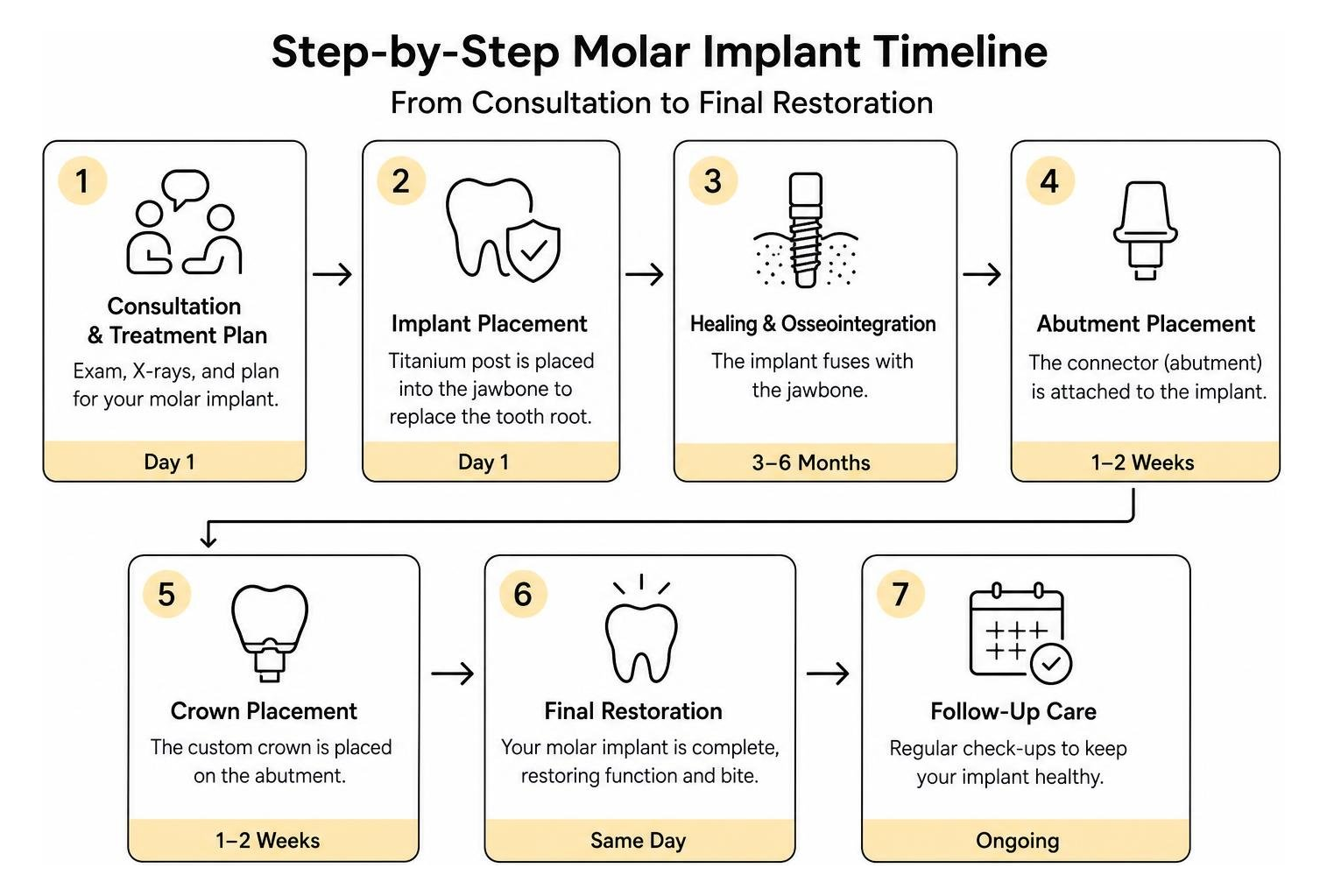
- The Implant Post ($1,000 – $3,000): This is a biocompatible titanium or ceramic cylinder surgically placed into your jawbone. It replaces the natural tooth root and permanently fuses with the surrounding bone through osseointegration.
- The Abutment ($400 – $1,000): A custom or prefabricated connector piece securely attached to the top of the implant post. It extends through the gum line and acts as the structural anchor holding your replacement tooth securely in place.
- The Crown ($800 – $3,000): The visible artificial tooth custom-designed to match your bite and adjacent dentition. When planning dental implant restorations, material selection plays a massive role in both longevity and price. While porcelain-fused-to-metal (PFM) crowns offer an affordable, time-tested approach, monolithic zirconia crowns represent the gold standard for back molars due to their near-indestructible strength under heavy chewing forces.
Additional Procedures That Increase Molar Implant Fees
Not every patient has a jawbone that is immediately ready for an implant fixture. If a molar has been missing for several months or years, the surrounding jawbone naturally begins to resorb. Preparing the surgical site may require supplementary treatments:
- Tooth Extraction ($150 – $500): Removing a damaged, infected, or fractured molar prior to surgery, often paired with socket preservation.
- 3D CBCT Imaging ($150 – $400): High-definition three-dimensional scans that allow us to map bone density, locate anatomical nerves, and ensure sub-millimeter precision during surgery.
- Bone Grafting ($300 – $1,200): When bone volume is insufficient, bone grafting for dental implants builds a dense foundation to support the post.
- Sinus Lift ($1,500 – $3,500): A specialized bone graft performed on the upper jaw when the sinus cavity sits too close to the implant site.
Understanding what you will really pay for titanium dental implants means looking at whether these preliminary surgeries are necessary for your unique anatomy.
Key Factors Influencing Back Tooth Replacement Costs
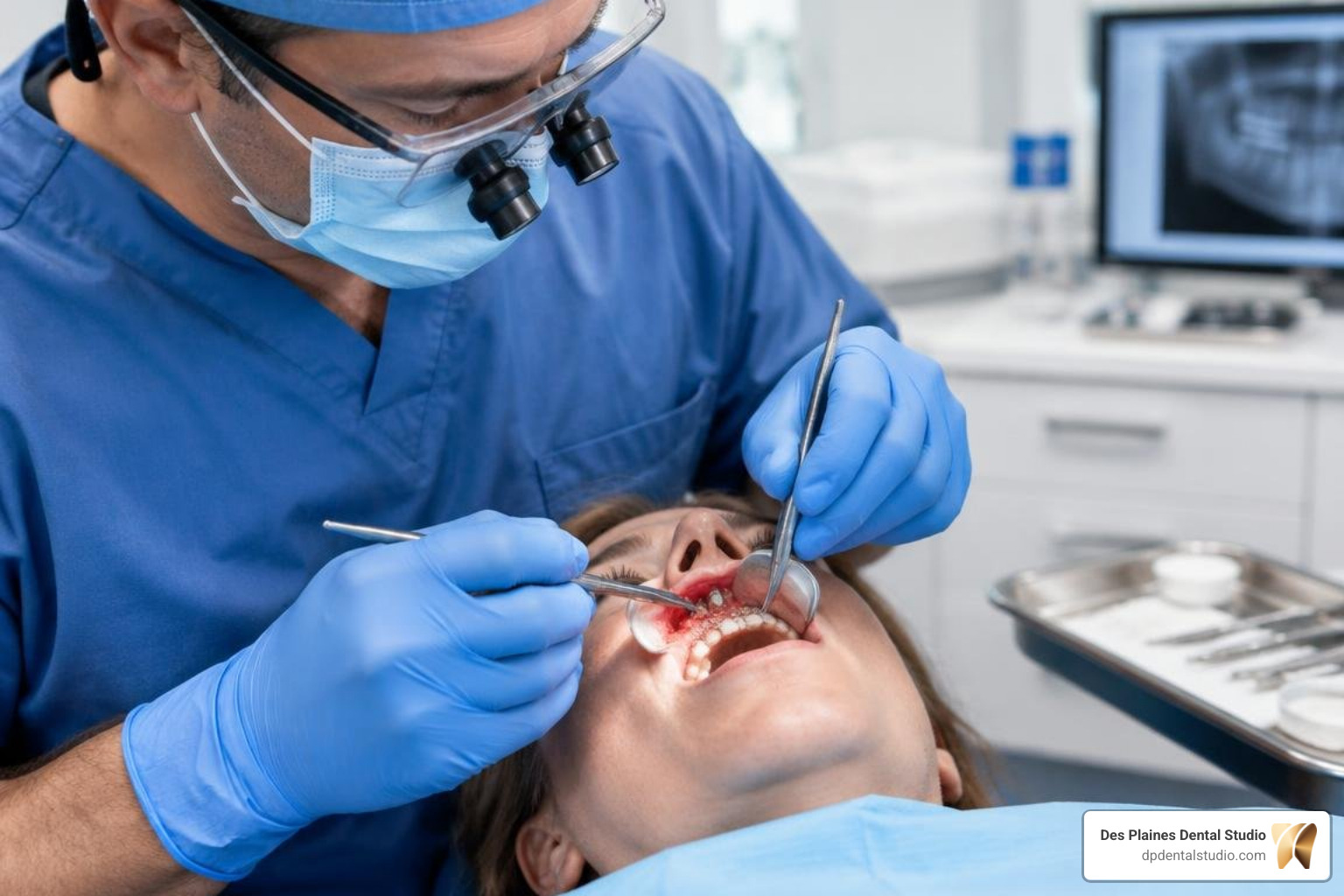
Pricing for dental implants is influenced by several clinical and regional variables that dictate the overall complexity of your treatment plan:
- Geographic Location: Dental fees reflect the local operational overhead and lab costs of the region. In Illinois, single-tooth implant procedures align closely with national averages, with regional averages ranging between $2,200 and $5,500 depending on procedural complexity and facility capabilities.
- Technology and Digital Workflows: Modern clinics utilizing 3D surgical guides, computerized torque monitors, intraoral digital impression scanners, and dynamic navigation systems offer elevated accuracy. These state-of-the-art tools minimize the risk of implant failure while slightly adjusting diagnostic, planning, and laboratory fees.
- Provider Experience: Finding the right clinician is paramount for long-term clinical success. Learning how to find a dentist near you who does dental implants helps ensure that your provider possesses dedicated post-graduate surgical training, extensive restorative credentials, and a strong track record of successful restorative outcomes.
How Much Is an Implant for a Molar in the Upper vs. Lower Jaw?
The anatomical location of your missing molar introduces unique structural considerations that affect surgical complexity and overall cost:
- Upper Molars (Maxillary Arch): Upper back teeth sit directly beneath the maxillary sinus cavities. When an upper molar is lost, the sinus floor naturally expands downward while the alveolar ridge shrinks. If you lack sufficient vertical bone height, a sinus lift is required to gently elevate the sinus membrane and insert donor bone grafting material. This supplementary surgery extends overall healing time by several months and increases the final price of the restoration.
- Lower Molars (Mandibular Arch): The lower jaw generally features denser cortical bone, which offers excellent primary stability for titanium posts. However, oral surgeons must carefully navigate around the inferior alveolar nerve canal, which supplies sensation to your lower lip and chin. Using guided 3D surgical planning ensures safe placement well above this vital nerve pathway.
Choosing a Qualified Dental Implant Provider
Restoring a molar is not solely about placing a titanium screw; it involves recreating a finely balanced bite (occlusion). Your molars guide your jaw during chewing cycles. A poorly positioned implant crown can place excessive lateral forces on the post, trigger bone loss, or cause uneven wear on opposing natural teeth. Selecting a provider who excels in both surgical placement and restorative mechanics ensures your replacement tooth functions harmoniously with your entire smile.
Insurance Coverage and Financing

Many patients assume dental insurance will not contribute toward implants. Fortunately, coverage policies have evolved significantly in recent years. Following our dental implants insurance guide for 2026, many major PPO plans now cover diagnostic imaging, preparatory extractions, or a substantial percentage of the crown and abutment (often 40% to 50% of allowable charges), even if the surgical fixture itself is excluded.
Because annual dental insurance maximums typically cap between $1,500 and $2,500, you can use several smart financing strategies to manage out-of-pocket costs and minimize financial stress:
- HSA and FSA Funds: Health Savings Accounts (HSA) and Flexible Spending Accounts (FSA) allow you to pay for surgical, preparatory, and restorative fees using pre-tax dollars, delivering substantial net savings on your overall care.
- Split-Year Scheduling: If your treatment begins late in the calendar year, surgical placement and grafting can occur in November or December (utilizing that year’s maximum benefit) and final crown delivery in January (tapping into your renewed annual maximum).
- Flexible Healthcare Financing: Third-party healthcare credit options such as CareCredit offer low-interest or zero-interest monthly payment plans spanning 12 to 24 months, breaking your total fee into predictable, stress-free installments.
Frequently Asked Questions About Molar Implants
Do molar dental implants hurt during and after surgery?
No, the surgical procedure itself is completely painless. We use advanced local anesthesia to thoroughly numb the entire treatment area, and conscious sedation options are readily available for patients with dental anxiety. Post-operative discomfort is generally mild to moderate—very comparable to a simple routine tooth extraction. Any local swelling, gum tenderness, or mild soreness typically peaks around 48 hours after surgery and subsides within 3 to 5 days using over-the-counter pain relievers, cold ice packs, and a gentle soft-food diet.
How long does the molar implant process take from start to finish?
The full treatment timeline typically ranges between 3 and 9 months depending on your healing response. After surgical placement, your jawbone requires 3 to 6 months to fuse solidly with the titanium post in a biological process called osseointegration. If you require a preparatory bone graft, ridge augmentation, or sinus lift, an additional 3 to 4 months of healing may be needed before placing the final custom ceramic crown.
How long do back molar implants typically last?
Titanium implant fixtures boast a 10-year clinical survival rate above 95% and can easily last a lifetime with diligent oral hygiene, daily flossing, and routine dental cleanings. While the underlying titanium root fixture is essentially permanent, the custom zirconia or porcelain crown experiences continuous chewing friction and may require minor maintenance or replacement after 15 to 20 years of active daily service.
Conclusion
Losing a back tooth affects much more than your appearance—it directly impacts how comfortably you chew, forces surrounding teeth to shift out of alignment, and triggers progressive bone loss in your jaw. While dental bridges and partials offer a lower upfront cost, dental implants provide the highest long-term clinical value by functioning like a natural tooth root without compromising adjacent healthy enamel.
At Des Plaines Dental Studio, we believe every patient deserves compassionate, welcoming, and pain-free care backed by clear, upfront pricing, personalized treatment roadmaps, and comprehensive insurance support. If you are ready to regain full chewing power and protect your smile’s long-term health, explore the average cost of dental implants and schedule a comprehensive consultation with our team today.