


How Much Do Dental Implants Cost in 2026?
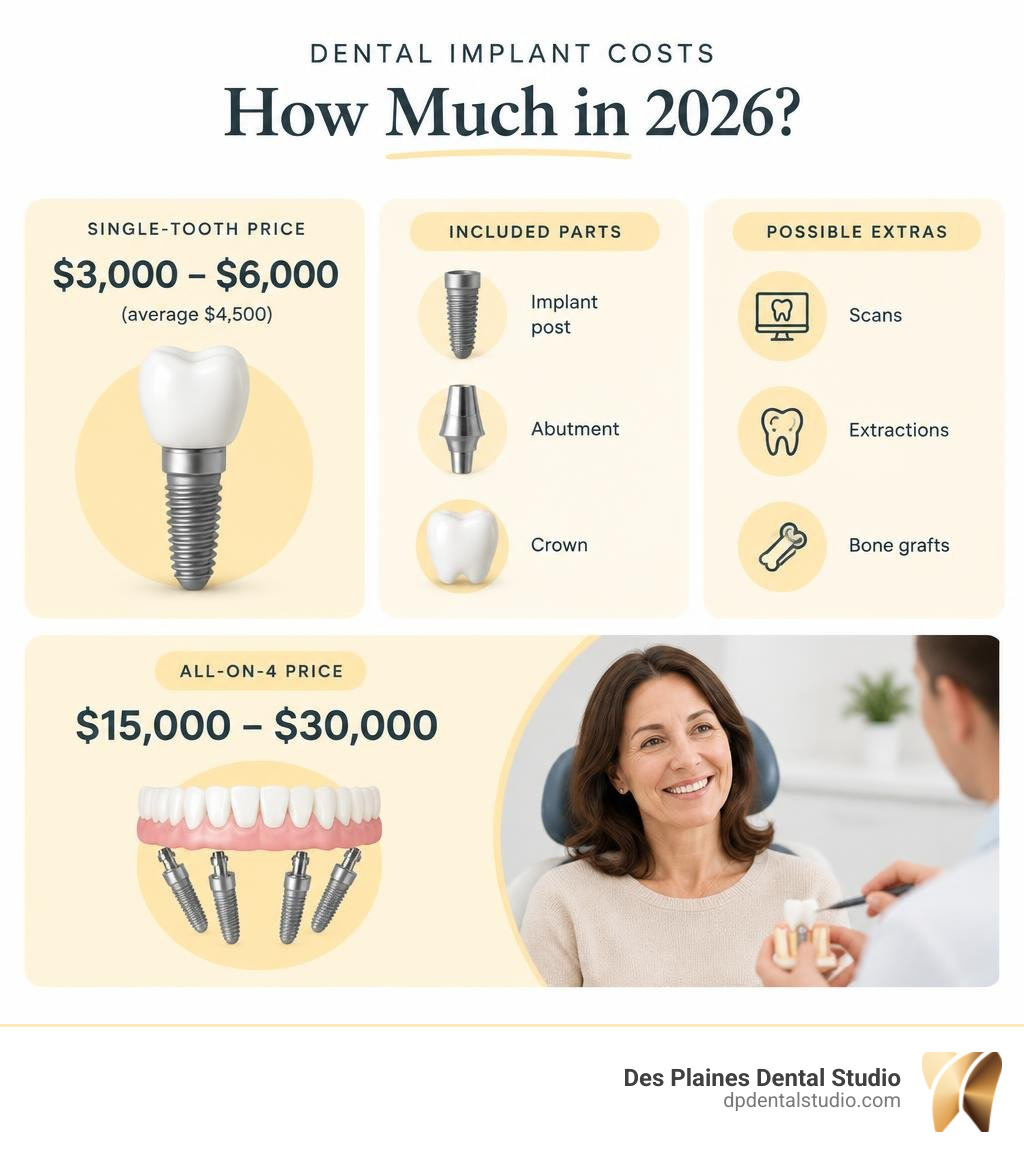
In the U.S., a complete single-tooth dental implant typically costs $3,000-$6,000 in 2026, with an estimated average of $4,500. That price usually includes the implant post, abutment, and crown. Scans, extractions, or bone grafts may cost extra. For a full arch, All-on-4 treatment often costs $15,000-$30,000.
The most useful way to compare prices is to ask what each quote includes, what insurance may pay, and whether you need any work before the implant can be placed. When patients ask how much dental implants cost, they are really asking for a clear starting point for understanding their options and total investment.
I’m Marta Milejczyk, a dentist who has practiced in Chicago’s northwest suburbs since 1997, with advanced training in restorative and implant dentistry. When patients search for “dental implants how much,” I want them to have a clear starting point for understanding their options and costs.
Quick look at dental implants how much:
- how much does dental implants cost for whole mouth
- are teeth implants expensive
- how much are anchored dentures
Dental Implants: How Much Do They Cost on Average in 2026?
When considering tooth replacement, patients want transparent answers. According to our complete guide to dental implant costs, the national average price for replacing a single tooth sits around $4,500. However, final investment figures range widely depending on case complexity, clinical health, and total teeth replaced.
Understanding the broad categories of treatment helps set realistic expectations before stepping into an examination room.
| Restoration Type | Typical 2026 Price Range | National Median / Benchmark | What Is Typically Included |
|---|---|---|---|
| Single-Tooth Implant | $3,000 – $6,000 | $4,500 | Fixture (post), abutment, and custom crown |
| Implant-Supported Bridge (3–4 Teeth) | $5,000 – $12,000 | $8,500 | 2 implant fixtures, custom abutments, multi-unit bridge |
| All-on-4 (Full-Arch Fixed) | $15,000 – $30,000 per arch | $22,000 per arch | 4 implant fixtures, conversion, fixed full-arch prosthesis |
| Full-Mouth Reconstruction (Both Arches) | $30,000 – $90,000+ | $45,000 – $60,000 | 8–12 fixtures, upper/lower fixed full-arch arches |
Regional operational expenses and local demographics influence these prices significantly. Higher overhead markets command higher surgical and laboratory fees, whereas practices in more accessible metro zones deliver competitive pricing structures without compromising care.
Single Tooth Dental Implants: How Much Do Individual Components Cost?
A single implant is not one solid piece of metal; it is an engineered medical system made up of three distinct components. Dental practices and insurance providers bill these parts using separate Current Dental Terminology (CDT) codes.
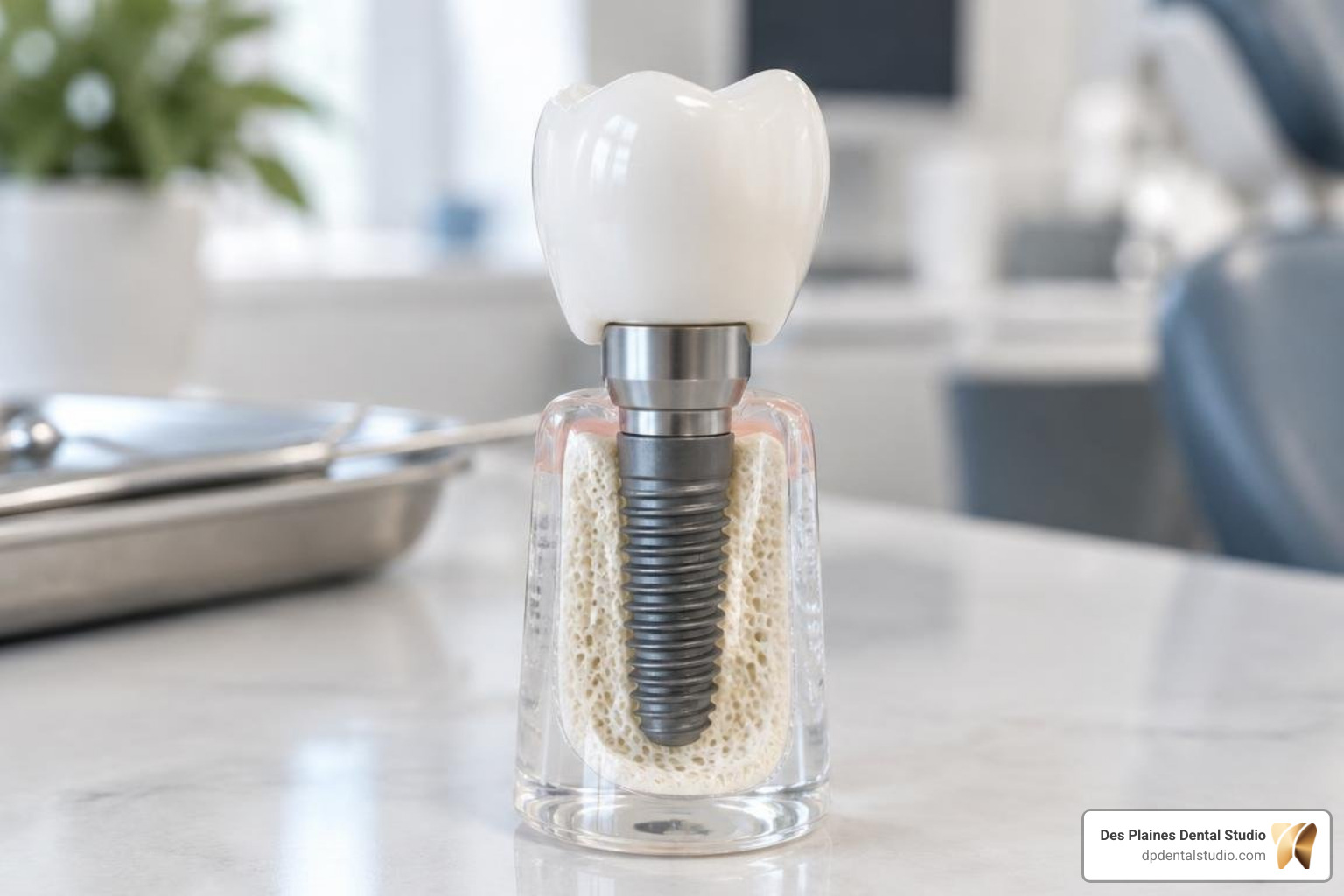
Breaking down a standard quote reveals where the budget goes:
- The Implant Fixture (CDT D6010): The biocompatible screw placed into the jawbone to replace the natural root. This typically ranges between $1,500 and $2,500.
- The Abutment (CDT D6056 / D6057): The connector piece screwed into the fixture that supports the restoration. Prefabricated or custom abutments range between $400 and $900.
- The Implant Crown (CDT D6058 / D6065): The lifelike ceramic or zirconia tooth visible above the gumline. Laboratory fabrication and seating range between $1,000 and $2,500.
If you only need a single restoration, exploring single tooth implant options will give you a clear look at how these three pieces come together to create a permanent, natural-looking replacement.
Full-Arch and All-on-4 Dental Implants: How Much Do Complete Restorations Cost?
For individuals facing severe decay or extensive tooth loss, restoring one tooth at a time is neither efficient nor cost-effective. Modern dentistry utilizes full-arch techniques to restore entire upper or lower dental arches simultaneously.
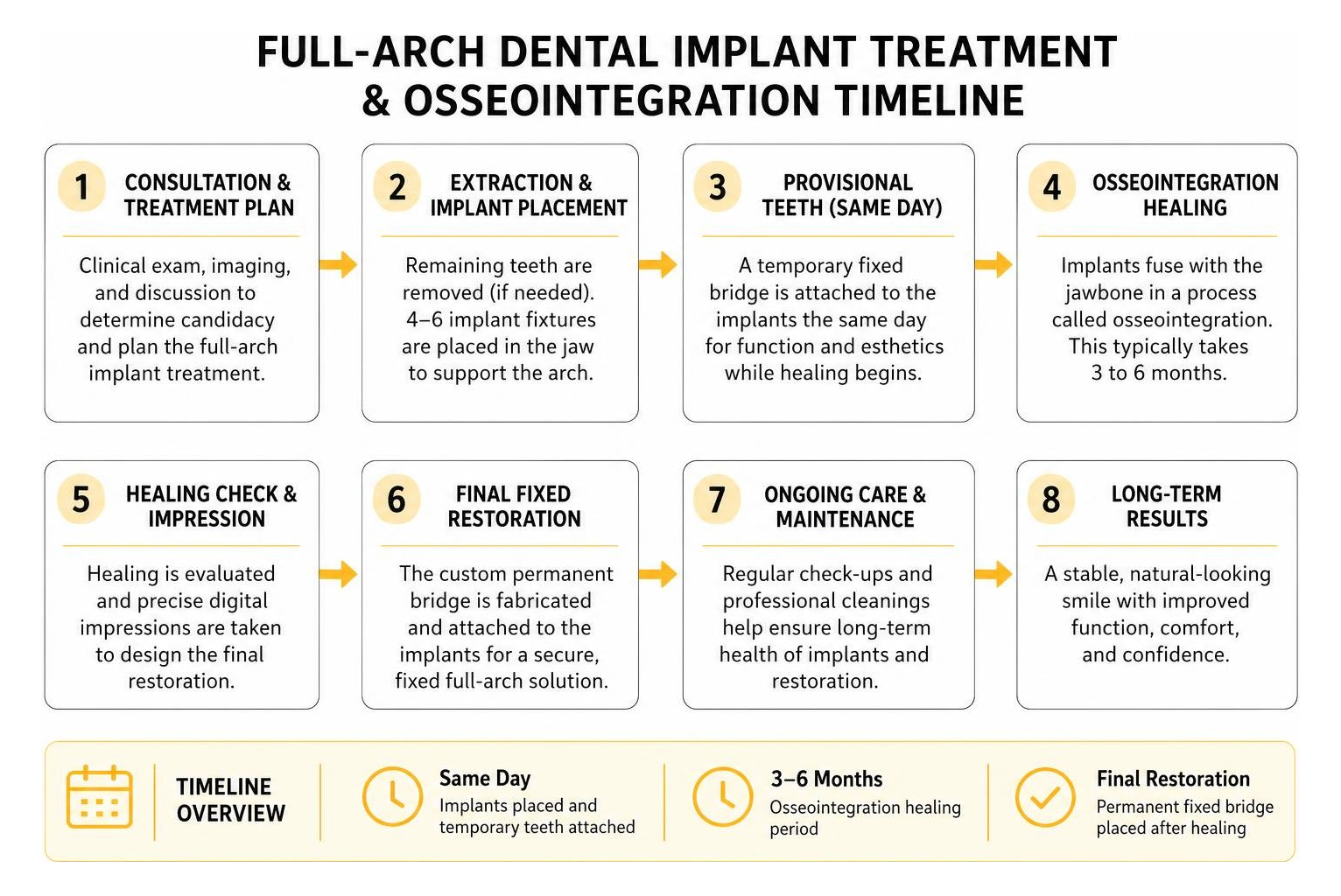
Popular restoration designs include:
- All-on-4 / All-on-6 Systems: By placing four to six angled implants along the jawbone, we anchor a complete arch of prosthetic teeth. Choosing All-on-4 dental implant restorations typically costs between $15,000 and $30,000 per arch, averaging roughly $22,000.
- Full-Mouth Reconstructions: Replacing both the upper and lower arches with permanent, fixed bridges runs between $30,000 and $90,000+, depending on material selection (acrylic vs. monolithic zirconia). You can review comprehensive details in our full-mouth implant solutions overview or check the average cost of full dental implants for different full-arch tiers.
- Implant-Retained Overdentures: A budget-conscious removable alternative using 2 to 4 implants with snap-on attachments, running $8,000 to $18,000 per arch.
Patients interested in immediate results often evaluate how much a one-day full mouth dental implant actually costs to balance same-day convenience with long-term laboratory durability.
Provider Specialty and Geographic Cost Discrepancies
Who places your implant influences your overall invoice. In clinical dentistry, implant placement is performed by experienced general dentists, oral and maxillofacial surgeons (OMS), or periodontists/prosthodontists.
A published comparative analysis of dental implant costs across US markets reveals that specialist surgical fees can vary compared to restorative-focused practices, depending on whether surgery and restorative crown placement are split between two separate offices. Working with a comprehensive team that manages both placement and restoration under one roof eliminates fragmented billing.
Reference guides such as the 2026 dental implant pricing benchmarks highlight how local commercial leases, equipment expenses, and regional cost-of-living metrics cause rates to fluctuate across the country.
Key Factors and Hidden Expenses That Influence Implant Pricing
Advertised “implant specials” can sometimes be misleading when they exclude essential diagnostic and preparatory steps. A complete clinical estimate must account for diagnostic imaging, surgical guides, and any necessary extractions.
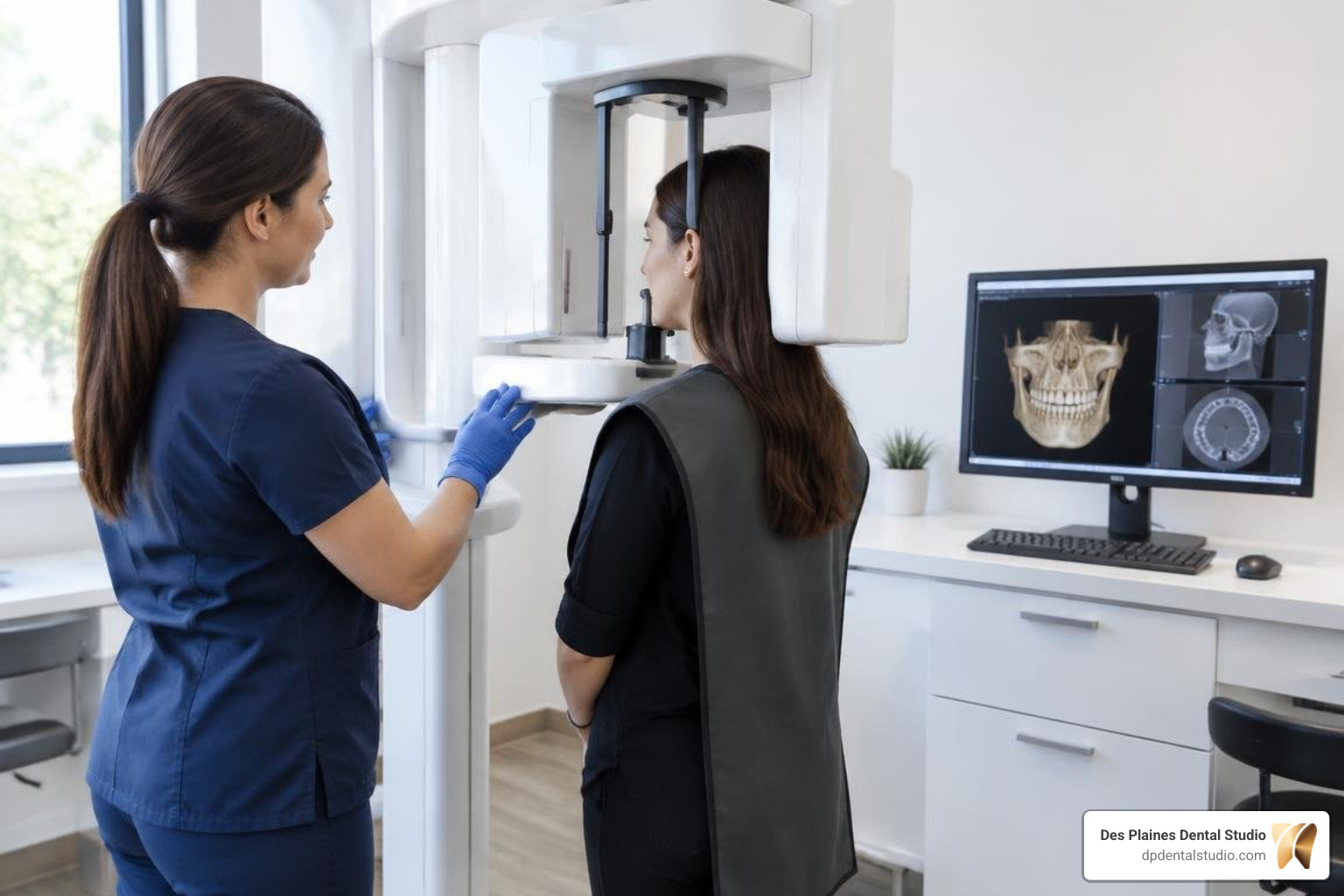
Common line items that influence total out-of-pocket expenses include:
- Diagnostic Imaging & 3D CBCT Scans: High-resolution scans evaluate bone volume and nerve pathways ($150 – $500).
- Tooth Extractions: Removing compromised or non-restorable teeth ($150 – $650 per tooth).
- Sedation & Anesthesia: Local anesthesia is standard, but nitrous oxide or IV conscious sedation adds $250 – $1,000.
- Surgical Guides: CAD/CAM custom-printed surgical placement guides ($250 – $600).
Preparatory Surgeries: Bone Grafts and Sinus Lifts
When a tooth is missing, the surrounding alveolar jawbone begins to resorb over time. Approximately 40% of implant candidates require bone enhancement to establish a stable foundation before an implant post can be safely anchored.
- Bone Grafting: Augmenting bone volume using mineralized tissue matrices. A standard socket or ridge graft ranges between $250 and $3,000, depending on the source material and defect size. Learn more about the procedure through our guide on bone grafting for dental implants.
- Sinus Augmentation (Sinus Lift): When placing upper molar implants near sinus cavities with thin bone, a sinus elevation adds $1,500 to $3,500 per side.
Implant Materials and Manufacturing Quality
The materials engineered into your new smile directly affect upfront costs and long-term biocompatibility:
- Medical-Grade Titanium: The gold standard for over four decades. Titanium offers exceptional osseointegration success rates (95–98%) and optimal structural strength.
- Zirconia (Ceramic) Implants: A 100% metal-free, tooth-colored option favored by patients with metal sensitivities or thin gum biotypes. Zirconia fixtures and custom abutments carry a 15–30% price premium over standard titanium.
- Lab Restoration Materials: Monolithic zirconia and high-translucency porcelain crowns resist chipping and staining far better than basic composite resin restorations, protecting your investment for decades.
Comparing Long-Term Value and Maintenance for Dental Implants
While traditional bridges and removable dentures carry lower initial price tags, they frequently demand costly replacements, realignments, and repairs over time. Implants preserve the natural jawbone, prevent adjacent teeth from shifting, and function just like natural teeth.
| Tooth Replacement Option | Initial Cost (1 Tooth) | 15-Year Estimated Maintenance / Replacements | Total 15-Year Investment | Jawbone Preservation | Impact on Adjacent Healthy Teeth |
|---|---|---|---|---|---|
| Dental Implant | $3,000 – $6,000 | $0 – $500 (routine cleanings & checkups) | $3,000 – $6,500 | Excellent (prevents bone loss) | None (adjacent teeth untouched) |
| Traditional 3-Unit Bridge | $2,500 – $5,000 | $3,000 – $6,000 (replacement every 7–10 yrs) | $5,500 – $11,000 | Poor (bone resorbs under pontic) | High (adjacent enamel cut down) |
| Removable Partial Denture | $1,200 – $2,500 | $2,000 – $4,000 (relines, repairs, new partials) | $3,200 – $6,500 | Poor (accelerates soft bone loss) | Moderate (stresses anchor teeth) |
Proper daily brushing, flossing, and semi-annual cleanings keep dental implant restorations intact for 20 years, 30 years, or a lifetime.
Navigating Dental Insurance, Financing, and Cost-Saving Strategies
Understanding how benefits apply reduces treatment stress. While historically classified as cosmetic, many current dental plans cover portions of the surgical extraction, bone graft, or final crown.
Reviewing a detailed dental implants insurance guide helps you understand plan provisions. That standard dental policies often feature annual maximums of $1,000 to $2,500.
Key payment and budgeting avenues include:
- Health Savings Accounts (HSA) & Flexible Spending Accounts (FSA): Utilizing pre-tax income for surgical and restorative treatment yields instant savings of 20% to 35%, depending on your tax bracket.
- Healthcare Financing Plans: Third-party programs like CareCredit or Proceed Finance offer 0% promotional interest or extended payment plans spread over 24 to 60 months.
- Split-Year Phased Treatment: If you begin treatment late in the calendar year, you can place the implant post in November or December and seat the final crown in January—effectively utilizing two annual insurance benefit maximums.
Utilizing Medical Insurance for Restorative Implant Procedures
In specific clinical circumstances, health insurance policies cover surgical reconstruction. When tooth loss stems from severe physical trauma, motor vehicle accidents, oral cancer treatment, or congenital anomalies, medical benefits may apply. Reviewing how to utilize medical insurance for dental implants helps identify whether pre-authorization applies to your situation.
Practical Tips for Lowering Out-of-Pocket Expenses
To ensure your investment is protected, evaluate quotes with complete transparency:
- Request an Itemized Estimate: Ensure every CDT code (fixture, abutment, crown, bone graft, imaging) is clearly listed.
- Inquire About In-House Dental Memberships: For patients without insurance, practice membership plans often include discounts on major restorative procedures.
- Seek a Comprehensive Clinical Second Opinion: If an initial proposal seems unusually high or includes unexplained surgeries, a second evaluation verifies what is medically necessary.
Frequently Asked Questions About Dental Implant Costs
Does dental insurance pay for the entire dental implant procedure?
No dental insurance plan covers 100% of a comprehensive implant procedure. Most plans cover diagnostic exams, preliminary extractions, and a percentage of the final crown up to their annual maximum ($1,000–$2,500), leaving the surgical fixture cost to the patient.
What factors contribute to the cost of dental implants?
Implant pricing reflects biocompatible medical materials (titanium and zirconia), 3D digital planning technologies, customized dental lab artistry, surgical sterilization overhead, and the advanced clinical skill required to safely place restorations near anatomical nerves and sinus cavities.
How long does the dental implant process take from start to finish?
A straightforward single-tooth restoration typically takes 3 to 6 months. This allows 8 to 16 weeks for osseointegration—the biological fusion of bone to the implant post—before placing the final permanent crown. Cases requiring extensive bone augmentation or full-arch reconstruction may take 6 to 9 months.
Conclusion
Choosing dental implants is an investment in your health, confidence, and overall quality of life. Unlike temporary dental bridges or removable appliances, implants preserve your bone structure, protect adjacent teeth, and provide permanent stability for chewing and speaking naturally.
At Des Plaines Dental Studio, we believe in patient-centered care, clear pricing, and comfortable, pain-free dentistry. Whether you need a single tooth replacement or a complete full-arch restoration, we work closely with you to navigate insurance coverage and establish flexible financing plans.
Schedule your personalized consultation today to learn more about the average cost of dental implants and take the first step toward a healthy, lasting smile.