How Much for Dentures? Start With the Full Cost
If you’re asking how much for dentures, budget $1,000 to $6,500 or more for a full upper and lower removable set in the U.S. A partial denture typically costs $700 to $3,500 or more per arch. Implant-supported dentures cost more. These are starting ranges, not final bills: extractions, X-rays, and later adjustments can add to the total.
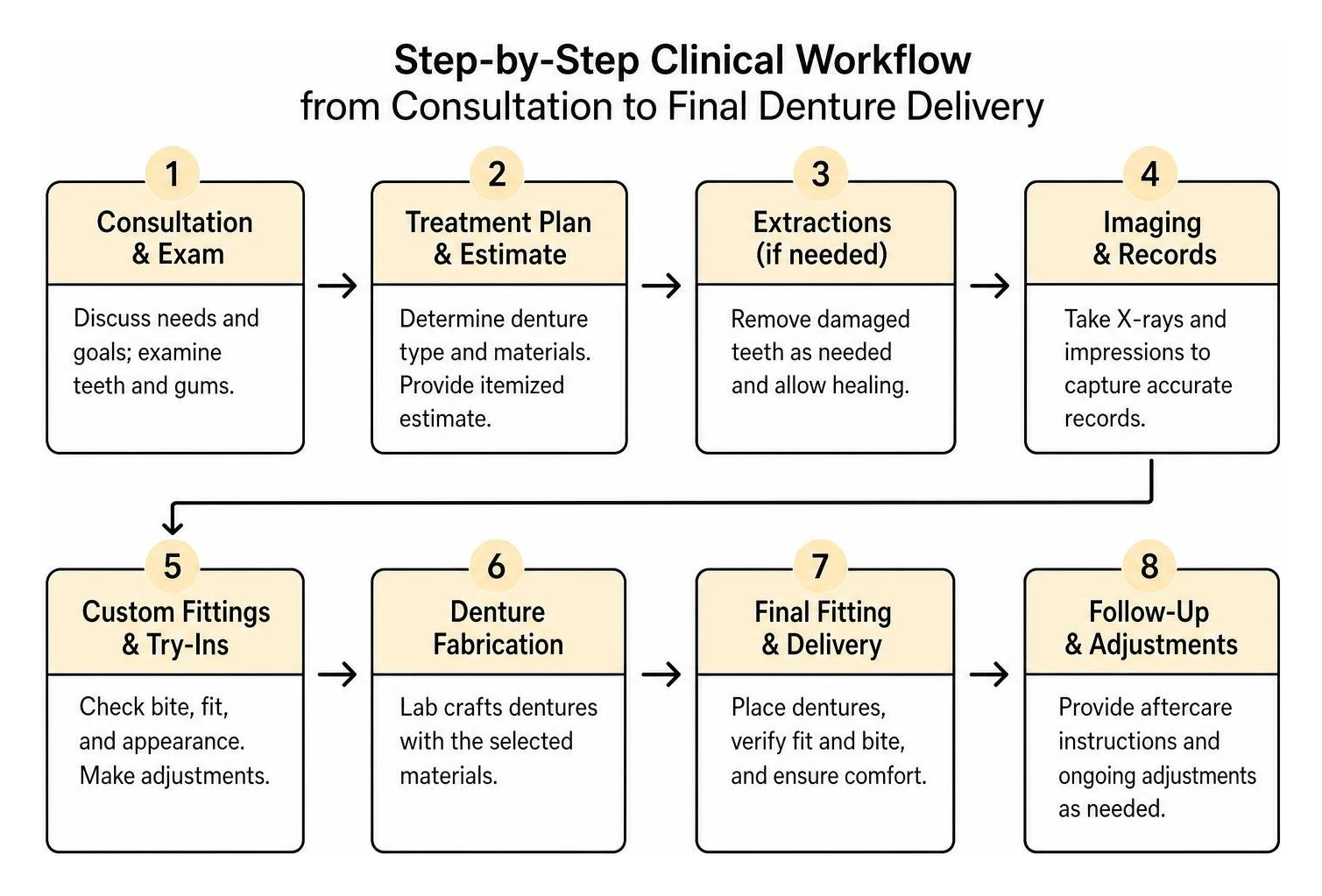
The most useful price is an itemized estimate based on your mouth and the type of denture you need. Check what it includes before comparing quotes.
I’m Marta Milejczyk, a dentist who has practiced in Chicago’s northwest suburbs since 1997, with training in restorative dentistry and full-mouth rehabilitation. When patients ask how much for dentures, I encourage them to look beyond the price of the denture itself to the cost of getting a comfortable fit and maintaining it.
How Much for Dentures: Complete Cost Breakdown by Type and Quality
Across the United States, more than 36 million adults are missing all their natural teeth, and nearly 90% of them rely on dentures to restore their ability to eat, speak, and smile with confidence. Nationally, the overall price spectrum for dentures spans from roughly $340 for entry-level, non-customized removable plates to over $11,000 for highly customized, premium full-mouth restorations.
When you begin evaluating your options, reviewing a full set dentures cost guide from economy to premium options helps you understand what goes into each tier. The total investment depends on material quality, the complexity of your bite, and laboratory artistry:
- Economy Dentures ($300 to $1,000 per arch): These budget-friendly options use prefabricated, cold-cured acrylic bases and standard synthetic teeth. Because they involve limited fitting visits, they can feel bulky and often require frequent adjustments or denture adhesives to remain stable.
- Mid-Grade / Conventional Dentures ($1,000 to $3,000 per arch): Fabricated with heat-cured, high-impact acrylic and natural-looking composite teeth, conventional dentures include custom impressions, bite registrations, and wax try-ins to verify aesthetics and speech.
- Premium Dentures ($3,000 to $8,000 per arch): Crafted with advanced, wear-resistant polymers or lifelike porcelain teeth, premium prosthetics are matched precisely to your facial contours, skin tone, and natural lip support for exceptional realism and comfort.
- Implant-Supported Overdentures ($4,000 to $15,000+ per arch): Also called snap-in dentures, these combine a removable prosthetic with surgically placed titanium implants to stabilize your bite and eliminate slipping.
How Much for Dentures by Type and Material?
The design of your prosthetic determines its upfront fee and everyday functionality. When weighing high-end dentures vs traditional sets, you are evaluating materials, fit precision, and structural longevity.
Conventional full dentures sit directly over healed gums. They rely on natural suction on the upper palate and ridge stability along the lower jaw. On average, traditional full removable dentures cost approximately $2,022 per arch (ranging between $1,493 and $3,309).
Immediate dentures, by comparison, are fabricated prior to dental surgery and placed immediately following tooth extractions. While they prevent you from spending a single day without teeth, they average around $2,178 per arch and require tissue conditioners and soft relines as your underlying jawbone naturally shrinks during post-surgical healing.
For patients seeking maximum stability, implant-retained overdentures offer a dependable alternative. Titanium implant fixtures average $4,093 per implant (ranging between $2,830 and $7,203), and securing a full arch typically requires two to four implants.
Full vs. Partial Sets: Exploring Price Differences
If you retain several healthy natural teeth, partial dentures preserve your remaining dentition while filling empty spaces. Prices vary depending on the framework material and clasps:
- Transitional Acrylic Partials (“Flippers”): Priced between $700 and $1,200, these lightweight acrylic plates replace one or two teeth temporarily during healing or on a tight budget.
- Cast Metal Framework Partials: Ranging from $1,500 to $3,500, these feature a rigid chromium-cobalt or titanium framework with acrylic gums. Understanding metal partial dentures pricing helps you evaluate their strength, thin profile, and chewing performance.
- Flexible Thermoplastic Partials (e.g., Valplast): Costing $1,200 to $2,600, flexible resins eliminate visible metal clasps and flex comfortably along your gumline.
For patients comparing single-arch solutions, reading the complete guide to upper dentures cost can clarify why upper plates (which benefit from palatal suction) often feel different and have distinct design requirements compared to lower plates.
Hidden Fees and Additional Costs Beyond the Denture Base
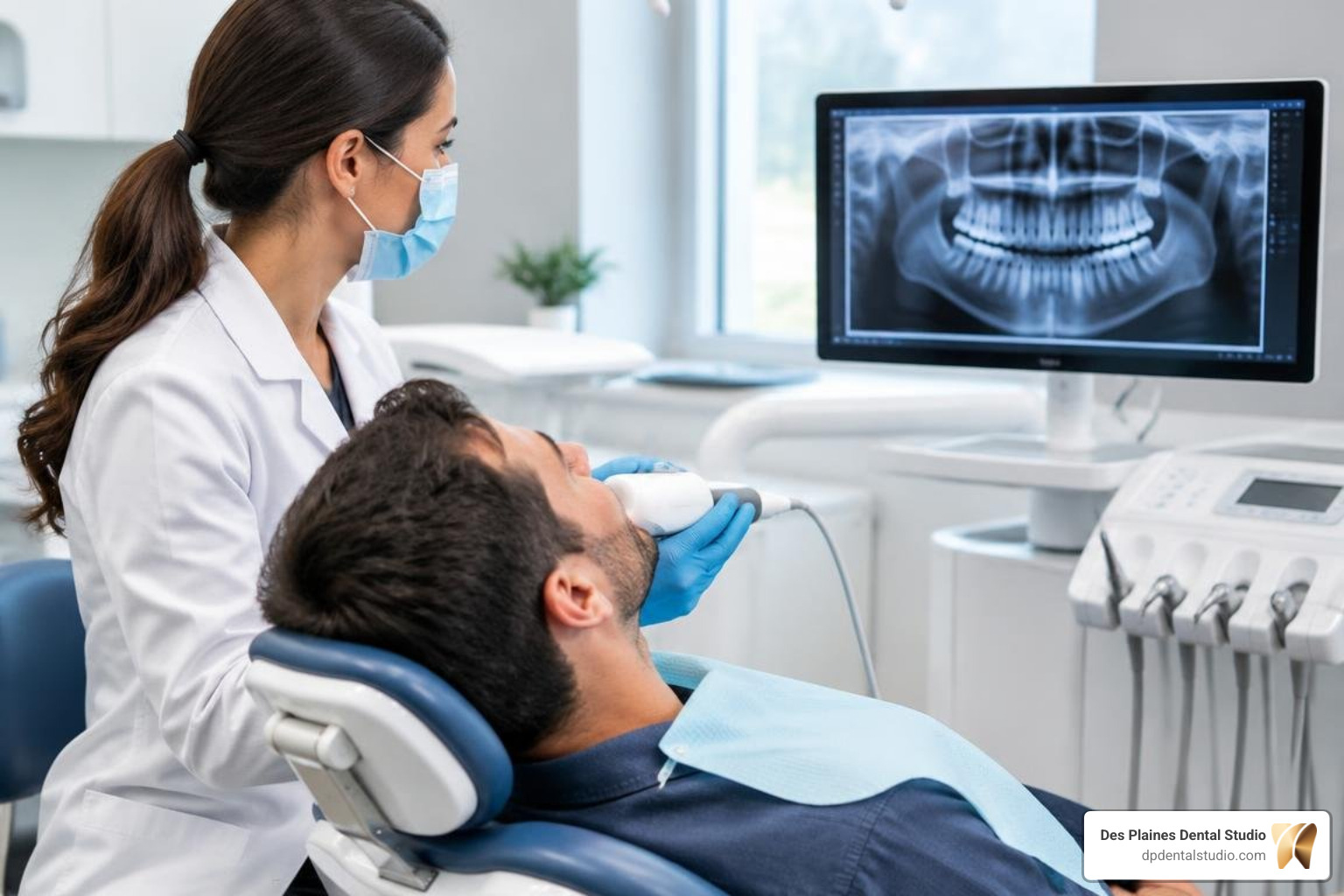
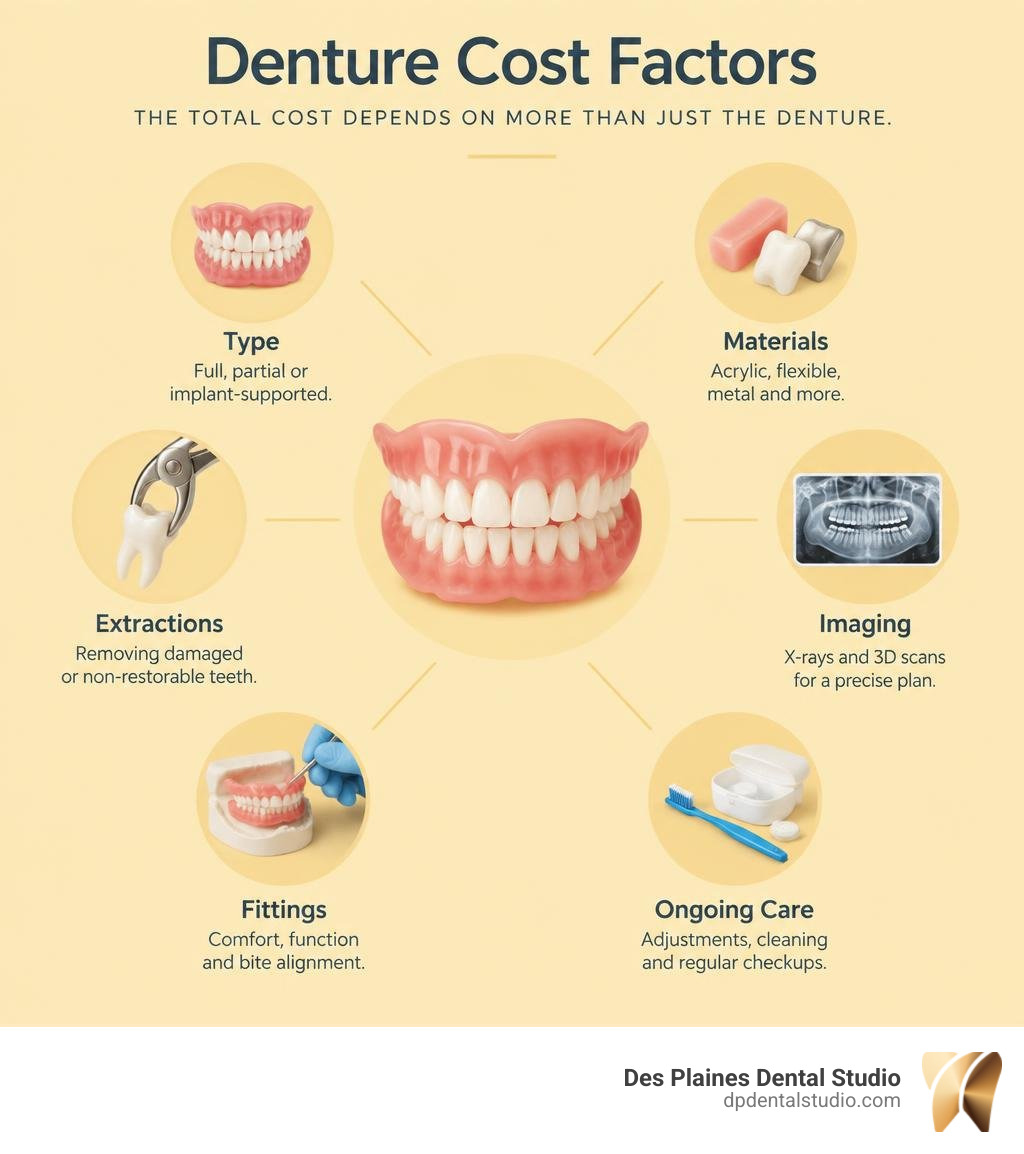
When planning your budget, the fabricated prosthetic is only one part of your comprehensive treatment plan. A complete oral rehabilitation involves diagnostic assessments, preparatory treatments, and follow-up care to ensure long-term comfort.
Extractions, Bone Grafting, and Preparatory Surgeries
If you have severely decayed or compromised teeth, preliminary dental surgeries may be necessary before your dentures can be placed:
- Diagnostic Imaging and Exams: Comprehensive clinical exams ($100 to $250) and full-mouth digital panoramic X-rays or 3D CBCT scans ($150 to $400) allow us to evaluate bone volume, nerve pathways, and tissue health.
- Tooth Extractions: Simple extractions range from $150 to $400 per tooth, while complex surgical extractions cost $300 to $650 per tooth.
- Alveoloplasty (Bone Smoothing): Following extractions, sharp bony ridges can cause sore spots under a denture base. Surgical ridge smoothing typically costs $500 to $1,500 per quadrant.
- Bone Grafting: If you are preparing for implant-supported dentures, site preservation or socket bone grafts range from $400 to $1,200 per site.
Maintenance, Relines, and Long-Term Repairs
Your mouth naturally changes shape over time, which means your dentures will require routine maintenance to maintain a secure fit. We recommend budgeting for these ongoing services:
- Soft Relines ($150 to $350): A pliable, medical-grade silicone layer placed inside your denture base to soothe tender gums during healing or tissue transitions.
- Hard Lab Relines ($250 to $600): Performed every one to two years, your dentist resurfaces the internal acrylic with durable resin to match your changing bone contours.
- Denture Rebasing ($400 to $800): Completely replacing the pink acrylic base while keeping the existing denture teeth intact.
- Emergency Repairs: Accidental drops or bite stress can cause hairline cracks or dislodged teeth. Professional partial denture repair methods and full plate repairs typically run $150 to $500.
Insurance Coverage, Medicare, and Payment Options
Navigating financial planning is an essential step when restoring your smile. You can make an informed decision by evaluating the real price for dentures and affordable options alongside your personal dental benefits.
How Much for Dentures Without Insurance vs. With Coverage?
Without insurance, traditional removable dentures average roughly $1,800 to $2,000 per arch, plus any diagnostic and surgical fees. Most private dental PPO plans classify complete and partial dentures as “Major Restorative Services,” covering up to 50% of allowable charges after your deductible ($50 to $150) is met.
However, keep these common policy details in mind:
- Annual Maximums: Many standard dental plans cap benefits at $1,000 to $2,000 per calendar year.
- Waiting Periods: Plans may require a 6- to 12-month waiting period before major restorative benefits activate.
- Replacement Clauses: Most insurers will only contribute toward a replacement denture once every 5 to 7 years.
- Missing Tooth Clauses: If a tooth was extracted prior to your policy start date, coverage for that specific space may be limited.
Medicare Advantage, Medicaid, and Senior Dental Benefits
Under Section 1862(a)(12) of the Social Security Act, Original Medicare (Part A and Part B) excludes routine dental procedures, including exams, extractions, and dentures. For details on covered services, review official Medicare dental services coverage.
Beneficiaries often use alternative pathways to manage costs:
- Medicare Advantage (Part C): Many Part C plans include supplemental dental riders with annual allowances (averaging around $1,300) and copays or coinsurance (typically 50% to 70%) for in-network prosthetic care.
- Illinois Medicaid: Enhanced adult dental benefits through Medicaid may provide partial or full coverage for basic removable dentures for qualifying individuals who meet state income thresholds.
- VA Dental Benefits: Comprehensive dental coverage is available to veterans classified within specific eligibility tiers or service-connected disability ratings.
Financing Alternatives: HSAs, FSAs, and Dental Savings Plans
If you are paying out-of-pocket or managing expenses beyond your plan’s annual maximum, practical financing options include:
- Health Savings Accounts (HSA) & Flexible Spending Accounts (FSA): Use pre-tax dollars to cover dentures, extractions, and adjustments, reducing your net cost by your income tax bracket percentage.
- Healthcare Credit Cards: Medical financing programs offer promotional interest-free terms for 6 to 24 months for qualifying applicants.
- Dental Discount Plans: These membership programs charge an annual fee and provide immediate 15% to 40% discounts on restorative services with no waiting periods or claim caps.
Frequently Asked Questions About Denture Costs
How long do traditional dentures last before needing replacement?
Traditional removable dentures generally last between 5 and 8 years. While the durable acrylic base and teeth hold up well, your underlying jawbone naturally recedes over time because it no longer receives stimulation from natural tooth roots. Periodic hard relines every 1 to 2 years help maintain suction and stability, but eventually, a new denture is required to preserve your facial structure and chewing efficiency.
Can I get dentures placed immediately after tooth extraction?
Yes. Immediate dentures are fabricated in advance from preliminary molds and placed in your mouth right after your extractions. This ensures you never have to go without teeth during social or professional activities. Because your gum tissue and jawbone naturally shrink as extraction sites heal, immediate dentures require temporary soft liners and a definitive hard reline after 4 to 6 months.
Why are cheap or economy dentures often more expensive over time?
Economy dentures often carry a low upfront price tag ($300 to $500), but they are usually built from bulk, cold-cured resins with minimal customized fitting. Their generic shape can put uneven pressure on your gums, accelerating bone loss and leading to chronic sore spots. Over two or three years, the cost of frequent relines, specialty adhesives, and emergency fracture repairs often exceeds the price of investing in a well-crafted, custom-fitted denture from the start.
Conclusion
Restoring your smile is an investment in your health, confidence, and quality of life. Understanding how denture materials, preparatory procedures, and long-term care influence the overall price helps you choose a solution that fits both your lifestyle and your budget.
At Des Plaines Dental Studio, we believe every patient deserves compassionate, transparent care in a welcoming, pain-free environment. Whether you are replacing an existing prosthetic or exploring full tooth replacement for the first time, we guide you through every step of treatment planning and maximize your insurance benefits. For an itemized quote tailored to your oral health, explore our detailed assessment of the average cost for dentures and schedule your consultation with our team today.