High-End Dentures: What Are You Paying For?
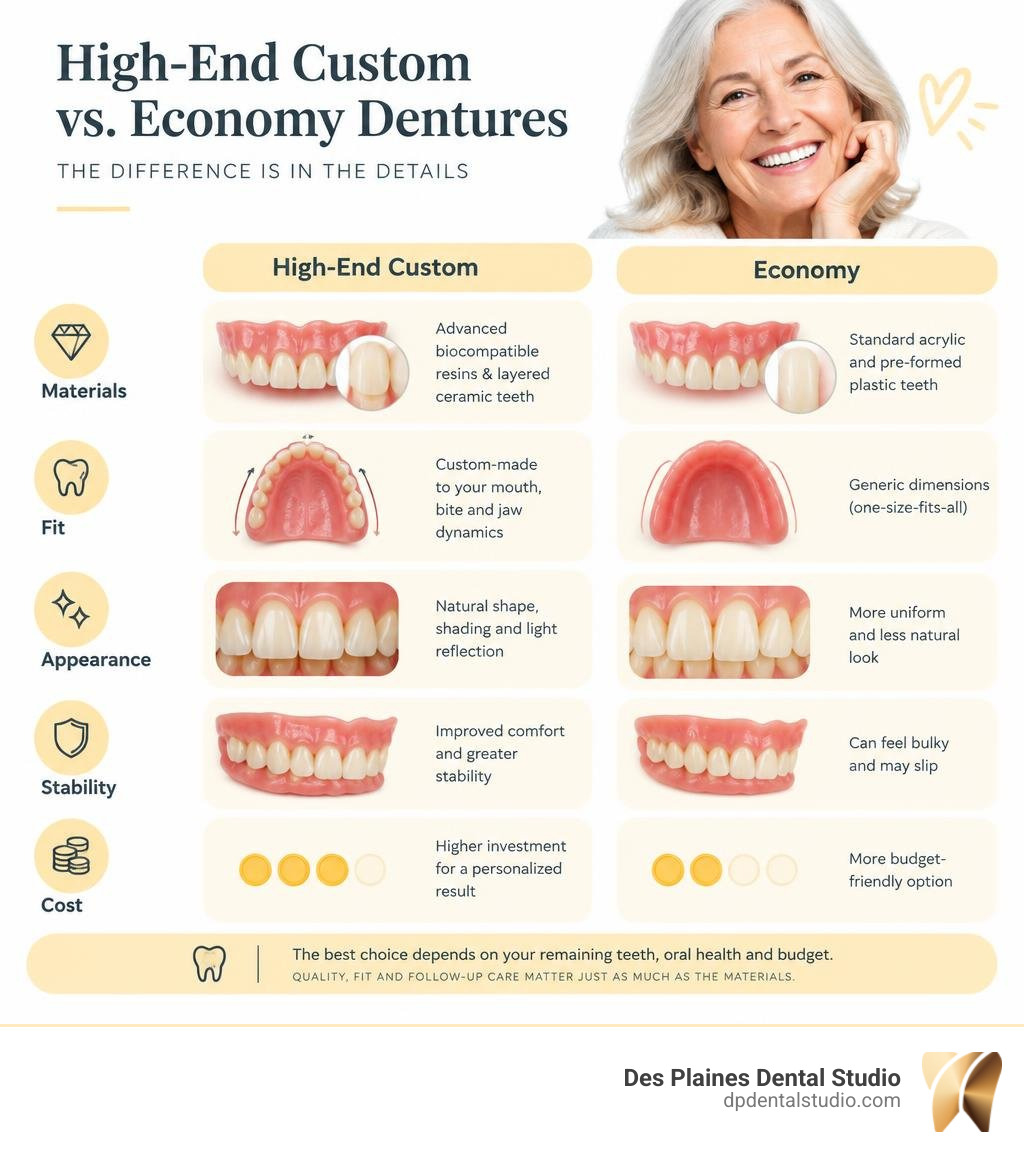
High-end dentures are made to match your mouth, bite, and smile. Compared with economy sets, they offer more choices in tooth shape, shading, and materials, plus time for a careful fit. If slipping is your main concern, an implant-supported denture may offer more stability. The best option depends on your remaining teeth, oral health, and budget.
A higher price does not guarantee a better result. The dentist’s planning, fit checks, and follow-up care matter just as much as the materials.
I’m Marta Milejczyk. My training in restorative dentistry and full-mouth rehabilitation helps me explain what to look for when searching for “denture high end” options.
What Sets High-End Dentures Apart from Traditional Sets?
When people think of dentures, they often imagine a stark, monochromatic row of teeth sitting in a glass of water on a nightstand. Traditional economy dentures are mass-produced with generic dimensions, leading to a “one-size-fits-all” look that can feel bulky and artificial. In contrast, high-end dentures are bespoke medical devices tailored to your facial symmetry, lip support, and natural jaw dynamics.
The difference comes down to clinical engineering and artistic craftsmanship. Standard prosthetics rely on flat acrylic bases and pre-formed plastic teeth that can wear flat over time. Premium options use advanced biocompatible resins and multi-layered ceramic teeth that mimic natural light reflection. Achieving this level of precision requires working with a provider experienced in restorative techniques; you can read more about evaluating an experienced denture dentist to ensure your provider has the clinical skill to capture accurate anatomical contours.
| Feature | Economy Dentures | Standard Traditional Dentures | High-End Custom Dentures |
|---|---|---|---|
| Base Material | Auto-polymerized basic acrylic | Heat-cured standard acrylic resin | High-impact, multi-layered biocompatible polymers or flexible nylon |
| Tooth Material | Monochromatic plastic | Dual-layer acrylic teeth | Multi-layered PMMA or hand-shaded cosmetic porcelain |
| Fit & Retention | Generic trays; relies heavily on adhesives | Standard functional impressions | High-precision digital mapping or implant attachments |
| Aesthetic Realism | Flat pink base, uniform artificial white teeth | Moderate gum tinting, standard tooth shapes | Custom characterization, natural translucency, individual root contours |
| Durability | 2 to 4 years (prone to rapid wear/fracture) | 5 to 7 years | 8 to 10+ years with superior stain and wear resistance |
| Jawbone Support | Minimal (may accelerate localized friction) | Standard tissue-borne support | Optimized force distribution or bone preservation via implants |
Advanced Materials: Porcelain, Multi-Layered PMMA, and Flexible Polymers
The materials used in high-end prosthodontics do not just look better; they perform better under the natural stress of chewing.
- Cosmetic Dental Porcelain: Porcelain teeth offer optical translucency that mimics organic tooth enamel. Because porcelain is non-porous, it resists staining from coffee, tea, and red wine far better than standard acrylics.
- Multi-Layered PMMA (Polymethyl Methacrylate): Modern high-impact polymers are engineered in progressive color gradients. Instead of a solid, opaque tooth, these restorations feature a warm, realistic cervical neck and a slightly translucent incisal edge.
- Flexible Nylon Polymers: Used primarily in partial prosthetics, flexible nylon offers high flexural strength. The material blends into the surrounding tissue, avoiding the visible metal clasps common in older partial designs.
- Anatomical Gum Tinting: High-end bases are hand-characterized with subtle micro-veining and multiple tissue tones to match your exact gingival shade.
Digital Mapping and Custom Aesthetics for a Denture High End Finish
Achieving a true high-end finish relies on cutting-edge digital dentistry. Rather than relying solely on messy, uncomfortable alginate trays, we use 3D intraoral scanning to capture a detailed digital map of your gums, palate, and remaining teeth.

Through custom digital smile design, your bite equilibrium is calculated down to the millimeter. This digital process ensures balanced contact across both sides of your mouth when you chew, preventing sore spots and uneven wear.
Implant-Supported and Snap-On Dentures vs Traditional Removable Prosthetics
Traditional dentures rest entirely on the gum tissue and rely on saliva-based suction or over-the-counter adhesives for retention. While modern custom versions can fit comfortably, traditional lower dentures are naturally more prone to shifting due to tongue movement.
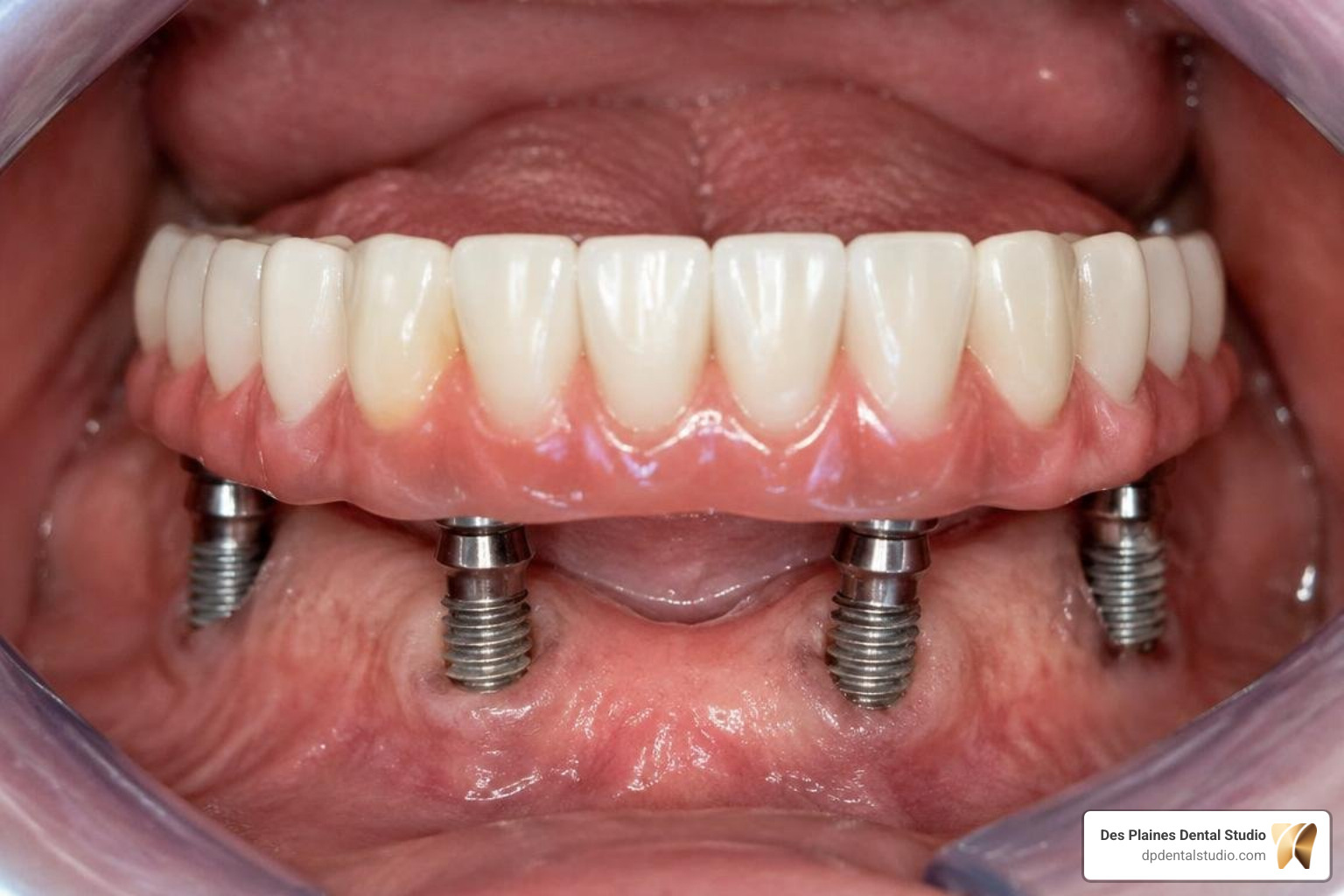
Implant-supported options, such as snap-on overdentures or fixed hybrid prostheses, anchor securely to titanium posts placed in the jaw. This setup keeps the prosthetic firmly locked in place while talking or eating. For upper restorations, anchoring to implants often removes the need for a full palate plate, freeing the roof of your mouth so you can taste food normally and speak without hindrance. Patients looking for this level of stability often choose permanent anchored dentures as a long-term solution.
Preserving Jawbone Density and Preventing Facial Collapse
When natural teeth are lost, the jawbone no longer receives the chewing stimulation needed to maintain its mass. Over time, this leads to alveolar bone resorption, causing the jaw to shrink. This bone loss can alter facial structure, leading to sunken cheeks, thinned lips, and deeper wrinkles around the mouth.
Traditional dentures sit on top of the gums and do not stimulate the underlying bone. In fact, an unstable, rocking denture can accelerate localized bone loss. Dental implants transmit bite forces directly into the jawbone, sending the biological signals needed to maintain bone density and facial structure. When considering long-term oral health, learning about the true cost of anchored dentures can help you weigh this upfront investment against decades of facial structural support.
Professional Custom Prosthetics and Clinical Fit
A premium denture requires careful, step-by-step fabrication in a dedicated dental laboratory. This process includes custom-poured impression trays, precise wax bite registrations, aesthetic try-in phases, and high-pressure, heat-curing methods.
Relying on direct-to-consumer moldable products carries clinical risks. Over-the-counter at-home custom solutions using warm-water-softened rubber cannot replicate an accurate occlusal plane, capture muscular borders, or establish a balanced bite. An improper bite can lead to chronic temporomandibular joint (TMJ) pain, soft tissue inflammation, and accelerated gum damage. Professional clinical precision ensures your prosthetic supports healthy chewing without damaging your joints or oral tissues.
Denture Options and Cost Breakdown: Full, Partial, and Overdentures
Denture costs reflect the materials used, the level of personalization, and whether surgical implants are integrated into the treatment plan. Below is an overview of national average costs across various types of dentures.
| Denture Category | Average Cost (National) | Typical Price Range | Key Advantages & Best Fit |
|---|---|---|---|
| Low-Cost Economy Dentures | $452 | $348 – $883 | Baseline tooth replacement; often temporary |
| Flipper Dentures | $605 | $471 – $1,164 | Temporary single or multi-tooth placeholder |
| Partial Resin Dentures | $1,738 | $1,333 – $3,283 | Replaces select teeth using an acrylic base |
| Partial Flexible Dentures | $1,761 | $1,360 – $3,451 | Lightweight nylon, metal-free, subtle clasps |
| Traditional Full Dentures | $1,968 | $1,520 – $3,648 | Complete arch replacement; tissue-borne suction |
| Immediate / Interim Dentures | $2,178 | $1,707 – $3,540 | Placed right after extractions during healing |
| Snap-On Dentures (Locator-Retained) | $2,480 | $1,901 – $4,729 | Removable overdenture with secure implant snaps |
| Overdentures (Implant/Bar-Supported) | $3,136 | $2,436 – $6,014 | Increased bite force; highly stable retention |
| Implant-Supported Dentures | $3,976 | $3,055 – $7,294 | Secure stability with minimal tissue shifting |
| Premium Custom Dentures | $6,514 | $5,000 – $12,438 | Top-tier cosmetic porcelain/PMMA, hand-characterized |
For a broader look at full-arch pricing tiers, explore our full set dentures cost guide. If you only need to replace a few missing teeth, reviewing our metal partial dentures cost overview can help you compare rigid chrome-cobalt frameworks with flexible acrylic alternatives.
Selecting the Right High-End Denture for Your Lifestyle
Choosing the right restoration depends on your daily habits, speech needs, remaining healthy teeth, and personal preferences:
- Removable Precision Partial Dentures: If you have healthy, stable natural teeth remaining, a custom partial locks into place with discreet attachments, preserving your natural dentition while filling gaps.
- Full Arch Upper Dentures: High-end conventional uppers utilize a lightweight, thin plate that fits securely against the palate. You can learn more about these considerations in our guide to understanding upper denture costs.
- Implant-Retained Overdentures: If you want to eat apples, steaks, and crusty breads without worry, an overdenture provides the retention you need. Take a look at what overdentures cost to see how they fit into long-term treatment plans.
Pricing Factors, Dental Insurance Coverage, and Financing Solutions
Several elements influence the total cost of high-end restorative dentistry:
- Diagnostic Technology: Digital 3D CBCT scans, intraoral imaging, and computer-guided bite mapping provide precise anatomical detail.
- Laboratory Expertise: Working with master dental ceramists who hand-layer each tooth demands specialized bench time.
- Surgical Scope: Adding preparatory extractions, bone grafting, or titanium implants changes the procedural scope.
While traditional dental insurance plans often cover basic acrylic sets under major services (typically 50% of standard allowances), they may not cover all costs associated with premium materials or cosmetic shading. However, our office team works directly with your insurance provider to maximize your annual benefits.
To help manage remaining out-of-pocket expenses, third-party healthcare financing options like CareCredit, along with flexible in-house payment plans and Health Savings Accounts (HSA/FSA), can break treatment costs down into manageable monthly payments.
Lifespan, Care Routine, and Long-Term Maintenance
Even the highest-quality prosthetics require routine care to stay clean, comfortable, and functional. Premium dentures typically last 8 to 10 years or more before normal wear or natural jaw changes call for a replacement or a reline.
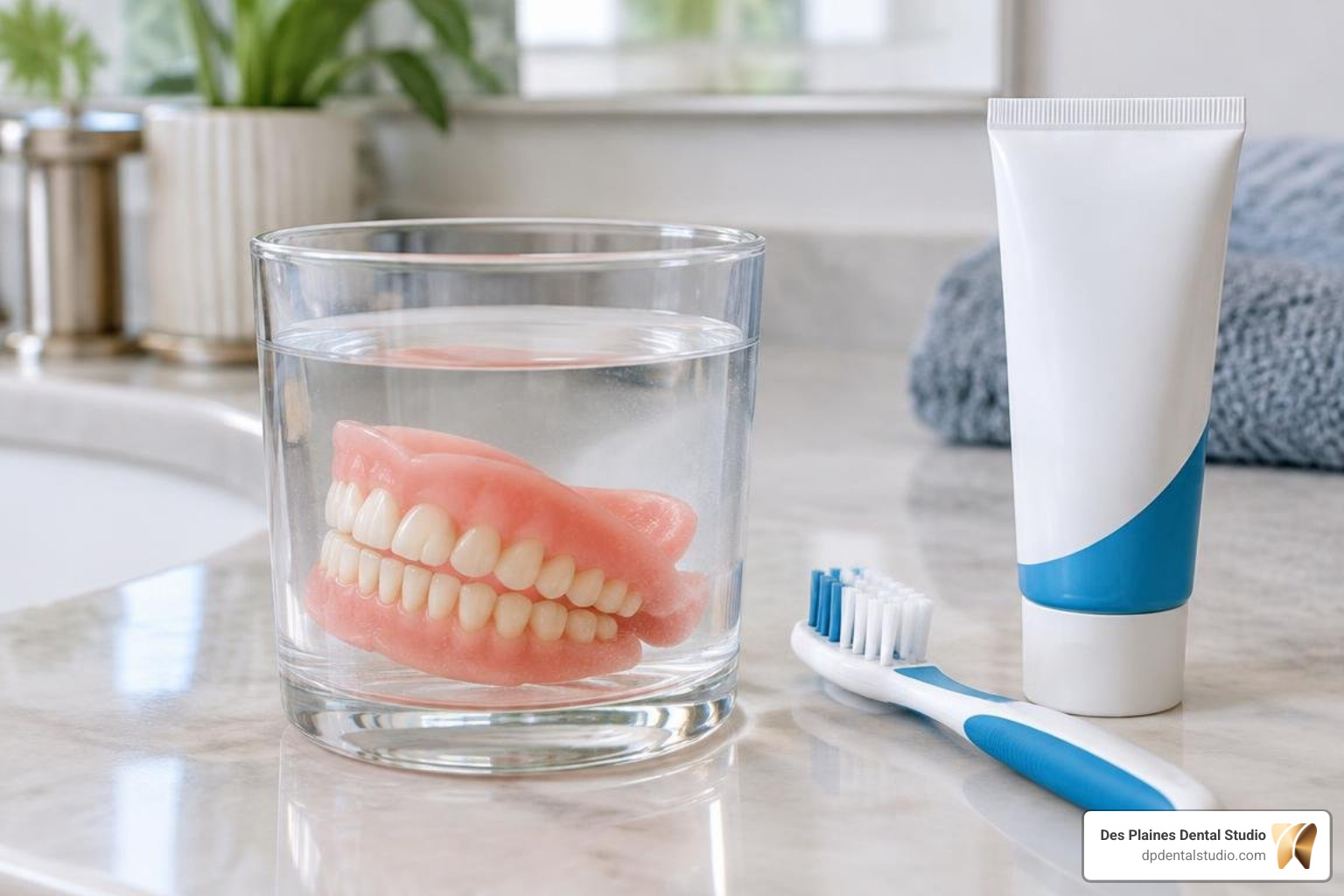
To protect your restoration, keep these daily maintenance habits in mind:
- Use Non-Abrasive Cleansers: Never use standard whitening toothpastes on your dentures. Abrasive pastes create microscopic scratches in the resin, which can harbor odor-causing bacteria and dull the polished finish. Review our daily cleaning instructions for false teeth for step-by-step home hygiene advice.
- Soak Overnight in Proper Solutions: Acrylic materials need moisture to maintain their shape. Soak your prosthetics overnight in clean water or an approved mild denture-soaking solution.
- Schedule Professional Relines: Over time, your jawbone and gums shift naturally. Every two to three years, your dentist can add a fresh layer of resin to the base, ensuring a snug, comfortable fit without having to remake the entire denture.
- Handle Repairs Professionally: If a clasp bends, a tooth chips, or an acrylic base cracks, avoid using household superglues, which contain toxic chemicals and can ruin the fit. Instead, turn to professional partial denture repairs to fix the damage safely.
Frequently Asked Questions About High-End Dentures
How long do premium custom dentures last compared to standard sets?
While economy dentures often show noticeable wear within 2 to 4 years, high-end dentures crafted from dense, cross-linked PMMA or dental porcelain typically last 8 to 10 years. Because the materials resist flattening, your bite remains balanced for longer. Routine relines every few years help adjust the base to natural changes in your gum tissue.
Can high-end dentures look identical to natural teeth?
Yes. Premium dentures are hand-crafted to reflect the subtle imperfections of natural teeth, avoiding the opaque, uniform look of budget alternatives. Using multi-layered translucency, individualized tooth rotations, and gum bases matched to your tissue tone with delicate micro-veining, high-end sets are designed to blend seamlessly with your smile.
Are implant-supported dentures worth the additional investment?
For most patients, yes. Implant-supported dentures provide stability that resting dentures cannot match. They eliminate the need for adhesives, prevent slipping during speech, and restore near-natural chewing strength. By stimulating the underlying bone, implants also help prevent the bone loss and facial sagging associated with missing teeth.
Conclusion
At Des Plaines Dental Studio, we believe tooth replacement should restore both your oral health and your confidence. Our team focuses on patient-centered care, insurance support, and a welcoming, pain-free experience to help you find a smile solution tailored to your needs.
If you are ready to explore your options, review average costs for dentures and schedule a consultation with us today. We will guide you through every step of restoring a strong, natural-looking smile.