


Key Qualifications of the Best Denture Dentist
The best denture dentist possesses advanced credentials in prosthodontics or restorative dentistry, deep expertise in bite mechanics and jaw alignment, and a commitment to custom digital treatment planning. When evaluating a practitioner, look for postgraduate training, clear laboratory collaboration, transparent pricing, and verifiable clinical experience. Choosing the right clinician ensures your prosthetic teeth look natural, fit comfortably, and function properly within the dynamic environment of soft tissues and shifting bone. Designing high-performing restorations requires specialized knowledge of jaw relations, occlusion, and tissue response. The American College of Prosthodontists provides educational resources on prosthodontic care that can help you understand the scope of specialty training.
General Dentists vs. Prosthodontists for Tooth Replacement
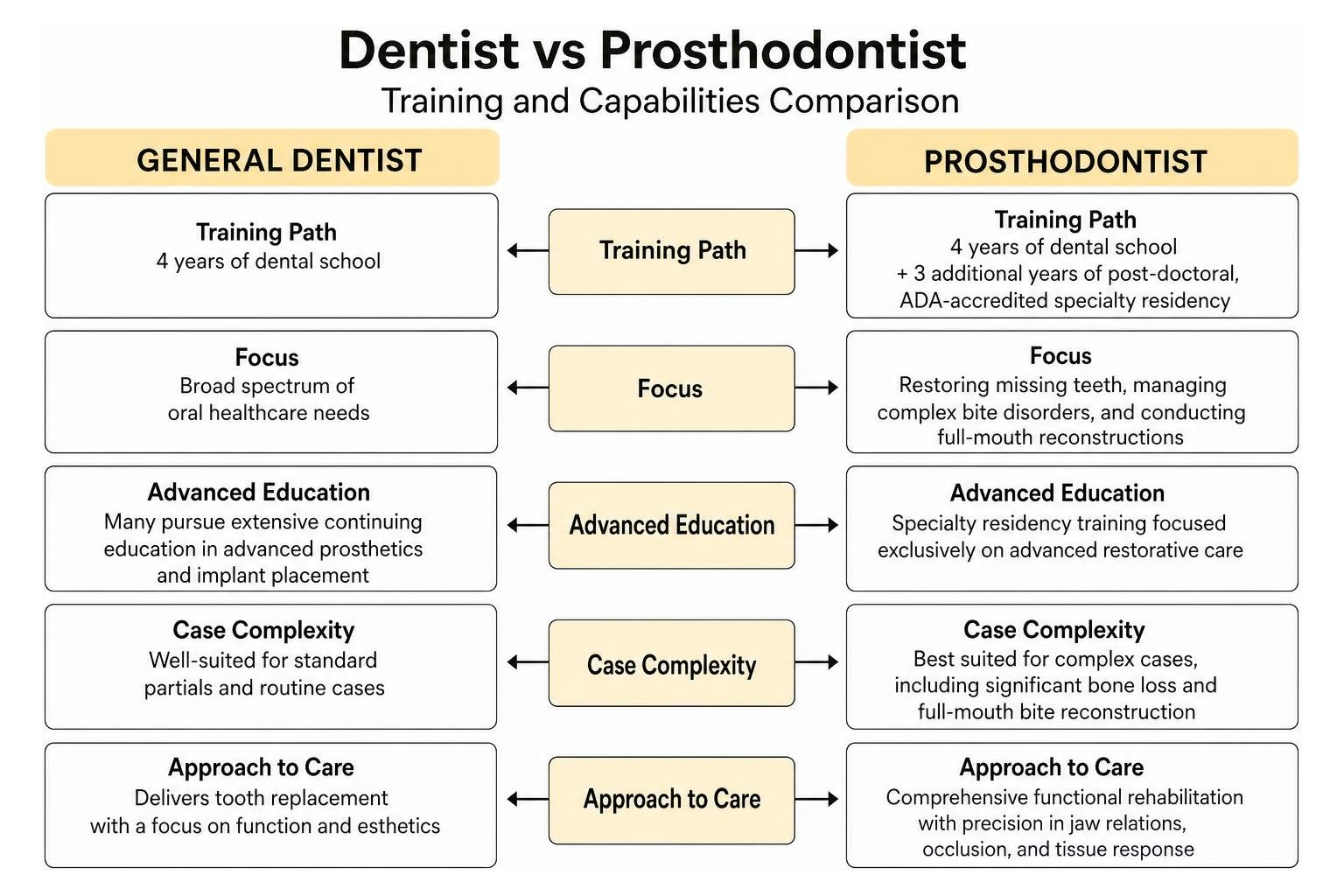
Both general dentists and prosthodontists provide denture solutions, but their training paths differ:
- General Dentists: Complete four years of dental school and manage a broad spectrum of oral healthcare needs. Many general dentists pursue extensive continuing education in advanced prosthetics and implant placement to deliver exceptional outcomes.
- Prosthodontists: Complete an additional three years of post-doctoral, ADA-accredited specialty residency training focused exclusively on restoring missing teeth, managing complex bite disorders, and conducting full-mouth reconstructions.
Understanding your clinical needs helps you decide which provider is right for you. If you require standard partials, an experienced general practitioner can deliver outstanding results. For complex cases involving significant jawbone atrophy or full-mouth bite reconstruction, specialized or advanced restorative training is essential. At our practice, we incorporate comprehensive restorative dentistry procedures to ensure your bite height, lip support, and chewing mechanics are balanced for long-term health.
How to Vet the Best Denture Dentist During Your Initial Consultation
Your first consultation gives you a clear look at a provider’s clinical philosophy and patient care standards. A top-tier clinician takes time to understand your lifestyle, aesthetic preferences, and budget rather than rushing you into a standard option.
Key elements to evaluate during your initial visit include:
- Chairside Manner and Communication: Your dentist should listen to your concerns, clearly explain your options, and address dental anxieties with a gentle, pain-free approach.
- Custom Treatment Planning: Beware of one-size-fits-all treatments. Quality care involves customized digital imaging, physical assessments, and customized treatment timelines.
- Laboratory Collaboration: Ask whether the clinic uses an in-house laboratory or partners with reputable dental technicians. Close collaboration between the dentist and the lab technician ensures natural tooth shading and precise gum contouring.
- Transparent Pricing: You should receive an itemized, written estimate detailing every cost—from extractions and temporary appliances to final adjustments and hard relines.
Comparing Denture Solutions: Types, Fit, and Long-Term Costs
Navigating tooth replacement requires balancing comfort, functionality, and lifetime value. Modern dental technology provides several avenues for restoring missing teeth, ranging from conventional removable appliances to permanent, implant-anchored arches.
| Denture Type | Primary Indication | Average Lifespan | Bone Preservation | Stability Level |
|---|---|---|---|---|
| Traditional Complete | Full arch tooth loss | 5–8 Years | Low (Gradual resorption) | Moderate (Relies on suction/seal) |
| Removable Partial | Several missing teeth | 5–10 Years | Moderate (Preserves existing teeth) | High (Clasps to natural teeth) |
| Immediate Denture | Post-extraction healing | 6–12 Months (Temporary) | Low (Aids initial healing) | Variable (Requires frequent relines) |
| Implant-Retained (Overdenture) | Edentulous arch with bone loss | 10–15+ Years | High (Implants stimulate bone) | Exceptional (Snap-in security) |
| Permanent Fixed Implant Arch | Full arch replacement | 15–20+ Years | Maximum (Titanium integration) | Maximum (Feels like natural teeth) |
Understanding the real price for dentures means looking beyond the initial purchase price and considering ongoing relines, maintenance, and eventual replacements over a 10-to-20-year timeline.
Traditional Full and Partial Sets vs. Overdentures
Traditional full dentures rest directly on the alveolar ridge (gum tissue and bone), using natural suction and a thin film of saliva to stay in place. While cost-effective, they do not prevent underlying bone loss over time.
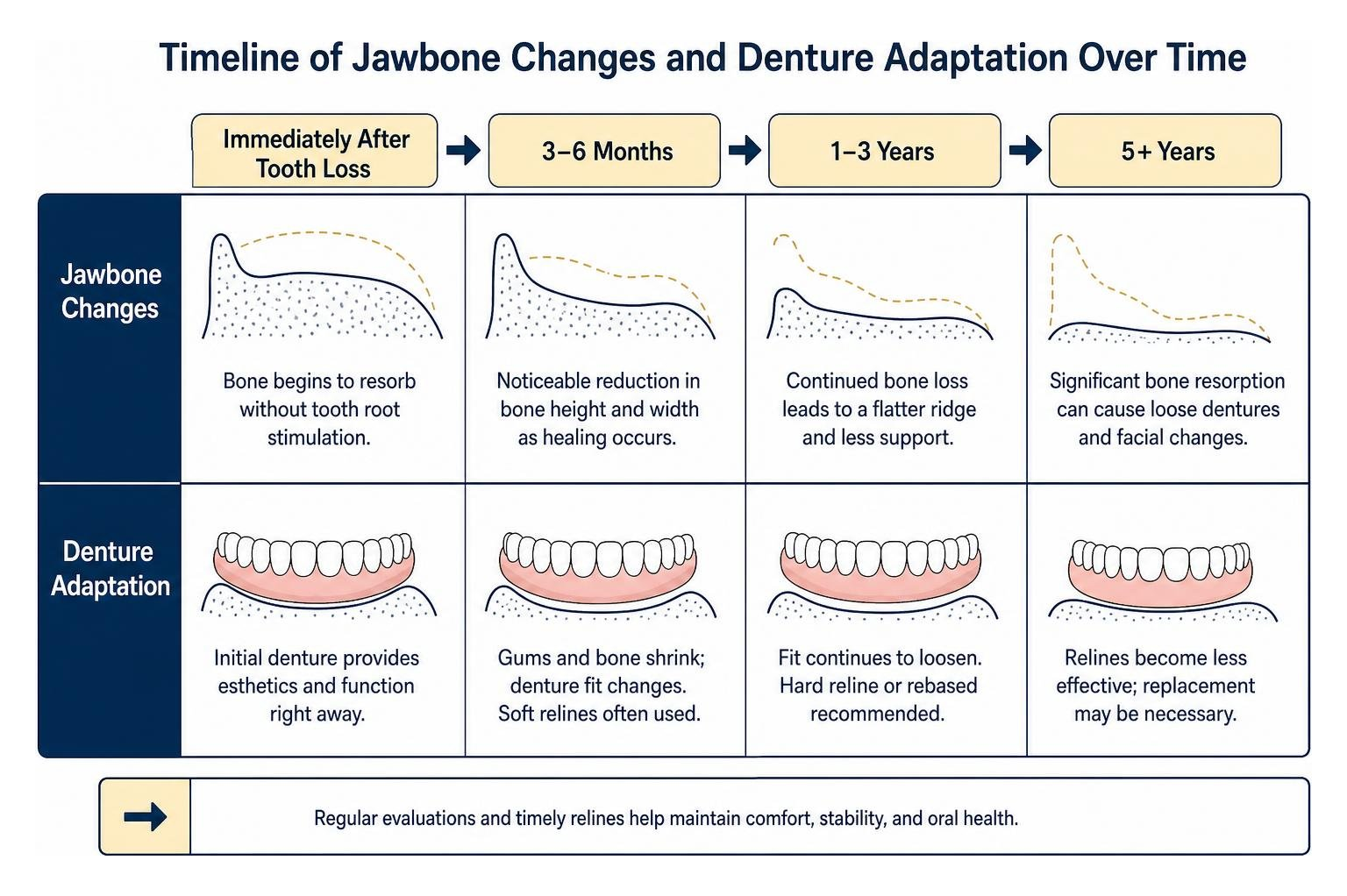
Immediate dentures are placed immediately after tooth extractions so you never leave the office without a smile. However, because bone and gum tissues remodel and shrink during the initial 3-to-6-month healing phase, immediate appliances require routine temporary soft relines followed by a permanent laboratory reline.
For individuals missing only a few teeth, custom partial dentures use lightweight metal or flexible acrylic frameworks that clasp securely to natural teeth, preventing neighboring dentition from shifting. If you need full upper restoration, reviewing the complete upper dentures cost guide will help you compare palatal suction designs with open-palate alternatives.
Implant-Retained Dentures and Bone Preservation
When natural tooth roots are lost, the surrounding jawbone resorbs (shrinks) due to a lack of physical stimulation. Over several years, this can lead to facial collapse, reduced lip support, and loose dentures.
Implant-retained overdentures resolve this issue by securing a removable or fixed prosthetic to surgically placed titanium posts. These implants act as artificial roots, stimulating bone tissue to prevent atrophy and providing exceptional stability that eliminates embarrassing slippage while eating or speaking.
When evaluating your long-term options, reviewing anchored dentures cost considerations helps you weigh the initial surgical investment against the lifetime savings of fewer relines and adhesives. For the highest level of stability, exploring permanent dentures solutions provides a reliable pathway to fixed, fully functional teeth.
The Denture Journey: From Digital Design to Daily Function
Restoring your smile is a step-by-step clinical journey designed to ensure your new teeth function comfortably and look natural.
Modern techniques rely heavily on digital workflows. The continuous advancements in digital denture design allow us to take 3D intraoral scans that eliminate messy impression trays, improve baseline fit, and reduce the total number of office visits needed for fabrication.
Precision Impressions and Same-Day Placement Protocols
The path to a well-fitting prosthetic follows several core clinical milestones:
- Diagnostic Evaluation: Comprehensive imaging, 3D bone mapping, and soft tissue assessments evaluate your oral health.
- Impression & Bite Registration: Highly accurate digital or elastomeric impressions capture the precise contours of your gums, palate, and jaw alignment.
- Aesthetic Wax Try-In: You and your dentist preview a prototype of your smile to verify tooth shape, shade, lip support, and bite mechanics before final fabrication.
- Final Processing: High-impact, heat-cured acrylics or milled zirconia are crafted to create your custom restoration.
- Final Delivery and Adjustments: The appliance is fitted, bite contact points are refined, and initial retention is verified.
For patients facing extensive extractions, replacing missing teeth seamlessly with planned immediate prosthetics ensures you never spend a day without a complete smile during tissue recovery.
Navigating the Speech and Chewing Adaptation Period
Adapting to new dentures takes a little time and patience. During the first few weeks, your brain and oral muscles will adjust to the new appliance:
- Saliva Flow Changes: The brain temporarily perceives new dentures as food, causing an initial increase in saliva. This normalizes within a few days to two weeks.
- Speech Adaptation: Pronouncing “s,” “f,” and “th” sounds may feel awkward at first. Reading aloud and practicing difficult words speeds up phonetic adaptation.
- Chewing and Muscle Retraining: Start with soft foods cut into small bites. Chew slowly using both sides of your mouth simultaneously to keep the appliance balanced on your gums. As muscle coordination improves, you can gradually reintroduce firmer textures.
Maintenance, Relining, and Recognizing Ill-Fitting Dentures
Even the most precisely crafted dentures require periodic maintenance. The human jaw naturally changes shape over time, which alters how a denture base rests on your gum tissue.
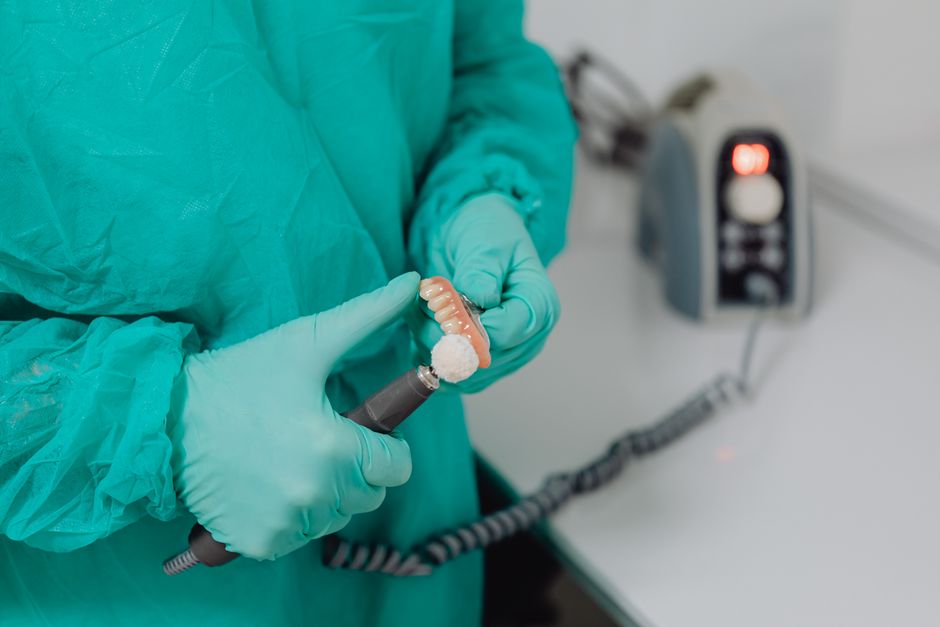
When dentures become loose, friction creates painful pressure sores, while gaps under the base trap food particles and bacteria. This increases your risk of chronic inflammation and oral infections like denture stomatitis. If a sudden crack or clasp failure occurs, seek professional emergency denture repair techniques right away rather than attempting dangerous at-home fixes with household glues.
Why the Best Denture Dentist Prioritizes Custom Relines and Adjustments
A dedicated dentist schedules routine check-ups to adjust bite pressure points and maintain a healthy fit. Never attempt to bend wires or file acrylic yourself.
Watch for these warning signs that your dentures need professional adjustment:
- Persistent slippage or loss of natural suction when speaking or laughing
- Localized gum redness, tenderness, or painful friction sores
- The need for increasing amounts of adhesive to keep the appliance in place
- Audible clicking noises or joint soreness in your jaw while chewing
- Unexplained bad breath or unpleasant tastes caused by trapped debris
Professional relines come in two forms: soft relines, which use a pliable, cushioned material for sensitive or newly healed tissues, and hard relines, which replace the underlying acrylic with durable, laboratory-cured material for long-term stability.
Daily Cleaning Best Practices and Avoiding Zinc Toxicity
Proper hygiene keeps your restorations looking great and protects your underlying gums from fungal and bacterial buildup.
- Daily Brushing: Brush your dentures daily using a soft-bristled brush and a non-abrasive denture cleanser. Never use standard abrasive toothpaste, which scratches acrylic and creates micro-grooves where bacteria can thrive.
- Overnight Soaking: Always remove your dentures for 6 to 8 hours daily—ideally while sleeping—to give your gum tissue time to rest and recover. Soak them in clean water or a mild soaking solution to prevent the acrylic from drying out and warping.
- Tissue Care: Gently brush your gums, tongue, and roof of your mouth daily with a soft toothbrush to stimulate circulation and clear away plaque.
- Smart Adhesive Use: Denture adhesives should provide a slight boost in stability, not act as a permanent fix for an ill-fitting prosthetic. Avoid adhesives containing zinc, as long-term, excessive zinc consumption from dental pastes can disrupt your body’s mineral balance and lead to neurological issues.
For a comprehensive hygiene routine, follow our guide on routine cleaning for false teeth.
Frequently Asked Questions About Denture Care
How do I know if my dentures need a reline or full replacement?
If your denture base rocks slightly when you bite, slips during speech, or requires frequent adhesive touch-ups, it likely needs a reline. A reline resurfaces the tissue-bearing side of the appliance to restore a snug fit against your gums.
However, if the denture teeth are significantly worn down, your bite height has collapsed, or the appliance is more than 5 to 7 years old, a complete replacement is often required to restore proper facial support and chewing efficiency.
Are implant-retained dentures worth the extra investment?
Yes. While the upfront investment is higher than traditional appliances, implant-retained dentures provide substantial long-term value. Implants preserve the underlying jawbone, eliminating the rapid bone loss caused by traditional friction.
They also restore over 70% of natural biting power—compared to roughly 20% with conventional lower dentures—and eliminate the recurring cost of adhesives and frequent emergency relines.
How do I properly care for my dentures to avoid oral infections?
The most effective way to prevent oral thrush and denture stomatitis is to keep your dentures out of your mouth while you sleep. Removing them at night allows your mucosal tissues to breathe and prevents candida yeast from multiplying beneath the acrylic base.
Always rinse your dentures thoroughly after meals, clean them daily with non-abrasive solutions, and brush your palate and gums every morning with a soft brush.
Conclusion
Finding the right provider for your tooth replacement journey makes all the difference in your comfort, health, and daily confidence. A skilled clinician will carefully evaluate your oral anatomy, listen to your aesthetic goals, outline transparent pricing, and support you through every stage of your healing and adaptation process.
At Des Plaines Dental Studio, we prioritize patient-centered, pain-free dental care. Our team helps you navigate insurance pre-authorizations and flexible financing so you can make informed decisions about your oral health. To learn more about treatment options tailored to your needs, schedule a transparent average cost for dentures consultation with us today.