Are All Four Dental Implants Right for You?
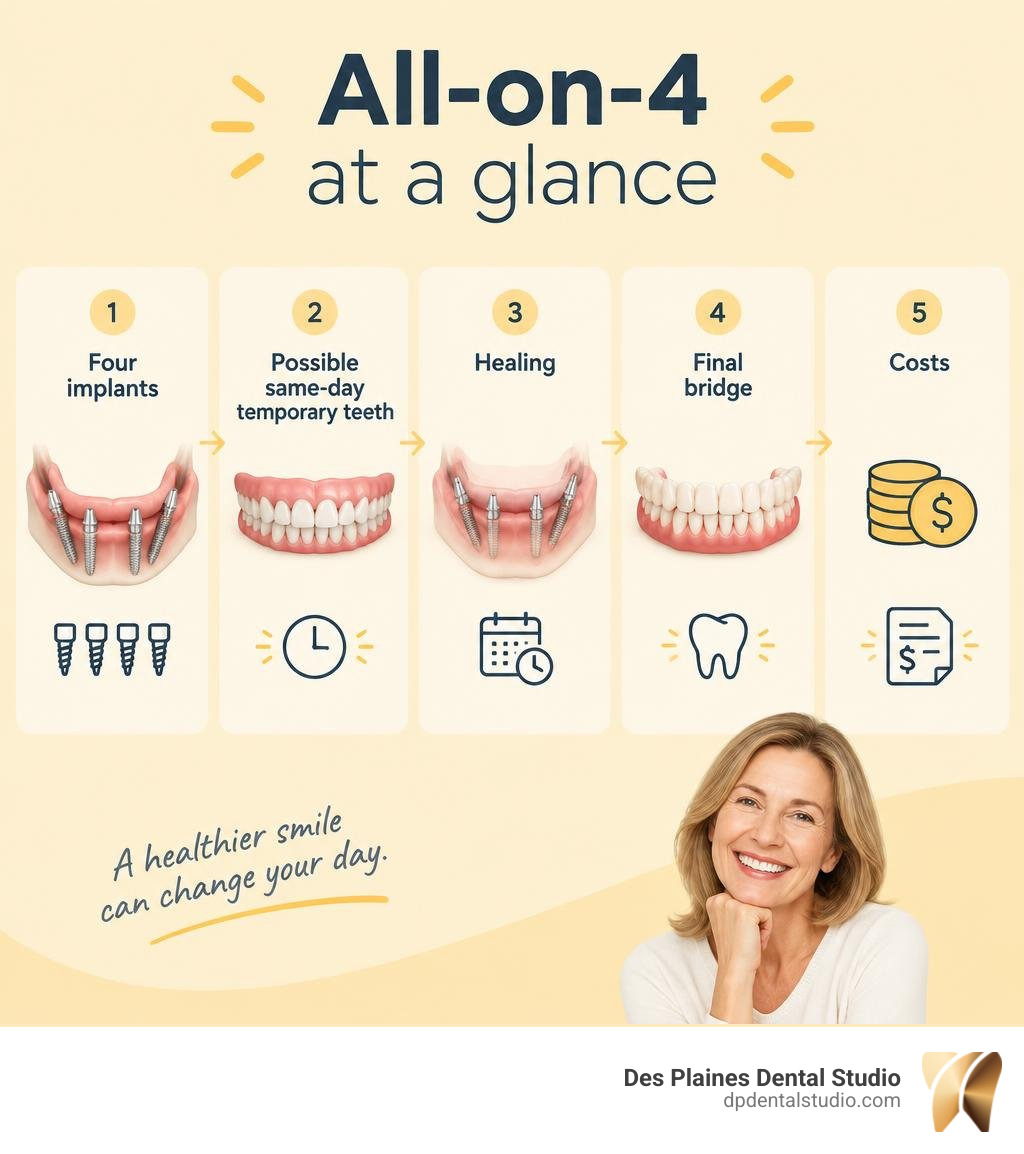
All-on-4 dental implants replace a full upper or lower set of teeth with a fixed bridge supported by four implants. They may be a good choice if you’re missing most or all of your teeth and want an alternative to removable dentures. Some patients can leave surgery with temporary fixed teeth; the final bridge is fitted after healing.
Before you commit, ask for an exam, a 3D scan, and a written quote that includes any extractions, both bridges, and follow-up care. Angled implants can sometimes avoid bone grafting, but treatment still carries risks, including infection and implant failure.
I’m Dr. Marta Milejczyk, a dentist practicing since 1997 with advanced training in full-mouth rehabilitation and continuing education in implant dentistry. I’ll help you weigh all four dental implants against other options, with a clear look at the process, costs, risks, and upkeep.
Similar topics to all four dental implants:
Understanding All Four Dental Implants: How the Technology Works
Full-arch rehabilitation has evolved significantly over the past few decades. Historically, replacing an entire arch of missing teeth required six to eight parallel implants per jaw, frequently paired with extensive sinus lifts and invasive bone augmentation. The modern approach changes this paradigm by using just four strategically placed titanium posts to anchor an entire customized prosthetic bridge.
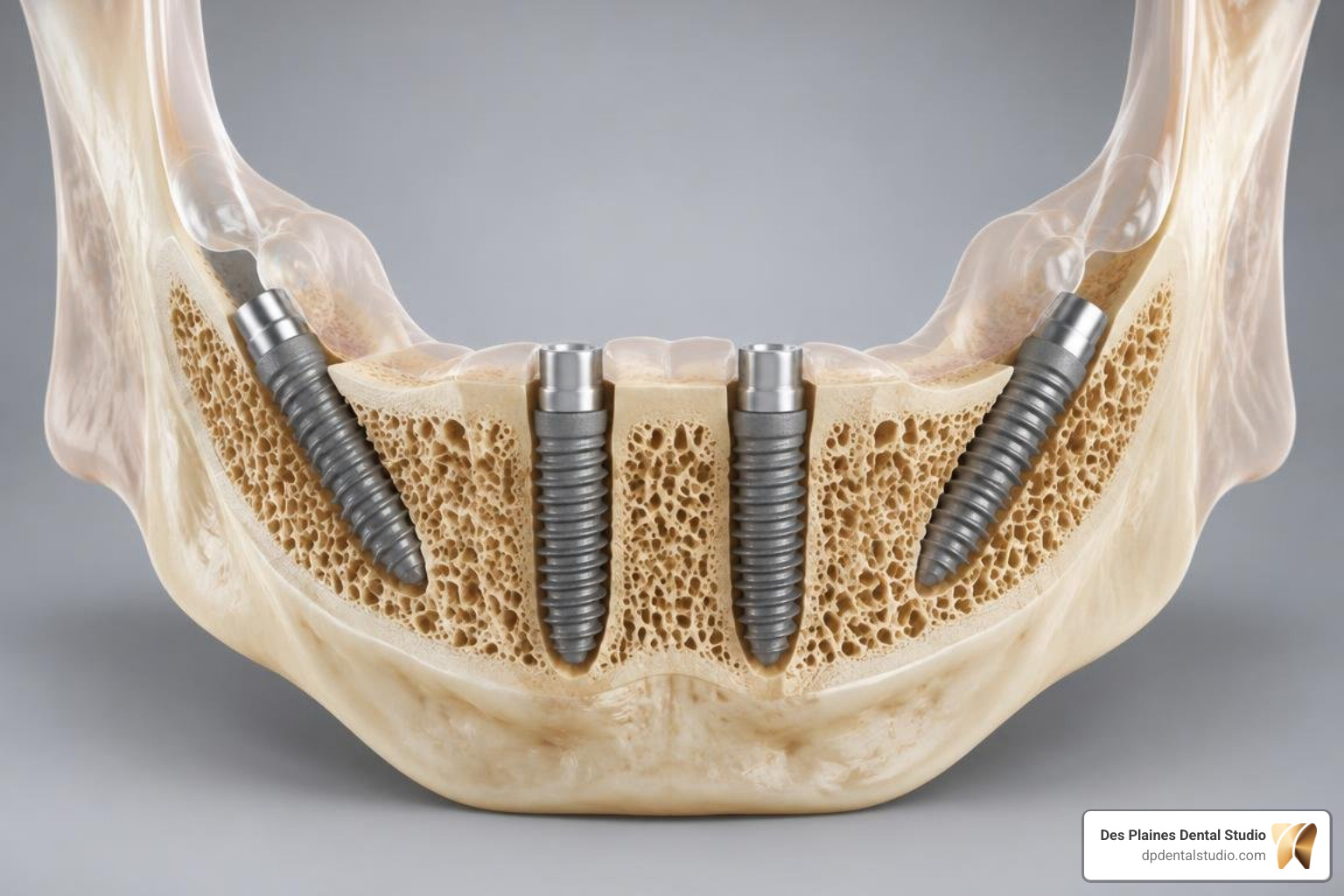
The foundation of this technique relies on the All-on-4® treatment concept protocol, which has accumulated over 25 years of documented clinical success. By placing two straight implants in the anterior region and tilting two posterior implants up to 30 to 45 degrees, we can bypass natural anatomical limitations while locking into dense cortical bone. This clever geometry often eliminates the need for bone grafting for dental implants, dramatically shortening overall treatment timelines and minimizing surgical trauma.
The Biomechanics of Angled Implant Placement
Why tilt the back implants instead of placing them upright? The answer comes down to pure engineering and anatomy.
When posterior implants are tilted at a 30- to 45-degree angle, several crucial biomechanical advantages occur:
- Enhanced Anteroposterior (A-P) Spread: Angling the posts positions the implant heads further back along the dental arch while keeping the root tips anchored in dense anterior bone. A wider A-P spread creates a broader, more stable base for the bridge.
- Cantilever Stress Reduction: In traditional parallel placements with limited bone, the prosthetic teeth extending past the last implant (cantilevers) endure heavy bending forces. Research shows that tilting posterior implants reduces cantilever stress by approximately 40% compared to four upright, parallel fixtures.
- Anatomical Avoidance: The tilted design allows us to safely bypass the maxillary sinus cavity in the upper jaw and the mental foramen (nerve canal) in the lower jaw without compromising structural strength.
- Maximum Bone-to-Implant Contact: Longer implant fixtures can be placed because they travel diagonally through the bone, engaging dense cortical bone plates for superior initial purchase.
Full-Arch Implants vs. Traditional Dentures and Conventional Implants
Traditional removable dentures have long served as a basic replacement for missing teeth, but they rest entirely on gum tissue. Over time, the lack of stimulation causes the underlying jawbone to resorb—often losing up to 25% of alveolar bone width within the first 12 months after tooth extraction alone.
By contrast, fixed implant arches stimulate the bone, halt structural shrinkage, and restore natural bite power.
| Feature | Traditional Removable Dentures | Conventional Parallel Implants (6–8 Posts) | All-on-4 Full-Arch Protocol |
|---|---|---|---|
| Chewing Efficiency | Restores only 20–25% of natural bite force | Restores 85–90% of natural bite force | Restores up to 90% of natural bite force |
| Bone Preservation | Ongoing bone resorption (1–2% loss per year) | Excellent bone preservation across the arch | Excellent bone preservation via cortical engagement |
| Bone Grafting Need | None (sits on gums) | Frequently required (sinus lifts, block grafts) | Rarely required due to angled posterior implants |
| Palatal Coverage | Full acrylic palate (reduces taste and temperature) | None (horseshoe design) | None (open palate, natural tongue space) |
| Stability | Slips, clicks, requires adhesives | Completely fixed, non-removable | Completely fixed, non-removable |
| Treatment Time | 4–8 weeks | 6–12+ months (if extensive grafting is needed) | Same-day provisional teeth, final bridge at 3–6 months |
Step-by-Step Procedure, Healing, and Bridge Material Options
Getting full-arch implants is a carefully orchestrated process guided by 3D digital dentistry. At Des Plaines Dental Studio, we use high-resolution Cone Beam Computed Tomography (CBCT) to map your nerve pathways, bone density, and sinus boundaries in three dimensions before touching a surgical instrument.
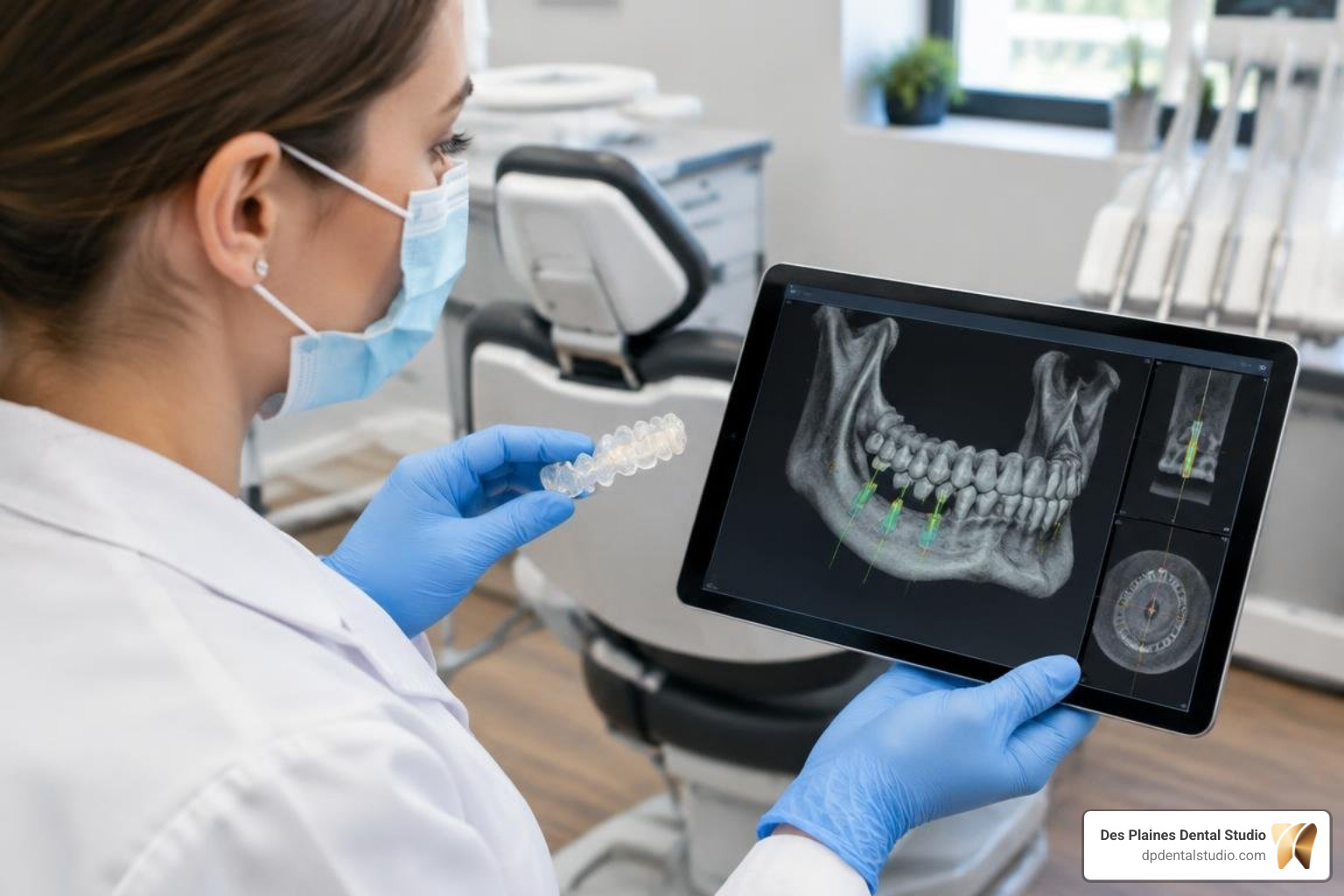

- Comprehensive Evaluation & Digital Planning: We capture 3D scans and digital impressions, virtually planning exact implant trajectories and 3D-printing a computer-guided surgical template.
- Surgical Placement: Any remaining failing teeth are extracted, the bone ridge is gently smoothed, and four implants are placed with precision guidance.
- Immediate Loading Assessment: We measure insertion torque. When primary stability reaches at least 35 Ncm, an immediate provisional bridge is secured to the implants.
- Osseointegration (Healing Period): The bone integrates with the titanium posts over the next 3 to 6 months.
- Definitive Restoration Delivery: Once healing is complete, we design and fit your permanent, high-strength dental implant restorations.
Immediate Function and the Same-Day Provisional Bridge
The concept of “teeth in a day” sounds almost like magic, but it is rooted in solid orthopedic science. When all four posts are cross-splinted by a rigid temporary bridge, bite forces are distributed evenly across the entire arch, preventing micro-movements at individual implant sites.
During this initial 3- to 6-month healing window, you will wear an interim PMMA (polymethyl methacrylate) acrylic bridge. While this provisional smile looks natural and allows you to speak and smile with confidence immediately, the underlying bone is busy undergoing osseointegration—fusing directly to the titanium surfaces. To protect this delicate biological bond, patients must stick to a soft-food diet (anything you can easily cut with a fork, such as eggs, pasta, fish, and soft vegetables) during the healing phase.
Final Prosthesis Materials and Durability
Once your implants have fully fused with the jawbone, we transition you from the provisional acrylic bridge to your custom-crafted definitive restoration. Several material options exist, each with distinct aesthetic and structural profiles:
| Material Type | Structural Composition | Aesthetic Quality | Durability & Wear | Best Suited For |
|---|---|---|---|---|
| Monolithic Zirconia | Solid, computer-milled dental zirconia glazed with porcelain | Premium translucency, lifelike shade customization, stain-proof | Exceptional fracture resistance; virtually impossible to chip | Patients desiring maximum longevity, durability, and top-tier aesthetics |
| Acrylic with Titanium Bar | Milled titanium framework layered with high-grade PMMA/composite | Natural appearance, easily modified or repaired | Moderate; acrylic teeth may wear down or pop loose over 7–10 years | Budget-conscious patients seeking proven strength with repairable teeth |
| Hybrid Nanoceramic / PEKK | High-performance polymer core infused with ceramic composites | Warm, natural optical properties mimicking tooth enamel | Excellent shock absorption; gentle against opposing natural teeth | Patients with heavy bite force or natural teeth in the opposing arch |
All-on-4 Risks, Complications, and Longevity Factors
Full-arch implant rehabilitation boasts an impressive clinical track record, with long-term studies demonstrating an overall implant survival rate between 95% and 98% at 10 years, and prosthetic survival reaching up to 99.7%. However, as with any major oral surgery, understanding potential complications and how we prevent them is essential.
Whether you are restoring the upper jaw or reviewing everything you need to know about full lower dental implants, long-term success requires teamwork between patient and clinician.
Potential Complications with All Four Dental Implants and How to Avoid Them
- Peri-Implantitis: This inflammatory condition affects the gum tissue and bone surrounding the implant fixtures, usually caused by bacterial plaque buildup. Excellent daily hygiene and routine cleanings prevent harmful biofilm accumulation.
- Smoking and Nicotine Exposure: Smoking constricts blood flow and significantly impairs healing. Studies show that smoking increases the risk of early implant failure by 2.2 times. We strongly advise smoking cessation before and after surgery.
- Cantilever Fracture: Biting excessively hard on the back extension of an acrylic bridge can cause structural fractures. Using high-strength materials like monolithic zirconia or shortening cantilevers minimizes this risk.
- Nerve Irritation or Sinus Infiltration: Improper placement can compromise nearby nerves or sinus cavities. We eliminate guesswork by utilizing dynamic 3D CBCT computer-guided surgical stents.
- Failed Osseointegration: Occasionally, an implant fails to integrate firmly with the bone. Because the bridge relies on four posts, a failed implant must be replaced and given time to heal before the definitive bridge is loaded.
Maintenance Protocols and Long-Term Success Rates
You cannot get cavities in titanium or zirconia, but your gums and supporting bone still require diligent care! A thorough maintenance regimen includes:
- Water Flossers: Using a water flosser with an implant-specific tip cleans beneath the bridge and sweeps away food debris around abutments.
- Sulcus and Tufted Brushes: Specialized angled brushes allow you to clean the interface where the prosthetic bridge meets your natural gum tissue.
- Custom Night Guards: Wearing a protective occlusal guard at night shields your bridge and implants from unconscious clenching or grinding forces.
- Professional Recalls Every 6 Months: During checkups, we examine your tissue health, check screw tightness, take baseline X-rays, and perform specialized ultrasonic debridement using implant-safe carbon fiber or titanium scalers.
Total Investment: Pricing, Insurance, and Financing Breakdown
Restoring a full arch of teeth is a major life investment. Understanding the scope of costs upfront helps you plan comfortably without unexpected financial surprises.
Before scheduling your surgery, reviewing our full mouth implants cost guide and checking our breakdown on the price of full mouth dental implants can help you compare implant costs across different restorative materials and techniques.
Factors That Influence the Cost of All Four Dental Implants
The total cost for full-arch implant therapy typically ranges from $20,000 to $35,000+ per arch depending on individual clinical requirements:
- Single Arch vs. Dual Arch: Treating both the upper and lower jaws doubles the prosthetic components and surgical fixtures.
- Extractions and Bone Leveling: Removing diseased natural teeth and re-contouring the alveolar bone ridge (alveoloplasty) for an ideal prosthetic fit affects surgical time.
- Bridge Material Selection: A standard acrylic-titanium hybrid is generally more economical upfront, while monolithic zirconia carries a higher initial cost due to advanced milling and custom ceramic firing.
- Sedation Modalities: Options range from local anesthesia and oral conscious sedation to certified IV deep sedation for maximum comfort.
For a deeper dive into regional pricing components, explore our dental implant costs complete guide as well as our overview on the average cost of dental implants.
Navigating Dental and Medical Insurance Benefits
While traditional dental insurance plans rarely cover the complete cost of a full-arch restoration, many policies provide partial benefits for specific procedural steps:
- Surgical Extractions and Bone Grafting: Frequently covered under standard major surgical benefits.
- Diagnostic CBCT Scans: Often reimbursable under major diagnostic dental codes.
- Implant Placement Codes: An increasing number of PPO plans contribute an allowance toward the surgical fixture codes (CDT code D6010).
- Prosthetic Allowances: Standard insurance benefits may apply an alternate benefit allowance toward the final bridge (equivalent to what they would pay for a standard denture).
To maximize your insurance reimbursement, review our dental implants insurance guide for 2026, learn how to get dental implants covered by medical insurance in cases involving severe atrophy or trauma, and read our step-by-step tips on navigating Delta Dental benefits for dental implants. We also provide flexible third-party healthcare financing options with low- or zero-interest payment plans to help fit treatment smoothly into your budget.
Frequently Asked Questions About Full-Arch Restorations
How long do all four implants last compared to traditional bridges?
Dental implant fixtures themselves can last decades or even a lifetime when properly maintained. Long-term clinical studies report a 98.1% implant survival rate at 10 years, with prosthetic survival reaching 99.7%. While natural-tooth bridges typically require replacement every 7 to 10 years due to recurrent decay or root failure, high-strength monolithic zirconia implant bridges routinely last 15 to 25+ years without structural degradation.
Is the surgery painful, and what is the typical downtime?
The procedure itself is virtually painless because we completely numb the surgical site and offer customized sedation options, including oral conscious sedation and IV sedation. Most patients are pleasantly surprised by how manageable post-operative recovery is—often comparing it favorably to a standard tooth extraction. Mild swelling and minor bruising peak around day three and subside quickly. Most patients take 3 to 5 days off work before returning to their normal daily routines.
Can all four implants be removed for cleaning at home?
No, the bridge is securely screw-retained onto the four implants and can only be removed by your dentist during your regular maintenance appointments. At home, you clean your bridge just like natural teeth using a soft-bristle toothbrush, low-abrasive toothpaste, interdental brushes, and a water flosser to flush beneath the prosthetic base.
Choosing the Right Path for Full-Arch Tooth Replacement
Living with missing, broken, or painful teeth takes a toll on your overall health, self-esteem, and daily comfort. You don’t have to settle for loose, slipping dentures or miss out on your favorite meals. Over 250,000 patients worldwide have rebuilt their smiles with this proven technique, reporting a 95% satisfaction rate.
At Des Plaines Dental Studio, we believe every patient deserves compassionate, individualized care delivered in a warm, welcoming environment. Whether you need full-mouth reconstruction or want to evaluate all your restorative options, we are here to guide you through every step of your journey.
Take the first step toward a permanent, confident smile today and schedule a consultation for dental implants near you with our experienced team in Des Plaines, IL!