How Much Does a Dental Implant Cost?
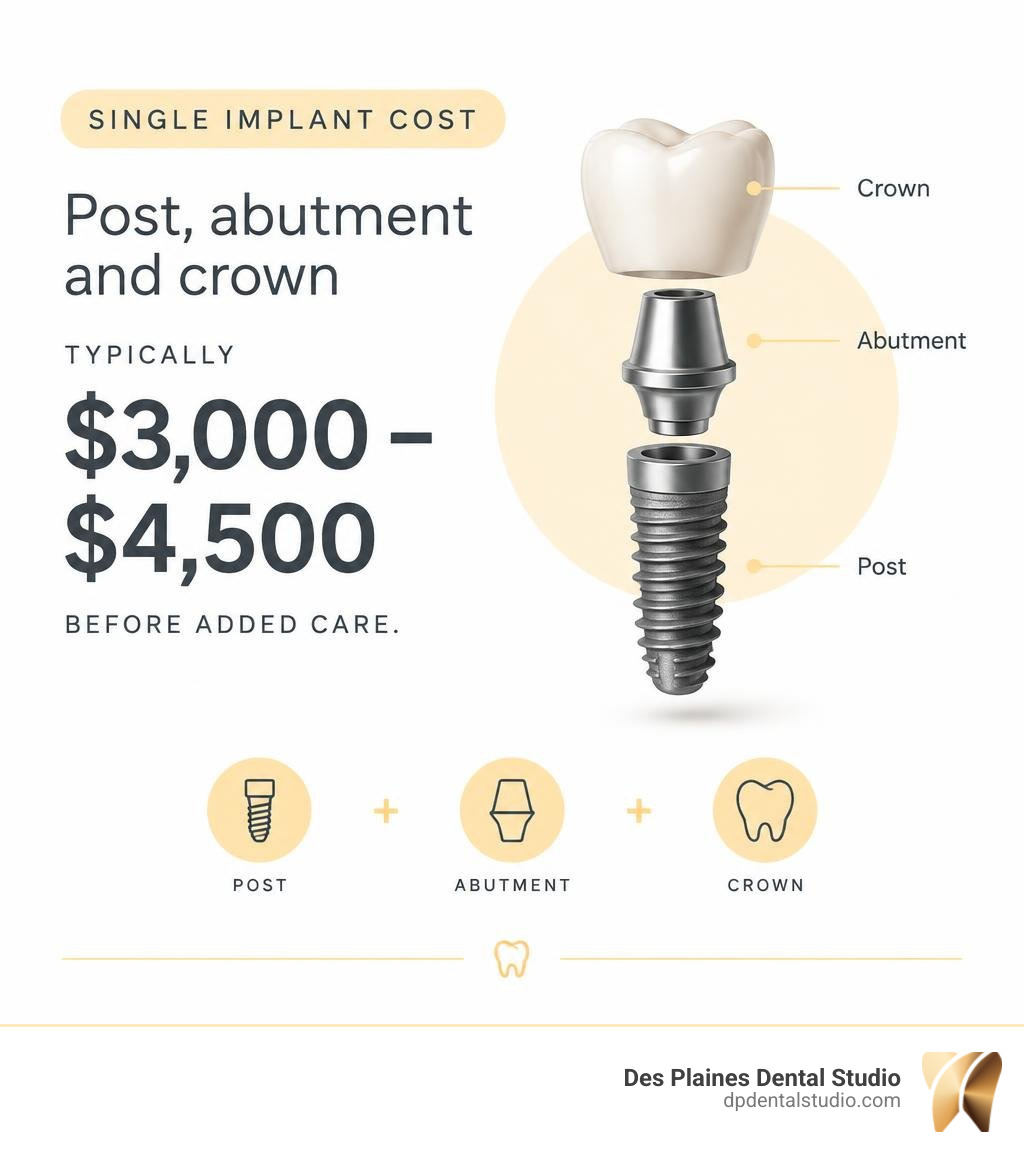
A complete single-tooth dental implant typically costs $3,000 to $4,500 in the U.S. before insurance. That price covers the implant post, the abutment that connects it to the new tooth, and the crown. An extraction or bone graft can raise the total. In the Chicago area, a survey found a median price of $4,500 for a complete implant.
A low advertised price may cover only the post. This guide will help you compare full quotes, spot extra costs, and understand what insurance might pay.
I’m Marta Milejczyk, a dentist who has practiced in Chicago’s northwest suburbs since 1997, with training in restorative dentistry and a special interest in implants. If you searched how much does a implant cost, I’ll help you see what belongs in a complete estimate.
How Much Does an Implant Cost on Average?
Navigating dental fees can feel overwhelming when different practices advertise vastly different numbers. So, exactly how much does an implant cost in today’s market? Across the United States, the nationwide median cost for a complete dental implant stands at $4,000, while general industry averages settle around $3,750 for an uncomplicated single tooth replacement.
Depending on individual health, diagnostic needs, and restoration materials, a complete single tooth replacement without insurance benefits ranges from $2,800 to $5,600. When looking strictly at the surgical placement of the artificial root itself, data shows national baseline averages of $2,143, with typical surgical fees spanning from $1,646 to $4,175 before attaching the visible crown.
According to A comparative analysis of dental implant costs across major US markets, regional economic factors, material quality, and provider structures create noticeable differences in final patient billing.
| Replacement Type | Typical Cost Range | National Average / Median | Key Inclusions |
|---|---|---|---|
| Single Tooth Implant | $3,000 – $4,500 | $3,750 – $4,000 | Post fixture, abutment, final custom crown |
| Multiple Teeth (Implant Bridge) | $4,000 – $16,000 | $27,475 (full multi-tooth cases) | 2+ implant posts, bridge span, custom abutments |
| Full Arch (All-on-4 / Fixed) | $15,000 – $30,000+ per arch | $24,000 – $42,000+ per arch | 4–6 posts, permanent hybrid bridge, conversions |
| Snap-in Overdenture | $6,000 – $15,000 per arch | $9,500 per arch | 2–4 posts, locator attachments, removable denture |
Breaking Down the Three Core Components
A finished dental implant is not a single prefabricated object. It is a precision-engineered system composed of three distinct parts, each billed as its own line item:
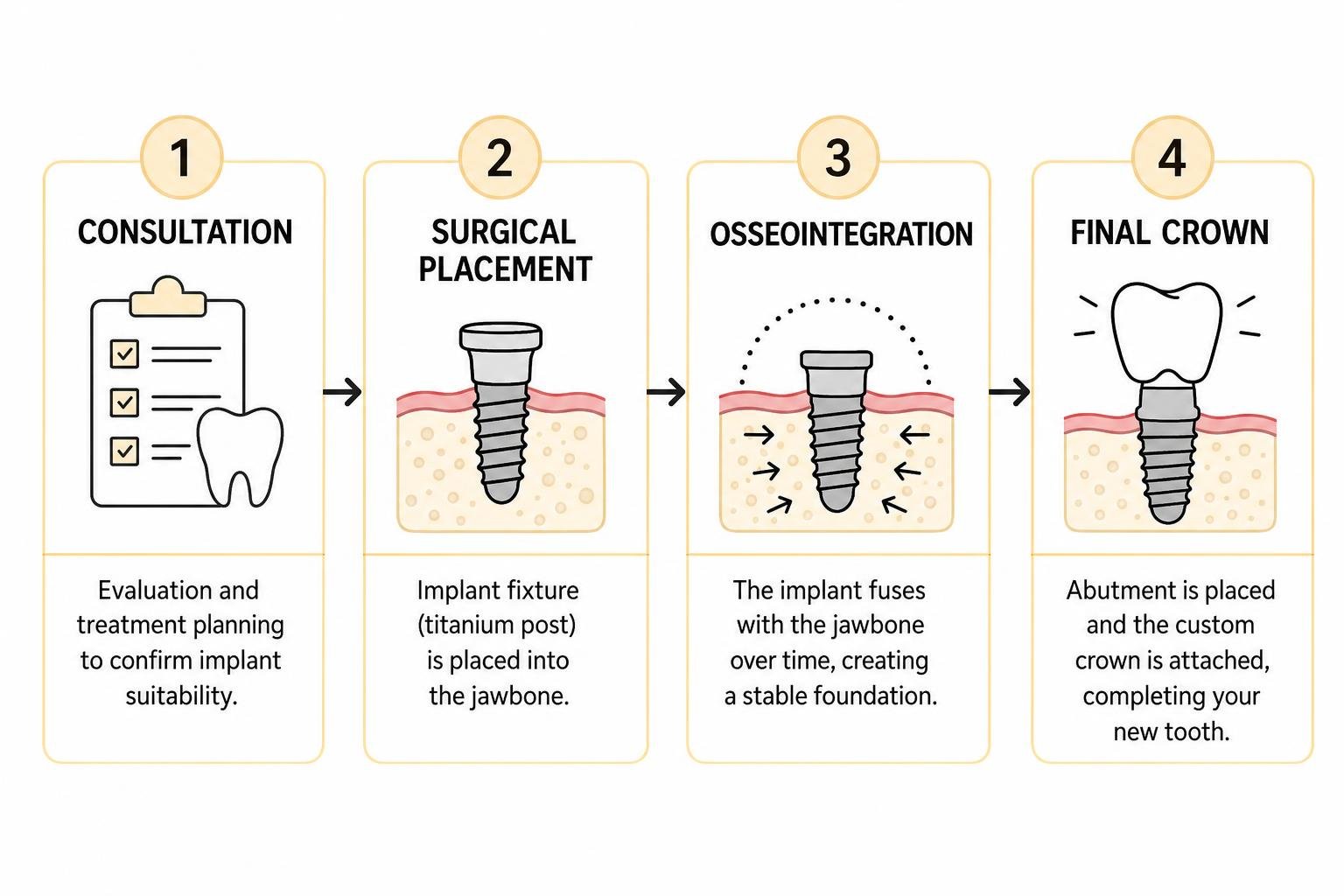
- The Implant Fixture ($1,500 – $2,000): This is the surgical screw placed directly into your jawbone. High-grade titanium bone implants act as biocompatible artificial roots that fuse directly with living bone tissue through a natural healing process called osseointegration.
- The Abutment ($300 – $500): The abutment serves as the connector piece that screws directly into the implant post and protrudes slightly above the gumline. While stock abutments are available, dental abutment costs often reflect custom-milled connectors designed to shape the gum tissue naturally around the tooth.
- The Prosthetic Crown ($1,000 – $2,000): The custom ceramic, porcelain, or zirconia tooth that restores your bite and appearance. Fabricated by specialized dental laboratories, these restorations are shaded and contoured to match your adjacent natural teeth seamlessly.
Specialist vs General Dentist: How Much Does an Implant Cost by Provider?
When planning treatment, provider training, surgical volume, and case coordination play key roles in overall pricing. Across dental practices, total procedural costs typically range from $3,000 to $4,800 depending on practice structure and whether care is coordinated between oral surgeons, periodontists, and restorative general dentists.
Clinicians who routinely perform implant placement and restoration achieve greater clinical efficiency and streamlined workflows. At our practice, we focus on seamless, patient-first workflows for single tooth implant care, ensuring every stage of treatment is transparent, pain-free, and affordable.
Major Factors and Preparatory Procedures That Influence Total Price
No two smiles share the exact same anatomy. The total amount you invest in your dental health depends on clinical diagnostics, material selections, and whether preliminary work is required to build a solid foundation.
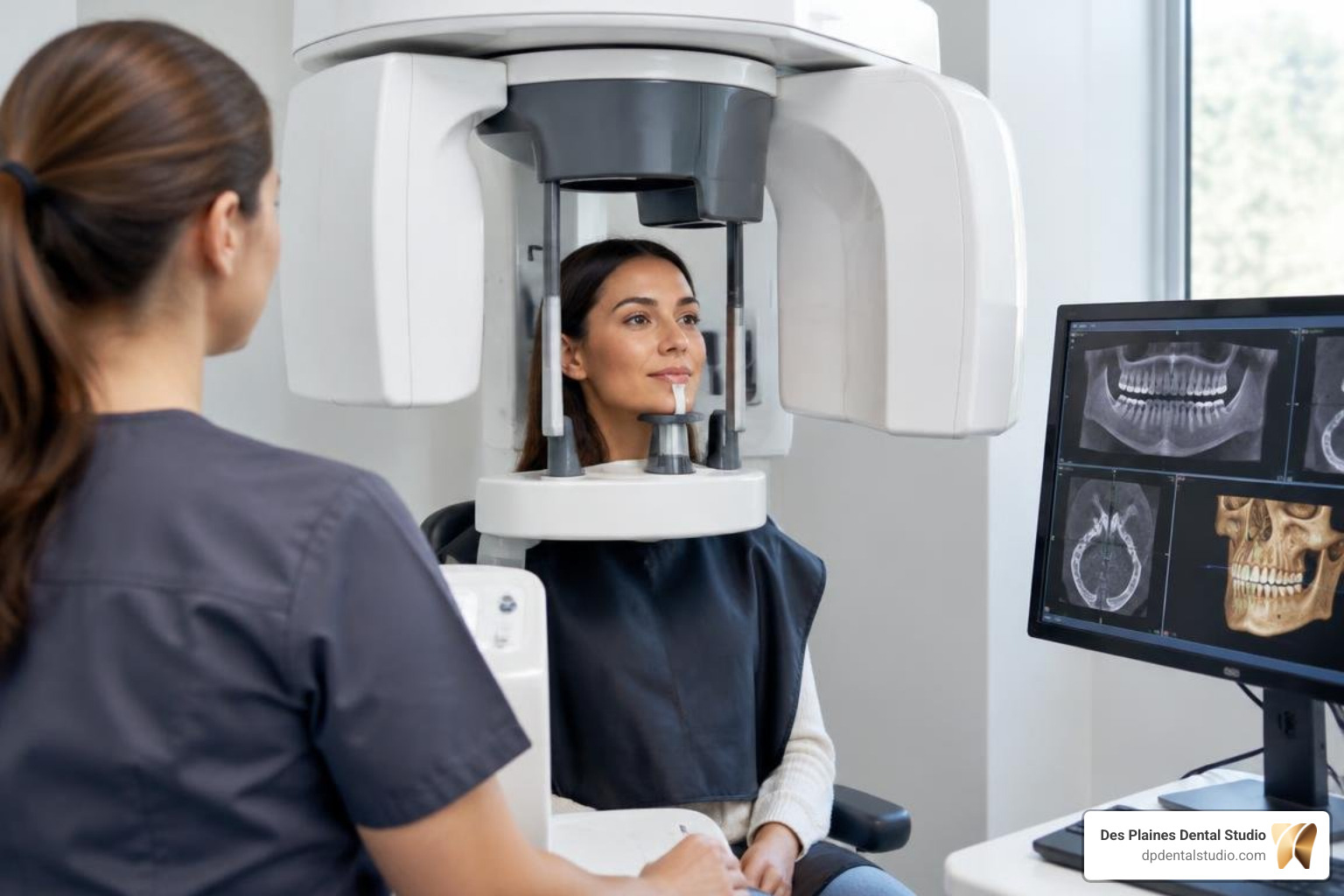
Key variables affecting final fees include:
- Diagnostic Imaging ($100 – $750): Advanced 3D Cone Beam Computed Tomography (CBCT) scans allow your clinician to map bone volume, nerve pathways, and sinus cavities with sub-millimeter precision.
- Component Materials: Standard medical-grade titanium remains the gold standard for long-term strength, whereas metal-free zirconia ceramic fixtures can exceed $4,500 per tooth due to specialized milling techniques.
- Sedation and Anesthesia ($250 – $800): Options range from routine local numbing to oral conscious sedation or IV sedation administered by a certified professional.
Preparatory Surgeries: Extractions, Bone Grafts, and Sinus Lifts
If a damaged tooth remains in place or if the jawbone has deteriorated due to past tooth loss, preparatory procedures ensure the implant has enough support:
- Tooth Extractions ($75 – $650): Removing a decayed, cracked, or non-restorable tooth prior to implant surgery.
- Bone Grafting ($250 – $3,000): If jawbone volume has shrunk, bone grafting for dental implants introduces specialized mineral matrices and barrier membranes ($300 – $800) to regenerate healthy bone density before or during fixture placement.
- Sinus Lifts ($1,500 – $5,000): In the upper back jaw, proximity to the maxillary sinus cavity may require gently elevating the sinus floor and placing graft material underneath to create vertical bone height.
When these foundational treatments are necessary, a realistic single-tooth implant investment with full prep work ranges between $4,500 and $6,500.
Geographic Variations and State-by-State Pricing
Dental fees reflect regional overhead, commercial facility expenses, and cost-of-living differences. For instance, single surgical placement averages $1,790 in Alabama and reaches $3,565 in Hawaii. According to state-by-state single tooth implant costs data, Illinois averages $2,207 for surgical placement alone, with complete restored procedures across the Chicago metropolitan area averaging $4,500.
Insurance Coverage, Financing, and Cheaper Alternatives

Understanding your dental coverage is the easiest way to avoid billing surprises. While some traditional insurance policies historically classified implants as elective, coverage models are shifting.
Our dental implants insurance guide 2026 outlines key strategies to help you maximize your annual benefits:
- Annual Maximums: Most dental policies cap annual payouts at $1,000 to $2,000 per calendar year.
- Alternate Benefit Clauses: Even if an insurer excludes the implant fixture, they may provide an allowance equal to the cost of a traditional bridge or partial denture that you can apply toward your implant restoration.
- Pre-Tax Healthcare Accounts: Utilizing Health Savings Accounts (HSAs) or Flexible Spending Accounts (FSAs) allows you to pay for surgical and restorative fees using pre-tax dollars, creating immediate savings of 20% to 35% depending on your tax bracket.
- Flexible Healthcare Financing: Monthly payment plans and medical credit arrangements break down major restorative investments into predictable, budget-friendly installments.
Comparing Implants to Bridges and Dentures: Long-Term Value
At Des Plaines Dental Studio, we offer bridges and dentures alongside implants, so you can weigh every tooth-replacement option with full information. Looking beyond initial price tags reveals the true 25-year math of tooth replacement:
| Feature | Dental Implant | Fixed Dental Bridge | Removable Partial Denture |
|---|---|---|---|
| Upfront Initial Cost | $3,000 – $4,500 | $2,500 – $5,000 | $800 – $3,100 |
| Lifespan | 25+ years to a lifetime | 7 – 15 years | 5 – 10 years |
| Adjacent Tooth Impact | None; preserves adjacent teeth | Requires shaving down healthy enamel | Clasps put stress on natural anchor teeth |
| Jawbone Health | Prevents bone resorption | Bone under fake tooth recedes | Accelerates localized bone loss |
| Amortized Yearly Cost | ~$150 – $250 / year | ~$500+ / year | ~$450+ / year |
While bridges and dentures cost less upfront, their ongoing replacement cycles, realignments, and risk of secondary decay under bridge abutments make dental implants the more cost-effective, durable choice for many patients over time. Our team can help you decide which option best fits your needs and budget.
Multiple Teeth and Full Arches: How Much Does an Implant Cost?
If you need to replace multiple missing teeth or an entire dental arch, you don’t necessarily need an individual implant screw for every single missing tooth. Exploring the true price of full mouth dental implants reveals that two implants can support a three- or four-unit porcelain bridge span, cutting per-tooth replacement costs significantly, while advanced full-arch methods securely anchor a complete set of teeth on just four to six strategically placed posts.
According to RealSelf patient cost reviews, dental implants earn an 84% “Worth It” rating, reflecting high satisfaction with comfort, aesthetics, and bite strength.
Frequently Asked Questions About Dental Implant Costs
Why do dental implant price quotes vary so widely between practices?
Implant pricing disparities usually stem from unbundled estimates. A practice advertising a “$1,799 implant” is often quoting only the surgical post, omitting the $300–$500 abutment, the $1,000–$2,000 crown, 3D imaging scans, and essential surgical fees. Always ask for a complete, written, itemized treatment plan before comparing providers.
How long do dental implants last compared to traditional bridges?
A biocompatible titanium post integrates directly into your jawbone and can easily last a lifetime with a 95% clinical success rate. The custom crown on top experiences normal daily chewing wear and typically lasts 10 to 15 years before minor maintenance or replacement is needed. By contrast, traditional bridges require replacing every 7 to 15 years and compromise adjacent natural teeth.
Can I split implant treatment across calendar years to maximize insurance?
Yes. Because standard implant treatment involves distinct surgical and restorative phases over 3 to 6 months, you can schedule the post placement in the late autumn (using your current plan year’s annual maximum) and the permanent crown restoration in January (tapping into a refreshed annual benefit).
Conclusion
Investing in your smile restores your chewing ability, facial structure, and day-to-day confidence. While evaluating fees across different providers, always insist on complete, itemized estimates covering the post, custom abutment, and permanent crown.
At Des Plaines Dental Studio, we believe every patient deserves clear pricing, attentive insurance navigation, and a welcoming, gentle treatment environment. To take the next step toward a restored smile, explore the average cost of dental implants and schedule your personalized consultation with our team today.