


What You’re Really Paying for With Dental Implants Pricing
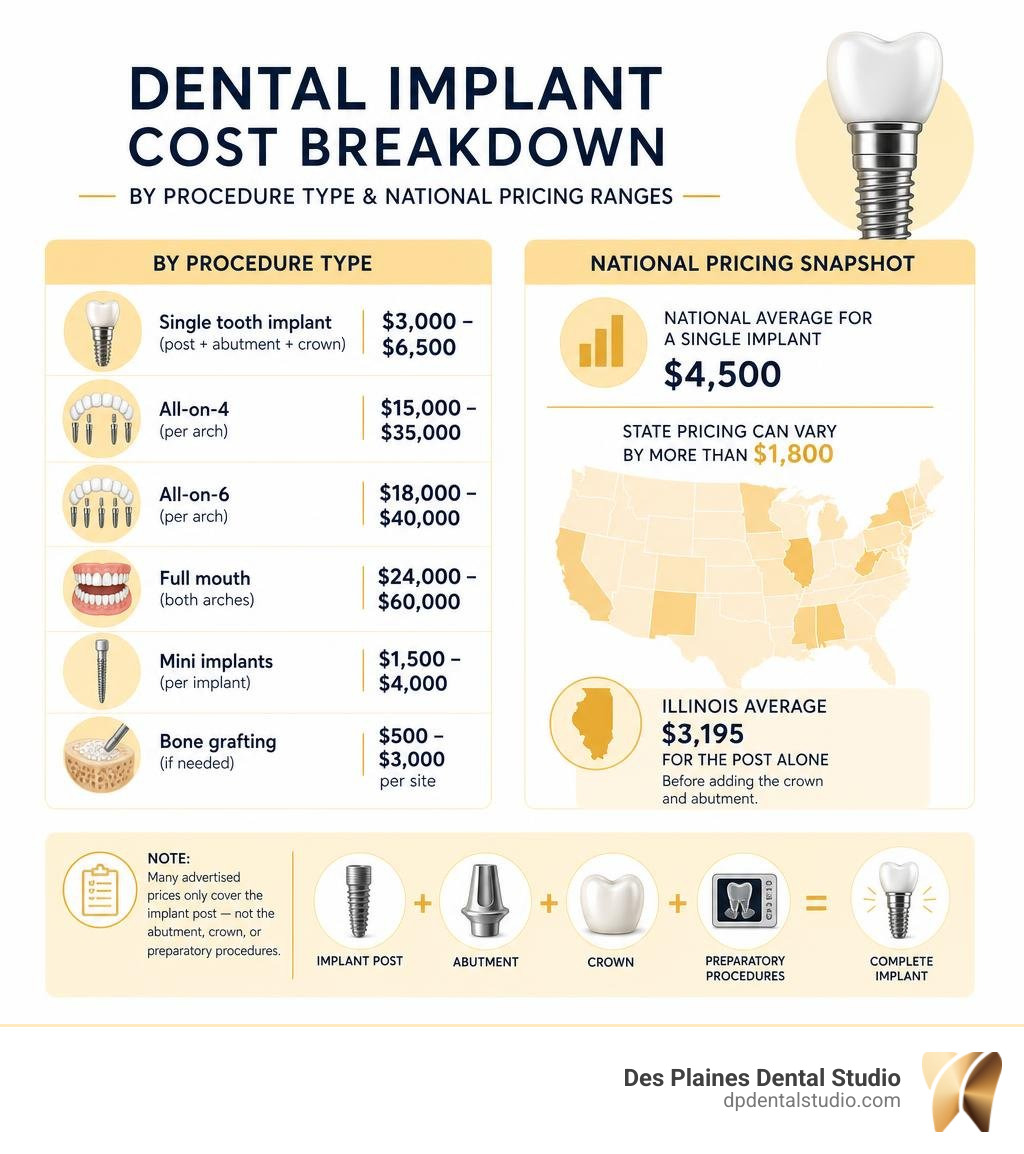
Dental implants pricing varies widely — and that gap can catch patients off guard. Here’s a quick snapshot of what to expect in 2026:
| Procedure | Typical Cost Range |
|---|---|
| Single tooth implant (post + abutment + crown) | $3,000 – $6,500 |
| All-on-4 (per arch) | $15,000 – $35,000 |
| All-on-6 (per arch) | $18,000 – $40,000 |
| Full mouth (both arches) | $24,000 – $60,000 |
| Mini implants (per implant) | $1,500 – $4,000 |
| Bone grafting (if needed) | $500 – $3,000 per site |
Note: Many advertised prices only cover the implant post — not the abutment, crown, or preparatory procedures.
The national average for a single implant sits around $4,500, but where you live matters a lot. State pricing alone can swing by more than $1,800. Illinois patients typically see averages closer to $3,195 for the post alone, before adding the crown and abutment.
And that’s exactly where the confusion starts. A price you see online might be half the story.
I’m Dr. Marta Milejczyk, and after nearly three decades of restorative and implant dentistry in Chicago’s northwest suburbs — including advanced clinical training in full mouth rehabilitation — I’ve helped hundreds of patients decode dental implants pricing and find a path that fits their budget. In this guide, I’ll walk you through every cost layer so you know exactly what you’re looking at.
Understanding Dental Implants Pricing: National Averages and State Variations
When patients first start researching how to replace a missing tooth, they are often met with a confusing array of numbers. You might see one website quoting a national average cost for a single tooth dental implant as $2,143 (which typically covers just the surgical placement of the titanium screw), while another site claims the average cost of replacing a single tooth with an implant ranges from $3,000 to $6,000.
Why such a massive gap? It all comes down to what is actually included in the estimate.
An “all-in” single dental implant costs $3,000 to $6,500 on average in the United States. This comprehensive price includes the titanium post, the connecting abutment, and the custom porcelain crown. When you look at raw surgical data, the national average cost for a single tooth dental implant is $2,143, with a range of $1,646 to $4,175, but this figure almost always excludes the dental crown (which itself can range from $488 to $3,254) and the abutment.

Geography plays an enormous role in these numbers. In fact, dental implant costs vary up to 2x by state due to local overhead, lab fees, and cost-of-living differences. For example, Hawaii averages $3,565 for the implant post alone, while Alabama averages $1,790.
Here in Illinois, the average cost for surgical implant placement is $3,195, while the average single-tooth implant cost (including the restoration) hovers around $2,207 for basic cases but can quickly reach $4,500+ depending on the complexity. To explore how local rates compare across the country, check out the Dental Implant Cost By State 2026 — Verified Prices, Procedures & Financing guide. Understanding these baseline numbers is the first step toward finding realistic solutions, which we cover extensively in our breakdown of the Average Cost of Dental Implants.
Single Tooth vs. Full-Arch Restoration Costs
The total price of your treatment scales based on how many teeth you need to replace and the method used to secure them.
- Single Tooth Implant: This is the most straightforward procedure, replacing one missing tooth with a single post, abutment, and crown. It is highly localized and keeps adjacent teeth healthy. For details on local pricing, visit our page on the Single Tooth Implant Des Plaines IL.
- All-on-4 Dental Implants: If you are missing an entire arch of teeth, All-on-4 is an incredibly popular option. It uses four strategically angled implants to support a full, fixed denture. This procedure averages $15,000 to $35,000 per arch. To learn more about this specific service in our office, check out All on 4 Dental Implants Des Plaines IL.
- All-on-6 Dental Implants: For patients with denser posterior bone who require added stability, All-on-6 utilizes six implants to support the arch, costing between $18,000 and $40,000 per arch.
- Full Mouth Dental Implants: Replacing both the upper and lower arches with permanent, implant-supported teeth ranges from $24,000 to $60,000 on average, though complex cases involving extensive reconstruction can reach $60,000+.
How Procedure Complexity Impacts Dental Implants Pricing
Your mouth is unique, and the health of your jawbone dictates the complexity of your procedure. If you have been missing a tooth for a long time, the bone beneath the surface begins to resorb (shrink).
To build a stable foundation for an implant, preparatory procedures are often required:
- Bone Grafting: This procedure adds bone tissue to your jaw. Bone grafting, needed by many patients, adds $500 to $3,000 per site to dental implant costs. For a deeper dive into why this is necessary, read about Bone Grafting for Dental Implants.
- Sinus Lifts: If you are replacing back teeth in the upper jaw, your sinuses may be too close to the bone. A sinus lift raises the sinus floor to make room for bone grafting, costing $1,500 to $5,000.
- Tooth Extractions: If a damaged tooth is still in place, it must be carefully extracted ($200 to $700) before the implant can be placed. This is particularly common when dealing with back teeth, as detailed in our guide on Molar Implants 101 What It Costs to Replace Your Back Teeth.
The Hidden and Additional Costs of Dental Implants
When you receive an initial promotional quote for a “cheap dental implant,” it is vital to read the fine print. Many low-ball advertisements only cover the surgical placement of the titanium screw (ADA code D6010).
To avoid financial surprises, you should look out for these commonly excluded fees:
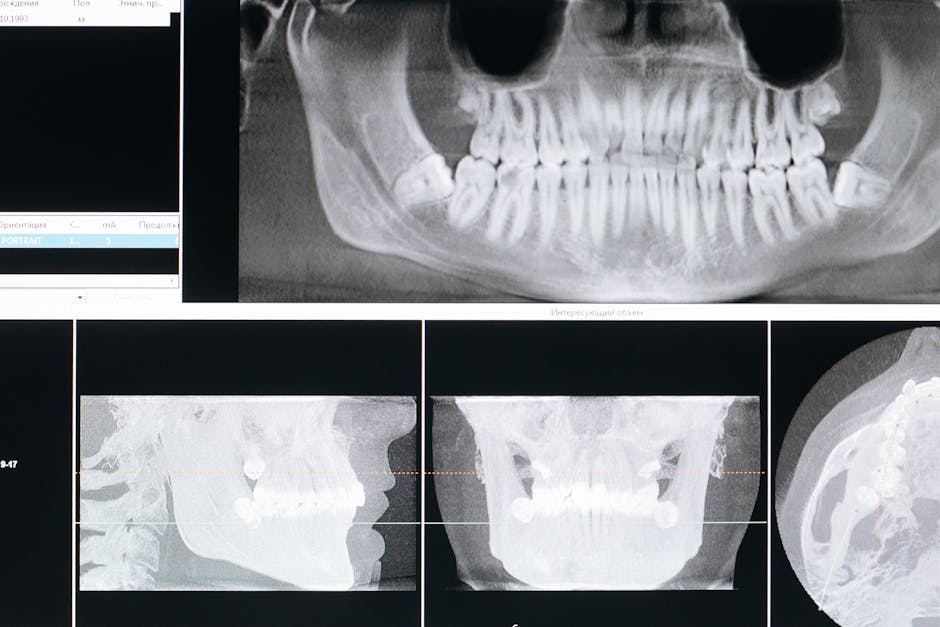
- Initial Consultations & 3D Imaging: A comprehensive evaluation requires a 3D Cone Beam CT (CBCT) scan. These scans cost $300 to $600 and are essential for mapping your nerves and bone volume.
- The Abutment: This is the connector piece that screws into the implant and holds the crown. To understand these costs, check out Dental Abutment Costs What to Expect When Youre Connecting.
- The Custom Crown: The final visible tooth can cost anywhere from $488 to $3,254 depending on the materials used.
- Sedation and Anesthesia: Whether you choose local anesthesia, nitrous oxide, or IV sedation, this can add $200 to $1,500 to your final bill.
For a transparent look at the national all-in averages, you can reference the Dental Implant Cost — National Average All-In | Pearl database.
Materials and Technology: Titanium vs. Zirconia and Magnetic Tech
The materials chosen for your restoration directly affect both the longevity and the dental implants pricing.
- Titanium Alloy: This has been the gold standard for over 30 years. It is incredibly strong, highly biocompatible, and fuses seamlessly with your bone. Learn more about the biology of these restorations in our article on Titanium Bone Implants.
- Zirconia: If you have metal allergies or prefer a completely metal-free option, zirconia (a strong ceramic) is an excellent alternative. Zirconia implants typically cost $500 to $1,000 more per unit than titanium.
- Magnetic and Snap-On Attachments: Modern technology allows us to use magnetic or mechanical snap-on attachments to secure dentures. Instead of a completely fixed bridge, these “snap-on” dentures attach to mini dental implants or standard implants, offering a highly secure yet removable option. Mini dental implants cost $1,500 to $4,000 per implant, making them a highly economical path for stabilizing loose lower dentures.
Lower Jaw Implants and Specialized Procedures
Replacing teeth in the lower jaw comes with its own set of clinical challenges. The mandibular (lower) bone is denser than the upper jaw, but we must carefully navigate the mental nerve.
For patients who have lost all of their lower teeth, full lower implants offer a life-changing alternative to slipping traditional dentures.
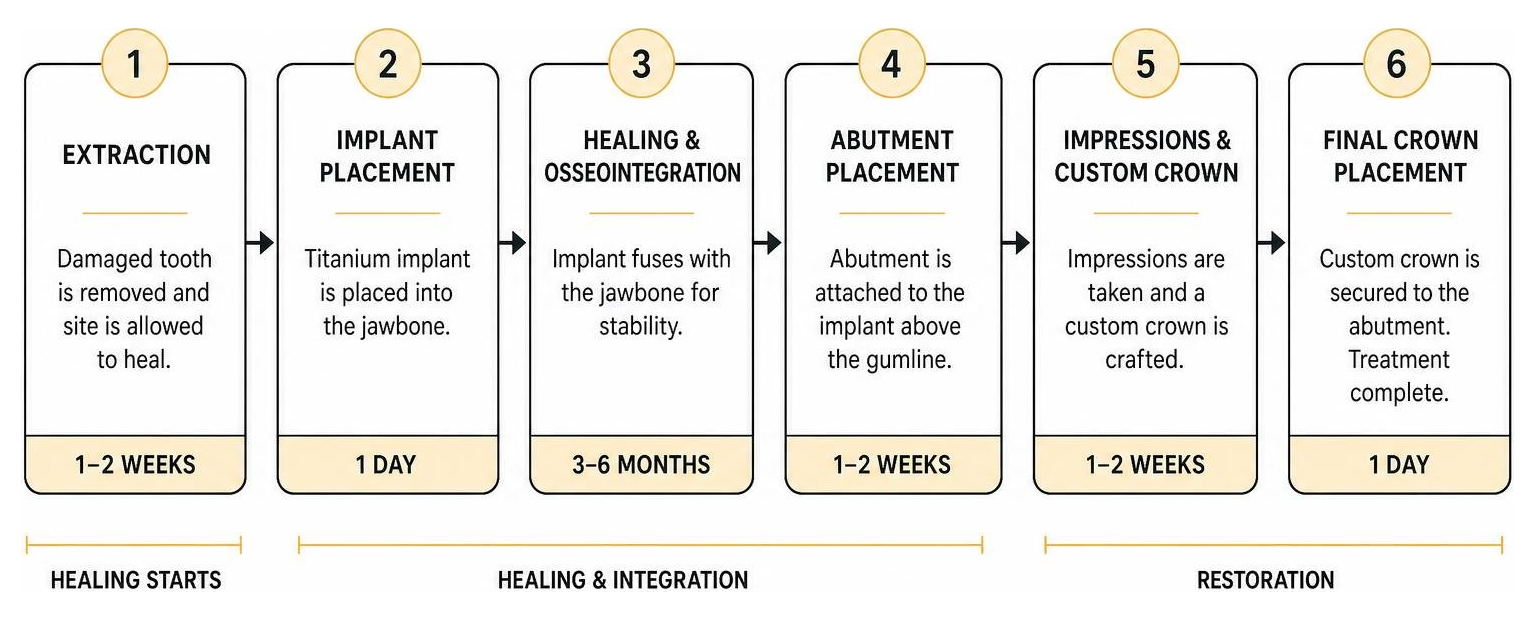
Whether you choose a fixed bridge or a removable snap-on denture supported by two to four implants, the stability gained is unmatched. We break down the anatomical considerations, recovery, and pricing for these procedures in our guides: Everything You Need to Know About Full Lower Dental Implants and Getting to the Bottom of Full Lower Jaw Dental Implants.
Insurance, Financing, and Cost-Saving Strategies
While the upfront cost of dental implants is higher than other options, they represent an incredible long-term value. Let’s compare the financial reality of implants versus traditional alternatives over a 20-year period:
| Feature | Dental Implant | Traditional Bridge | Traditional Denture |
|---|---|---|---|
| Upfront Cost | $3,000 – $6,500 | $2,000 – $5,000 | $1,500 – $4,000 |
| Lifespan | 25+ years (Lifetime post) | 5 – 10 years | 5 – 10 years |
| 20-Year Replacements | 0 (Maybe 1 crown swap) | 2 – 3 replacements | 2 – 3 replacements / relines |
| Bone Preservation | Yes (Prevents jaw shrinkage) | No | No (Accelerates bone loss) |
| Total 20-Year Cost | $3,000 – $6,500 | $6,000 – $15,000 | $4,500 – $12,000 |
To help plan your budget, you can use the Dental Implant Cost Calculator (2026) | CostFigure to estimate your out-of-pocket expenses. For a deep dive into insurance navigation, consult our Dental Implants Insurance Guide 2026.
Strategic Ways to Save on Dental Implants Pricing
You don’t have to break the bank to get a healthy smile. Here are three proven strategies our patients use to make treatment affordable:
- Calendar Year Splitting: Because the implant process takes 4 to 9 months, you can strategically split your treatment. Have the surgical post placed in December to use your current year’s insurance maximum, and have the abutment and crown placed in January to utilize the next year’s benefits.
- FSA and HSA Funds: You can use pre-tax Flexible Spending Account (FSA) or Health Savings Account (HSA) dollars to pay for your implants, saving you 20% to 30% depending on your tax bracket.
- Dental School Clinics: If you have a highly flexible schedule, local dental school clinics offer heavily discounted implant treatments supervised by board-certified prosthodontists. We share more practical tips on this in our guide: How to Find the Cheapest Dental Implants Without Losing Your Mind.
Maximizing Insurance and Medical Coverage
While many standard PPO plans classify dental implants as a “cosmetic” or “major” procedure and limit coverage, there are creative ways to secure funding.
For instance, your dental insurance might refuse to cover the titanium post but agree to cover 50% of the porcelain crown. Additionally, if your tooth loss was caused by a medical event — such as a car accident, physical trauma, or oral cancer — your medical insurance may cover the entire surgical reconstruction.
We have mapped out these complex insurance pathways in two comprehensive guides: How to Get Dental Implants Covered by Medical Insurance and The Sneaky Guide to Getting Medical Insurance for Dental Implants.
Frequently Asked Questions About Dental Implants
Do dental implants hurt and how long is the recovery?
The surgical placement of an implant is surprisingly comfortable. Because bone tissue doesn’t have pain receptors, most patients report that the procedure hurts less than a simple tooth extraction.
We use advanced, pain-free localized numbing technology to ensure you don’t feel a thing. Any post-operative swelling or mild soreness typically peaks around day three and vanishes by day five. During the first 24 hours, stick to cool liquids, then transition to soft foods like scrambled eggs, pasta, and smoothies for the first few weeks while your jaw heals.
How long do dental implants last compared to bridges?
While a traditional dental bridge relies on grinding down neighboring healthy teeth and must be replaced every 5 to 10 years, a dental implant is designed to last a lifetime. The biocompatible titanium post fuses directly with your jawbone.
While the porcelain crown on top may need to be replaced after 10 to 15 years due to normal wear and tear, the foundation remains permanent. If you are debating whether to save a compromised tooth or pull it in favor of an implant, check out our clinical comparison: Implants vs Keeping Your Teeth The Ultimate Guide to Early Gum Disease Reviews.
What is the average cost of full mouth dental implants?
A full mouth dental implant restoration (replacing all teeth on both the upper and lower jaws) typically costs between $24,000 and $60,000. The final price depends on whether you choose removable snap-on implant dentures or permanent, fixed zirconia bridges. For a detailed breakdown of full-mouth options and pricing structures, explore our resources: Price of Full Mouth Dental Implants and the Average Cost of Full Dental Implants.
Conclusion
At the end of the day, dental implants pricing isn’t just a cost — it’s a long-term investment in your health, confidence, and quality of life. Unlike temporary fixes that require frequent replacements and contribute to progressive jawbone loss, implants offer a permanent, natural-feeling solution.
At Des Plaines Dental Studio, we believe that high-quality, life-changing dental care should be accessible and stress-free. Our welcoming team is dedicated to providing patient-centered care with robust insurance support and a gentle, pain-free experience.
If you’re ready to explore your options and get a transparent, itemized estimate tailored to your unique smile, visit our Dental Implants Near Me page to schedule your consultation with us today!