Dental Implant Prices Near Des Plaines: What to Budget
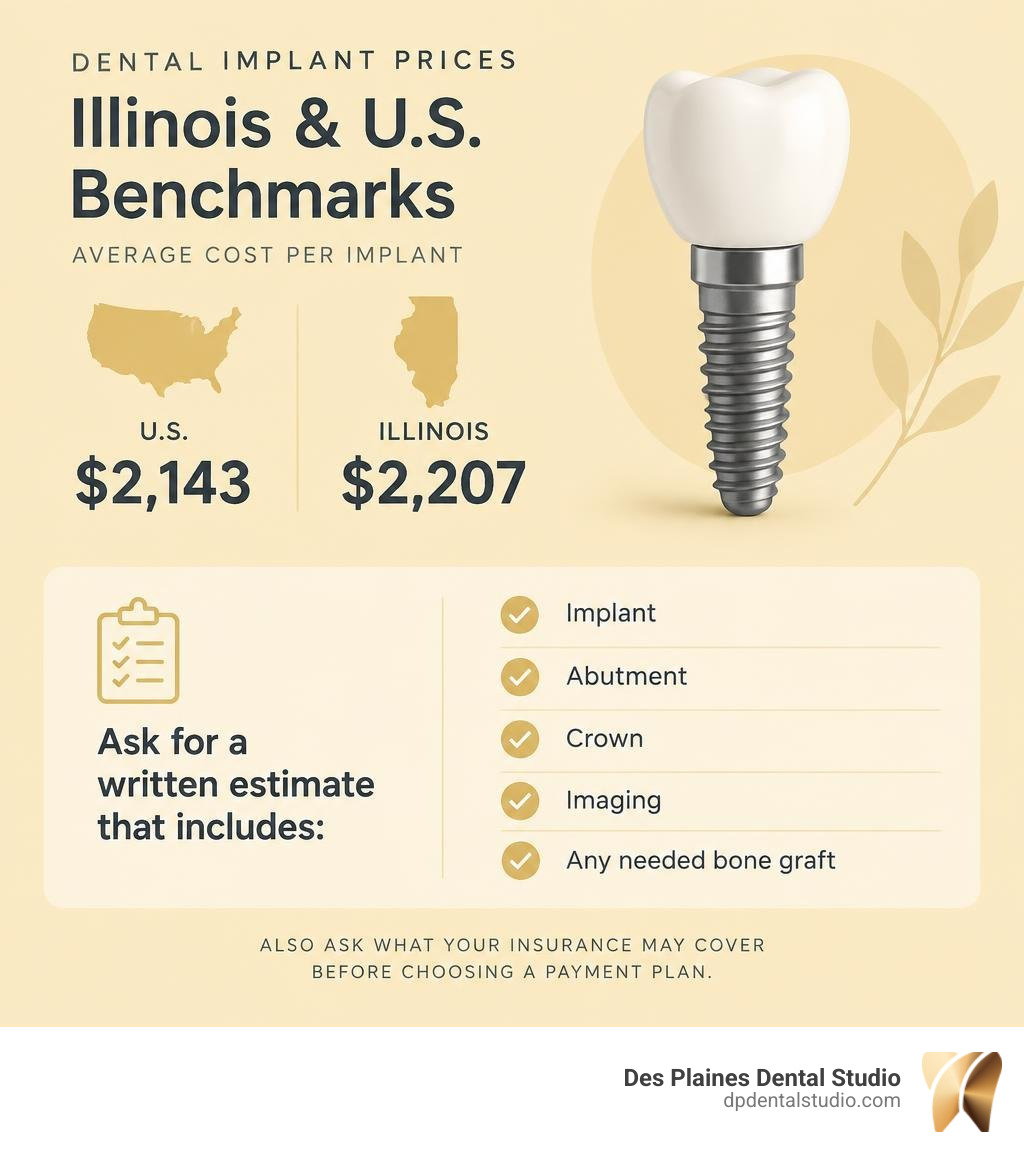
A single-tooth implant averages about $2,143 nationally and $2,207 in Illinois. Those figures are useful starting points, not a final quote. When comparing Des Plaines dentists, ask for a written estimate that shows the implant, abutment, crown, imaging, and any needed bone graft separately. Also ask what your insurance may cover before choosing a payment plan.
I’m Dr. Marta Milejczyk. I’ve practiced dentistry in Chicago’s northwest suburbs since 1997, and my training in restorative and implant dentistry helps me explain what matters when evaluating dental implants pricing near me. According to the American Academy of Implant Dentistry, more than 3 million Americans have dental implants, and that number grows by about 500,000 each year.
Helpful dental implant cost resources:
Understanding Dental Implants Pricing Near Me by Type and Procedure
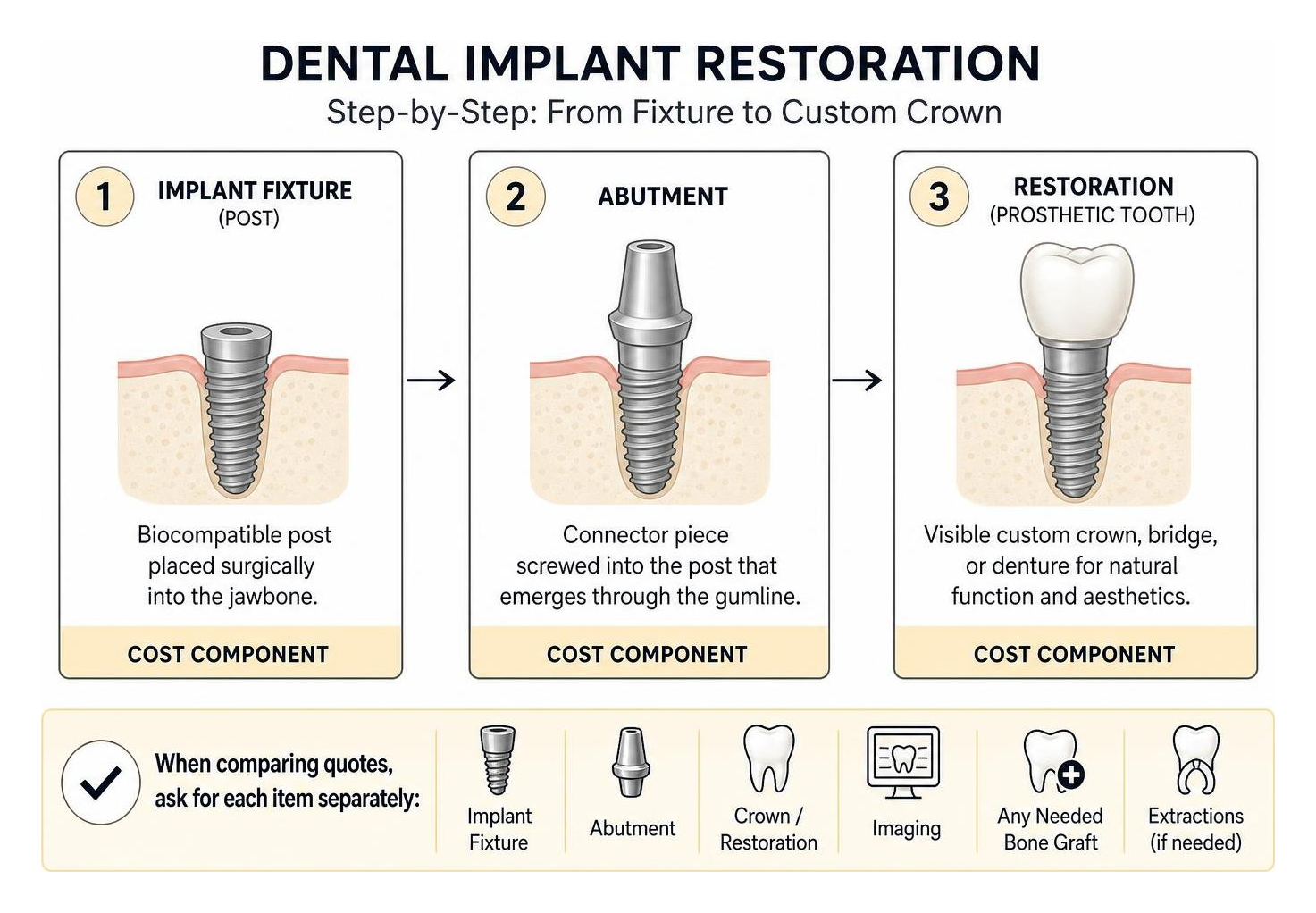
Understanding implant pricing begins with looking at the three physical parts of a dental implant restoration:
- The Implant Fixture (Post): A biocompatible post placed surgically into the jawbone.
- The Abutment: A connector piece screwed into the post that emerges through the gumline.
- The Restoration (Prosthetic Tooth): The visible crown, bridge, or full-arch denture.
When looking at the overall average cost of dental implants, ads that quote low numbers like “$899” often cover only the post itself, leaving out the abutment, crown, diagnostic 3D imaging, and extractions.
| Restoration Type | Typical National Range | Illinois Average (Des Plaines Area) | Longevity Expectancy |
|---|---|---|---|
| Single Tooth Implant | $1,646 – $4,175 | $2,207 – $3,800 (complete) | 25+ years to lifetime |
| Implant-Supported Bridge (3–4 teeth) | $4,500 – $11,000 | $5,500 – $9,500 | 15–20+ years |
| All-on-4 Full Arch (Per Jaw) | $15,000 – $28,000 | $17,999 – $24,500 | 20+ years to lifetime |
| Full Mouth Reconstruction (Both Jaws) | $30,000 – $55,000+ | $35,000 – $48,000 | Lifetime post support |
When patients review the average cost of full dental implants, these numbers reflect not just hardware, but custom clinical design, surgical placement, and long-term stability.
Single Tooth and Multiple Teeth Replacements
Replacing an individual missing tooth requires balancing surgical precision with custom aesthetics. A standard single tooth implant des plaines il treatment includes the surgical fixture, custom connector, and a realistic porcelain or zirconia crown.
Crowns vary based on the selected material, ranging from $488 to $3,254. When reviewing your quote, ask about dental abutment costs so you understand whether standard prefabricated or custom-milled connectors are planned for your smile.
For adjacent missing teeth, an implant-supported bridge anchors several replacement teeth onto two or more posts. This avoids grinding down healthy neighboring teeth and costs less than placing individual implants for every missing root.
Full Mouth Restorations and All-on-4 Systems
For patients facing widespread tooth loss or advanced periodontal damage, full-arch restorations provide fixed stability without the slippage of traditional dentures.
Using strategically angled posts, all on 4 dental implants des plaines il systems support a complete arch of teeth on just four to six implants. Exploring a detailed full mouth implants cost guide helps clarify how full-arch treatment compares to single-tooth replacements. Full-arch options eliminate the ongoing relining expenses and daily adhesives required by conventional dentures.
Geographical Cost Variations and State Price Benchmarks
Dental implant pricing varies across the United States due to commercial rent, local operational overhead, regional lab fees, and specialist availability.
Reviewing the ultimate guide to dental implants costs and benefits shows that national averages for a complete single-tooth placement range from $1,646 to $4,175, with a median around $2,143. Choosing a practice offering dental implants des plaines il provides access to advanced suburban dental care without downtown metropolitan overhead fees.
Comparing Regional and State Dental Implants Pricing Near Me
State-level pricing shows clear regional patterns across the country:
- Illinois: Averages $2,207 for a single implant fixture, providing balanced pricing in the Midwest.
- Hawaii: Highest in the nation, averaging $3,565 per implant due to island shipping logistics and high practice overhead.
- California: Averages $2,730, driven by higher regional cost-of-living metrics.
- Alabama: Averages $1,790, representing the lower end of the national cost scale.
Reviewing a practical guide to dental implant costs comparisons helps you compare implant costs so you can evaluate treatment quality, diagnostic capabilities, and long-term value alongside the base price.
Factors Determining Dental Implants Pricing Near Me
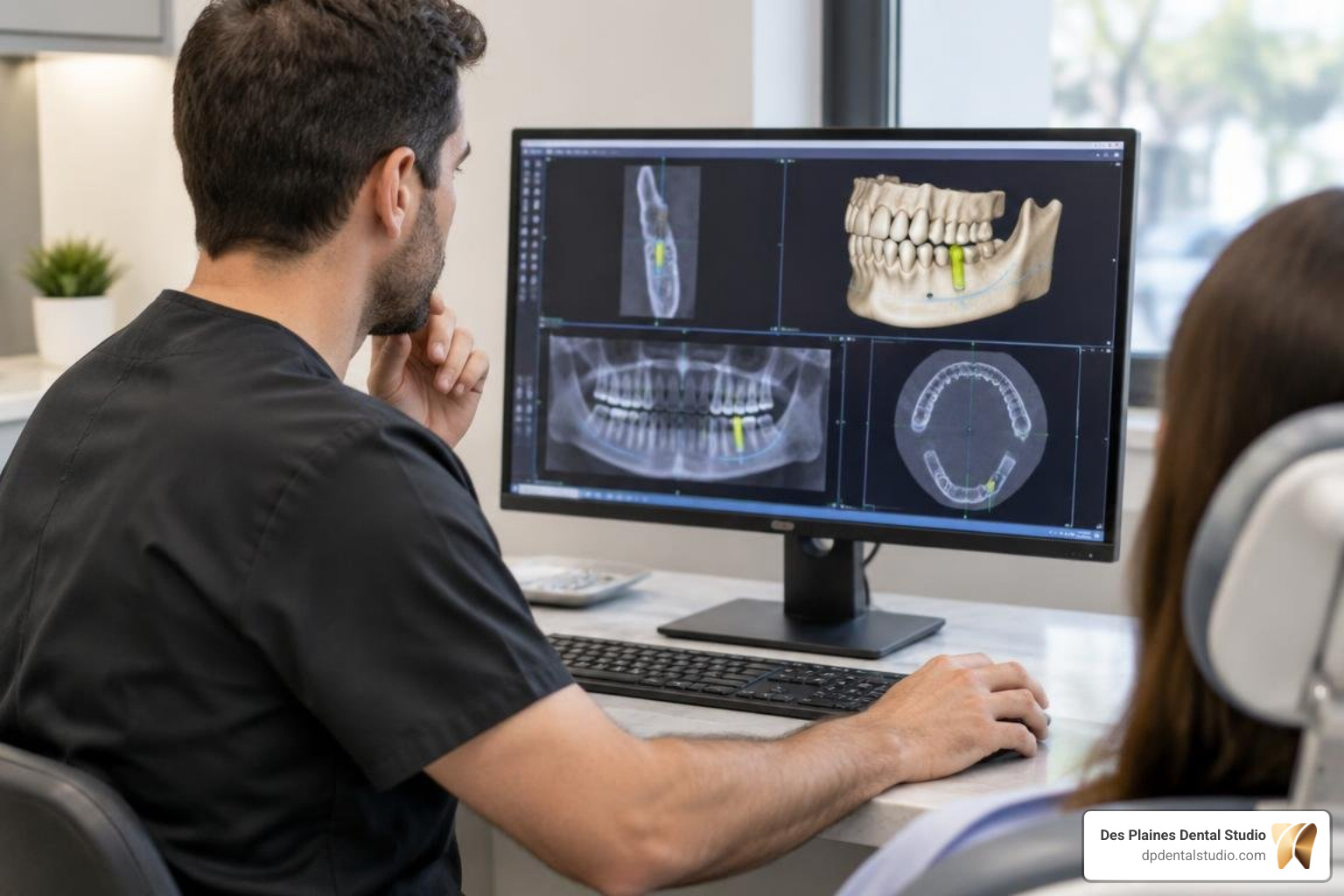
Several clinical factors influence final implant estimates:
- Bone Volume and Quality: If a tooth has been missing for an extended period, the underlying bone naturally resorbs. In these cases, bone grafting for dental implants or sinus lifts are needed to build a secure foundation.
- Diagnostic Technology: Utilizing high-resolution 3D Cone Beam Computed Tomography (CBCT) imaging and computer-guided surgical splints ensures exact placement, preventing nerve complications and improving long-term success.
- Restorative Materials: Medical-grade titanium alloy and monolithic zirconia deliver durability and natural aesthetics, though premium materials carry higher fabrication costs.
- Clinical Experience: Choosing how to find a dentist near you who does dental implants means working with clinicians who prioritize pain-free methods and handle complex surgical cases in-house.
Insurance Coverage, Medical Benefits, and Financing Options
Dental insurance policies are increasingly recognizing implants as standard care rather than purely cosmetic procedures. Coverage varies widely depending on your specific policy.
When evaluating your benefits, start by navigating your delta dental benefits for dental implants or reviewing our dental implants insurance guide. While some plans may not cover the implant fixture itself, they often provide partial coverage for the extraction, bone graft, abutment, or final porcelain crown.
Navigating Medical Insurance and Flexible Payment Plans
In cases involving traumatic injury, severe congenital deficiencies, or bone loss resulting from underlying medical conditions, medical insurance may cover portions of surgical reconstruction. Understanding how to get dental implants covered by medical insurance helps maximize your available policy benefits.
For remaining balances, third-party healthcare financing options like CareCredit, along with in-house payment plans, help spread out the investment. Options include:
- 0% interest promotional financing plans for 6, 12, or 24 months.
- Extended low-APR payment terms (up to 60 months) with single-tooth payments starting around $73 to $150 per month.
- Full-arch financing options starting around $299 per month.
These structured financing options allow you to explore how to find the cheapest dental implants without losing your mind, making quality restorative care manageable on a monthly budget.
Long-Term Value and Maintenance Requirements
When evaluating dental restoration options, longevity is a key consideration. Traditional dental bridges and removable dentures carry a lower initial price tag, but they typically require replacement, refitting, or repair every 5 to 15 years. Over several decades, repeated replacements often exceed the one-time investment of an implant.
With consistent oral hygiene and regular preventive cleanings, the underlying post can last a lifetime, while the attached dental implant restorations can provide 15 to 25+ years of reliable function.
Implants also preserve the natural jawbone through functional stimulation during chewing, preventing the facial collapse and shifting teeth often caused by missing roots. If you are currently managing periodontal concerns, comparing implants vs keeping your teeth can help you decide on the right long-term approach for your oral health.
Maintaining an implant matches regular tooth care:
- Brush twice daily using a soft-bristled brush.
- Clean daily around the restoration with specialized floss or an interdental brush.
- Schedule routine six-month cleanings and check-ups to verify soft-tissue health.
Treatment Timeline, Surgery Recovery, and What to Expect
The complete dental implant process typically spans three to nine months from initial consultation to final crown placement. This timeline ensures the bone bonds securely with the biocompatible post.
During the healing window, titanium bone implants integrate directly into the surrounding bone structure through osseointegration. Understanding this biological healing process and reviewing all four dental implants complications costs and what to expect helps you plan each stage of recovery with confidence.

Managing Recovery, Swelling, and Post-Operative Care
Implant surgery is generally comfortable. It is performed under targeted local anesthesia or relaxing sedation, meaning patients typically feel gentle pressure rather than sharp pain during placement.
Post-operative recovery expectations include:
- Days 1–3: Mild tenderness and localized swelling are normal. Applying an ice pack to your cheek in 20-minute intervals and taking over-the-counter anti-inflammatories (such as ibuprofen or acetaminophen) will manage any soreness.
- Days 4–7: Swelling subsides, soft tissue begins closing over the site, and normal work routines can resume.
- Dietary Care: Stick to cool liquids for the first few hours, followed by soft foods (scrambled eggs, pasta, smoothies, yogurt, and warm soups) for the first one to two weeks. Avoid chewing directly on the implant site, and avoid using straws during the initial healing days.
Frequently Asked Questions About Dental Implant Pricing and Procedures
Do dental implant procedures hurt, and what is the typical recovery time?
Most patients report less discomfort during implant placement than during a standard tooth extraction. Local anesthetics numb the entire treatment area completely. Mild post-surgical swelling and tenderness generally resolve within three to five days with basic over-the-counter pain relievers and ice packs.
How long does the entire dental implant process take from start to finish?
A standard single implant typically takes between three and six months. If initial bone grafting or sinus augmentation is required, the timeline may extend to six to nine months to ensure a secure, long-lasting bony foundation before attaching the final crown.
Are dental implants cost-effective in the long run?
Yes. While bridges and removable dentures have lower upfront costs, their need for periodic replacements, realignments, and potential repairs on adjacent natural teeth makes them more expensive over time. Implants boast a long-term clinical success rate above 95% and can last a lifetime with proper care.
Conclusion
Missing teeth affect how you eat, speak, and smile. Understanding local pricing, treatment steps, and financing options helps you make an informed decision without unexpected costs.
At Des Plaines Dental Studio, we believe in patient-centered, pain-free dental care backed by transparent pricing and complete insurance support. Whether you need to replace a single tooth or explore a full-arch restoration, our team is here to guide you through a comfortable treatment plan designed for your budget.
Ready to restore your smile? Explore our dental implants near me resources or contact our Des Plaines team today to schedule your comprehensive implant consultation.